Listen to this story
Voting; recounts; certification; election administration North Carolina; nationwide
North Carolina State Board sets November 24 canvass meeting
In effect: North Carolina’s post-election canvass, audit, and recount procedures are operating for the November 3, 2026 general election. The State Board has noticed the statewide canvass for November 24. Verify status
What happened
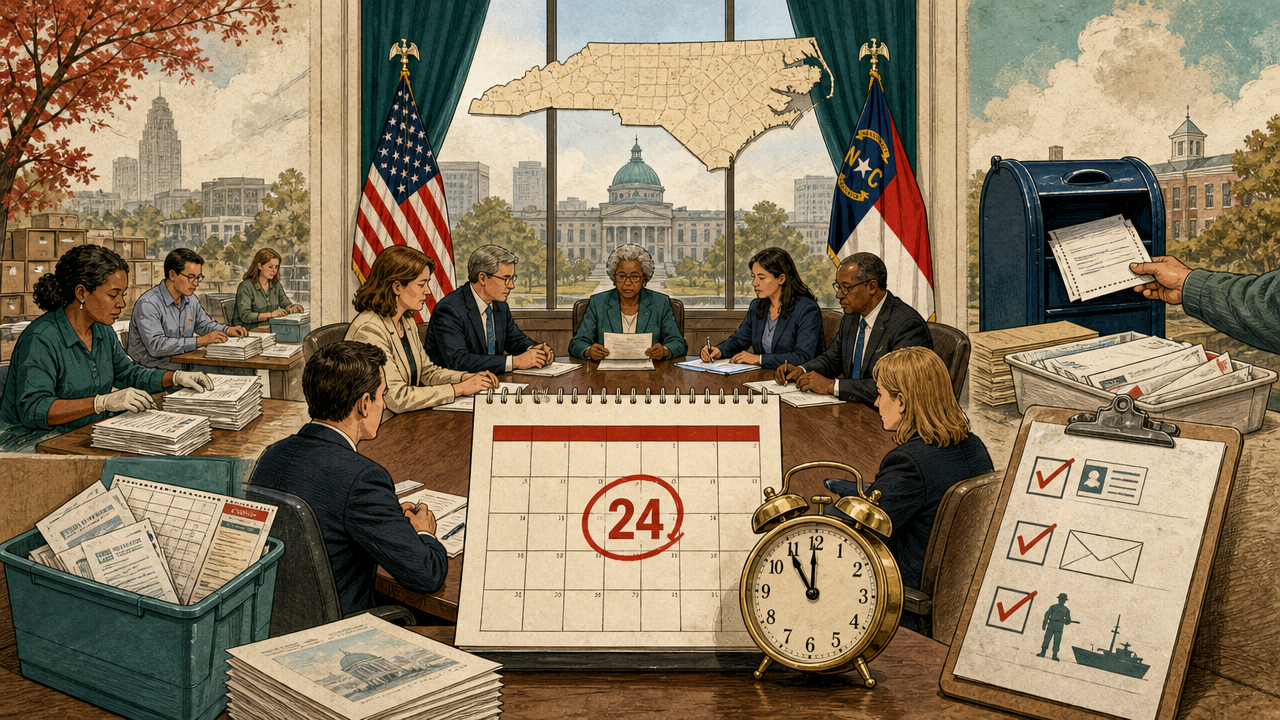
North Carolina’s State Board of Elections will meet in Raleigh at 11 a.m. on November 24 to canvass the November 3 general election. The board previously said no statewide contest appeared close enough to qualify for a recount.
What it means for voters
This is a public state-level check before statewide results are made final. For voters, it is a reminder that election-night totals are not the official finish because lawful ballots and required audits still have to be handled. The direct household effect is not financial, but the result determines who holds offices that make state and federal decisions about schools, healthcare, taxes, roads, and workplace rules.
Save stories & follow topics · Open this story
Get the context & analysis
North Carolina’s State Board of Elections will meet in Raleigh at 11 a.m. on November 24 to canvass the November 3 general election. The board previously said no statewide contest appeared close enough to qualify for a recount. County boards completed their canvass stage earlier, including review of eligible provisional, cured absentee, and qualifying military and overseas ballots.
What to watch
Watch the North Carolina State Board’s November 24, 2026 meeting agenda, canvass action, and any post-canvass certificate or audit report.
Context from earlier events
The State Board said on November 13 that no statewide contest appeared close enough to qualify for a recount, while eligible recounts in other contests could follow separate county or state procedures.