Listen to this story
Utilities; electricity bills; Congress; jobs; economic life Nationwide, with direct relevance in fast-growing data-center regions
Senate bill meant to keep data-center grid costs off other customers falls short
Proposed: The Senate bill failed a procedural vote on September 30, 2026. It did not become federal law. Verify status
What happened
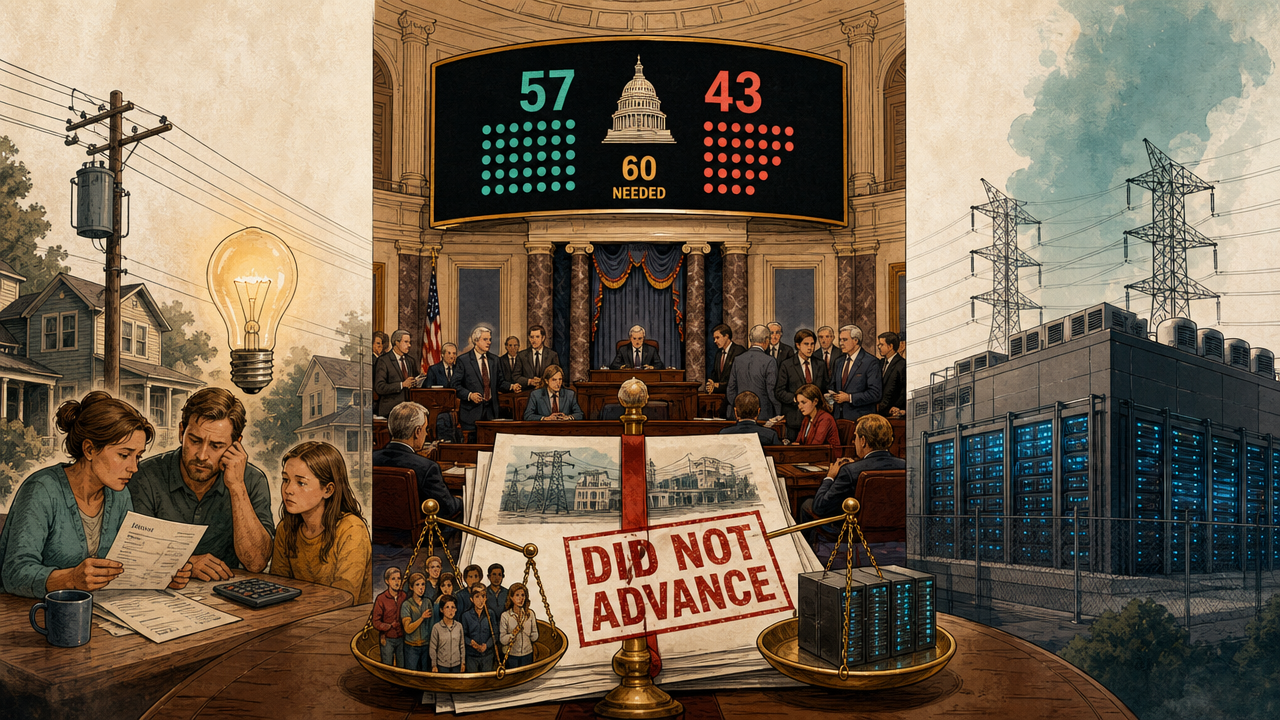
The Senate voted 57-43 on a bill that needed 60 votes to move forward, so it did not advance. The bill would have required utility regulators to consider a federal standard for charging very large electricity users, including data centers, for the grid upgrades needed to serve them.
What it means for voters
Data centers can bring construction work and local tax revenue, but they can also require new power plants, transmission lines, and water systems. The basic household question is who pays for that buildout: the big customer, all utility customers through rates, taxpayers, or some mix. Nothing changes on a power bill because of this failed vote. Utility commissions and state legislatures still make many of the decisions that affect local rates.
Find my representatives · Look up elected officials for your address.
Save stories & follow topics · Open this story
Get the context & analysis
The Senate voted 57-43 on a bill that needed 60 votes to move forward, so it did not advance. The bill would have required utility regulators to consider a federal standard for charging very large electricity users, including data centers, for the grid upgrades needed to serve them. The House had passed the measure 417-3, but the Senate vote means it is not becoming law.
What to watch
Congress is largely out of session for October, so watch whether a similar bill returns after the election. Closer to home, watch state public-utility commission cases, where proposed data-center contracts and grid-upgrade costs may be reviewed.
Context from earlier events
On October 5, the prior scan reported a conditional federal loan offer for nuclear upgrades in the PJM region. That was about adding or preserving supply; this Senate fight was about how to assign the cost of demand-driven grid upgrades.