The daily civic brief
U.S. civic and pocketbook scan — October 7, 2026
Today’s scan puts consumer protections, utility bills, healthcare billing, and voting administration ahead of campaign noise. The biggest concrete actions are a court order requiring the consumer-protection bureau to seek operating money, a Senate bill on data-center power costs that stalled, and ongoing federal and state fights over energy and election rules. Some developments change rules now; others are lawsuits or arguments that still need a court or agency decision.
Estimated 4-minute catch-up · 6 stories
Today's audio briefing
Today's spoken briefing
Hear the latest national briefing and what to watch next for every headline. A restrained instrumental bed plays in the web player.
Read the audio transcript
Consumer debt; credit; banking; accountability; federal courts Nationwide; case brought by 22 state attorneys general
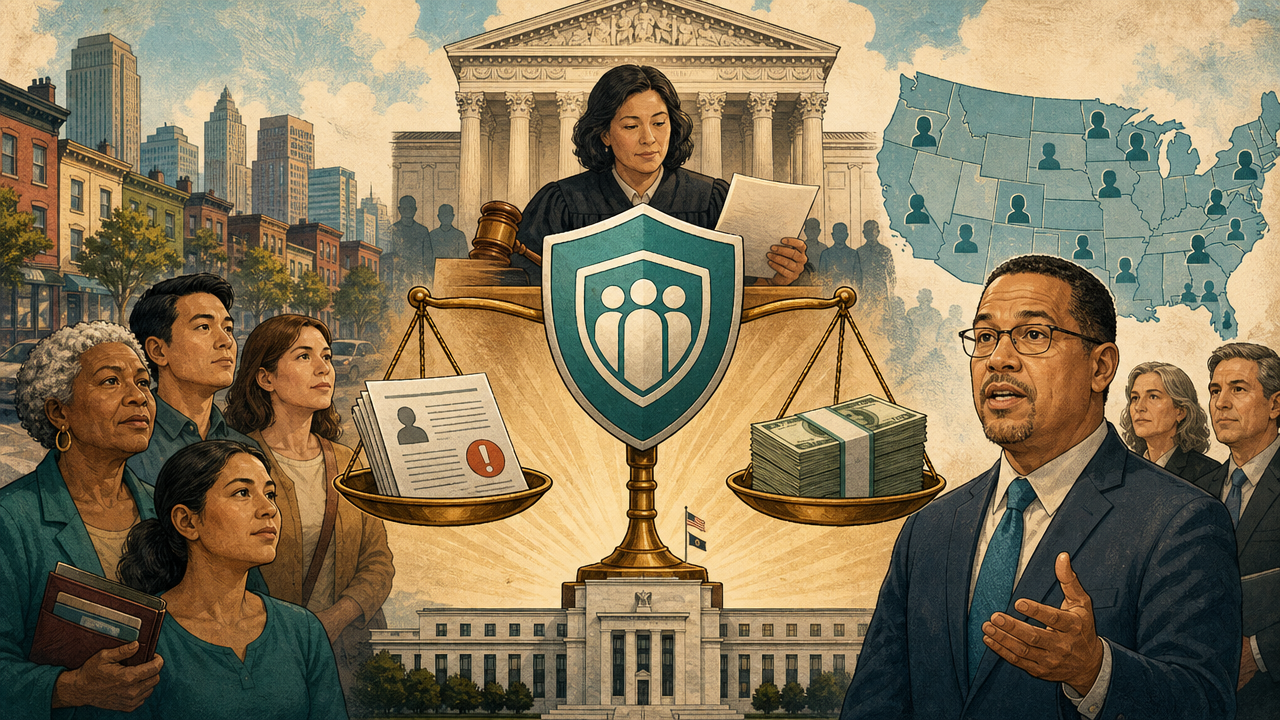
Federal court says the consumer watchdog must seek funding, keeping its national complaint and enforcement work alive
Challenged in court: A federal court granted summary judgment to the state coalition and held that CFPB leadership must request necessary funding. Further litigation or an appeal could still affect the result. Verify status
What happened
A federal court ruled that the Consumer Financial Protection Bureau must request the funding it needs from the Federal Reserve rather than remain unfunded. Minnesota Attorney General Keith Ellison said the ruling resolves a lawsuit filed by a coalition of 22 attorneys general after the bureau’s prior leadership declined to request operating money.
What it means for voters
This matters when a household has a problem with a credit card, mortgage, car loan, bank account, payday lender, credit report, or debt collector. The CFPB’s complaint system, supervision, and enforcement work are national tools, while state attorneys general can also enforce many consumer laws. The popular medical-debt lead was worth checking: protections around medical debt have been rolled back, but this court ruling is about whether the agency itself must remain able to operate. That could affect how quickly consumers can get help, though it does not by itself erase medical bills or change anyone’s credit file today.
Save stories & follow topics · Link to this story
Get the context & analysis
A federal court ruled that the Consumer Financial Protection Bureau must request the funding it needs from the Federal Reserve rather than remain unfunded. Minnesota Attorney General Keith Ellison said the ruling resolves a lawsuit filed by a coalition of 22 attorneys general after the bureau’s prior leadership declined to request operating money. The order concerns whether the agency can keep carrying out duties Congress gave it; it does not restore every consumer rule the bureau has previously withdrawn.
What to watch
Watch for the CFPB’s funding request, any appeal, and whether the agency resumes or expands consumer-enforcement work. Also watch Congress, which can change the agency’s powers or pass laws affecting medical debt and credit reporting.
Context from earlier events
The CFPB was created after the 2008 financial crisis to oversee consumer financial products. In 2026, disputes over its funding and the rollback of some consumer protections have made the agency’s basic ability to function a major issue.
Check sources (2)
Utilities; electricity bills; Congress; jobs; economic life Nationwide, with direct relevance in fast-growing data-center regions
Senate bill meant to keep data-center grid costs off other customers falls short
Proposed: The Senate bill failed a procedural vote on September 30, 2026. It did not become federal law. Verify status
What happened
The Senate voted 57-43 on a bill that needed 60 votes to move forward, so it did not advance. The bill would have required utility regulators to consider a federal standard for charging very large electricity users, including data centers, for the grid upgrades needed to serve them.
What it means for voters
Data centers can bring construction work and local tax revenue, but they can also require new power plants, transmission lines, and water systems. The basic household question is who pays for that buildout: the big customer, all utility customers through rates, taxpayers, or some mix. Nothing changes on a power bill because of this failed vote. Utility commissions and state legislatures still make many of the decisions that affect local rates.
Save stories & follow topics · Link to this story
Get the context & analysis
The Senate voted 57-43 on a bill that needed 60 votes to move forward, so it did not advance. The bill would have required utility regulators to consider a federal standard for charging very large electricity users, including data centers, for the grid upgrades needed to serve them. The House had passed the measure 417-3, but the Senate vote means it is not becoming law.
What to watch
Congress is largely out of session for October, so watch whether a similar bill returns after the election. Closer to home, watch state public-utility commission cases, where proposed data-center contracts and grid-upgrade costs may be reviewed.
Context from earlier events
On October 5, the prior scan reported a conditional federal loan offer for nuclear upgrades in the PJM region. That was about adding or preserving supply; this Senate fight was about how to assign the cost of demand-driven grid upgrades.
Check sources (1)
Primary and independent sources
Healthcare costs; insurance; surprise bills; federal administration Nationwide
Federal health officials seek fixes for the system that resolves many surprise-billing disputes
In effect: The federal independent-dispute-resolution process has operated since 2022 under the No Surprises Act. CMS says officials are now considering changes to improve its cost and administration. Verify status
What happened
Federal health, labor, and treasury officials met with the organizations that decide out-of-network payment disputes under the No Surprises Act. CMS says the program has received and closed more than 7 million disputes since April 2022, but case volume and administrative costs have grown faster than expected.
What it means for voters
The No Surprises Act generally protects insured patients from many surprise bills after emergency care or certain out-of-network treatment. But the dispute process behind the scenes can affect what insurers and providers pay each other, and those costs can eventually influence premiums, provider networks, and availability of care. No new patient charge or benefit was announced at this meeting.
Save stories & follow topics · Link to this story
Get the context & analysis
Federal health, labor, and treasury officials met with the organizations that decide out-of-network payment disputes under the No Surprises Act. CMS says the program has received and closed more than 7 million disputes since April 2022, but case volume and administrative costs have grown faster than expected. The agencies are considering operational and regulatory changes, including a planned late-2026 replacement for the current online portal.
What to watch
Watch for proposed rules or operational changes to the federal dispute process, and for the late-2026 launch of the new IDR Gateway. Patients should still review bills, explanations of benefits, and appeal options when they receive an unexpected charge.
Context from earlier events
The No Surprises Act created a process in which independent reviewers can decide certain payment fights between insurers and out-of-network providers, instead of sending the patient the full disputed bill.
Federal courts; environmental review; military; territorial government; accountability Guam, with consequences for federal environmental review nationwide
Supreme Court is set to hear Guam case over when communities can challenge federal hazardous-waste plans
Challenged in court: The Supreme Court set the case for argument on October 7, 2026. The Court has not decided whether the Air Force’s permit-application step can be reviewed in court. Verify status
What happened
The Supreme Court scheduled arguments for October 7 in Department of the Air Force v. Prutehi Guåhan.
What it means for voters
The immediate issue is about hazardous-waste disposal and community participation in Guam. The wider question is whether people, tribal or territorial communities, states, and local groups can challenge a federal agency’s environmental planning early enough to affect the plan — or only after more decisions are locked in. That can shape cleanup risks, local land use, and legal costs, but it does not create a new nationwide rule today.
Save stories & follow topics · Link to this story
Get the context & analysis
The Supreme Court scheduled arguments for October 7 in Department of the Air Force v. Prutehi Guåhan. The case concerns whether a community group can go to court when the Air Force submits a permit-renewal application for hazardous munitions disposal in Guam, or whether residents must wait for a later, final permit decision. The Court has not issued a decision.
What to watch
Watch for the argument transcript and a decision later in the Court term. The ruling could define when an agency action is final enough to be challenged in federal court.
Context from earlier events
The dispute grew from the Air Force’s permit-renewal process for open burning or detonation of hazardous munitions in Guam. The Ninth Circuit allowed the challenge to proceed, and the federal government appealed.
Check sources (3)
Voting; election administration; state and local government; accountability Maricopa County, Arizona
Arizona says mistakenly early mailed ballots are valid, but the error puts election operations under a microscope
In effect: Maricopa County says the mailed ballots are valid and recipients may complete and return them normally. This is an administrative error, not a newly enacted voting rule. Verify status
What happened
Maricopa County says 3,126 early ballots were mailed about six days ahead of schedule because of a vendor error. County officials say the ballots went to the correct voters, remain valid, and can be returned normally.
What it means for voters
This is a local administration problem with national lessons because Arizona is a major battleground state and mail voting is used widely. For the people who received these ballots, the county says there is no need to wait or obtain a replacement just because they arrived early. Election rules themselves are mostly run by states and counties, while federal law sets some nationwide voting protections.
Save stories & follow topics · Link to this story
Get the context & analysis
Maricopa County says 3,126 early ballots were mailed about six days ahead of schedule because of a vendor error. County officials say the ballots went to the correct voters, remain valid, and can be returned normally. The company involved said the county was not at fault and called it a human error.
What to watch
Watch for the county’s follow-up on how the vendor error happened and whether any additional ballots were affected. Voters should use official county election information, not social-media claims, for return deadlines and ballot tracking.
Context from earlier events
The Supreme Court recently rejected the administration’s attempt to restrict mail ballots for the 2026 midterms, leaving state mail-voting systems in place. That is separate from this vendor mailing mistake.
Check sources (2)
Utilities; electricity; public health; federal courts; state government Nationwide; lawsuit filed in the U.S. Court of Appeals for the D.C. Circuit
States and cities challenge EPA repeal of power-plant climate rule, with ratepayer and health claims headed to court
Challenged in court: A coalition of states and cities has asked the U.S. Court of Appeals for the D.C. Circuit to overturn EPA’s repeal of the prior power-plant emissions rule. Verify status
What happened
Twenty-one states, the District of Columbia, and several cities sued to challenge the Environmental Protection Agency’s repeal of a prior rule limiting greenhouse-gas emissions from coal- and gas-fired power plants. The EPA has said the repeal would reduce industry costs and let utilities make decisions based on local ratepayer costs.
What it means for voters
This fight can touch household budgets in competing ways. Supporters of the repeal say it could avoid compliance costs and help keep existing power plants available. Opponents say more pollution can bring health costs and worsen costly disasters, while delaying investment in cleaner power. No customer’s electricity rate changes automatically because the lawsuit was filed; rates are set through utility and state-regulatory processes that vary by place.
Save stories & follow topics · Link to this story
Get the context & analysis
Twenty-one states, the District of Columbia, and several cities sued to challenge the Environmental Protection Agency’s repeal of a prior rule limiting greenhouse-gas emissions from coal- and gas-fired power plants. The EPA has said the repeal would reduce industry costs and let utilities make decisions based on local ratepayer costs. The states and cities argue the repeal is unlawful and would create large health and climate costs. A court, not the lawsuit filing, will decide who is right.
What to watch
Watch for the D.C. Circuit’s schedule and for EPA’s separate proposal that could limit future federal regulation of power-plant greenhouse gases. Also watch local utility cases, where any effect on bills is more likely to be decided.
Context from earlier events
Federal power-plant climate rules have changed across administrations and have repeatedly been challenged in court. This case follows EPA’s recent repeal of the Biden-era rule.
Check sources (1)
Primary and independent sources
You're caught up on this briefing. Choose topics and save stories to return on your own schedule.
How this briefing was made
We used official records to verify government actions and independent reporting to add context. We also checked popular political videos on YouTube for topic leads. Popularity helped us decide what to investigate, but it was not treated as proof or public opinion. Every included claim still had to be checked against the linked sources.