The daily civic brief
U.S. Civic & Pocketbook Scan — September 30, 2026
Today’s biggest practical federal moves touch public spending, homelessness aid, student debt, Medicare choices, online access to government services, and election security. A recurring theme is that Washington is setting national rules and money flows, but states, local agencies, insurers, schools, and service providers will decide how much people feel the changes day to day.
Today's audio briefing
Today's spoken briefing
Hear the latest national briefing and what to watch next for every headline. A restrained instrumental bed plays in the web player.
Taxes; federal spending; housing; schools; accountability Nationwide
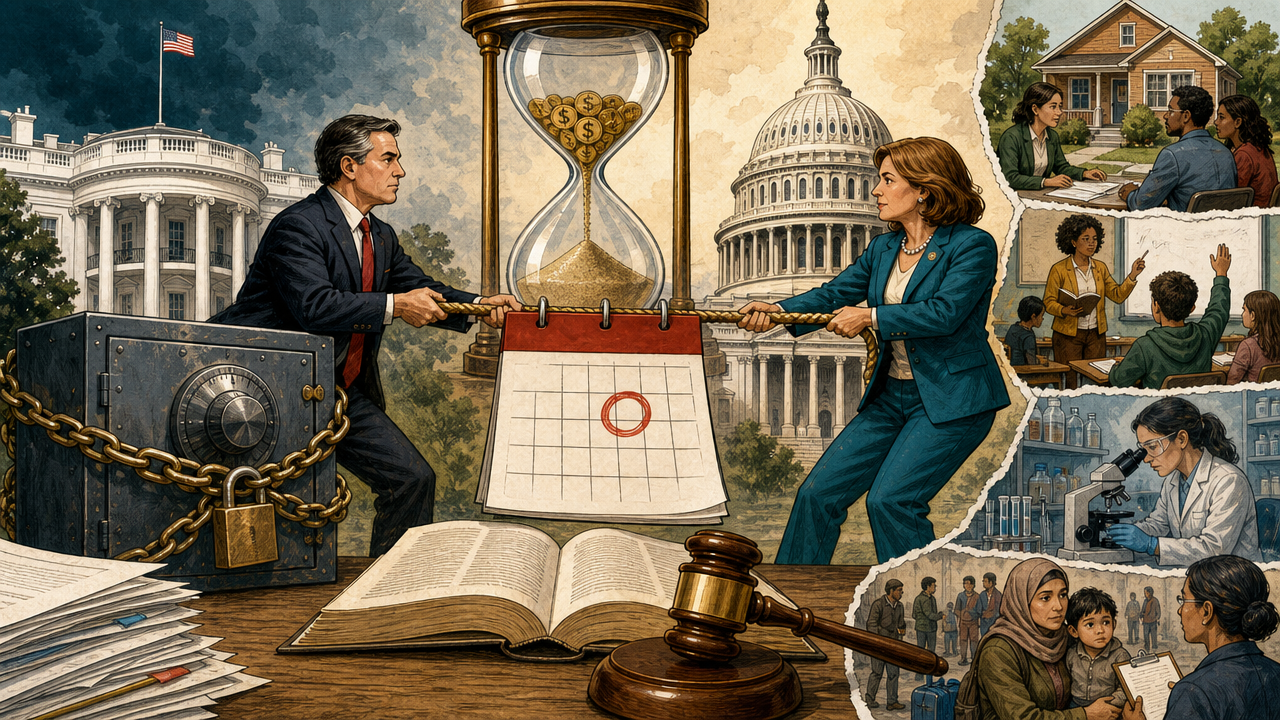
Budget watchdog says the White House cannot hold back $810 million past today without Congress acting
What happened
The Government Accountability Office said the president’s September 25 request to cancel about $810 million in already-approved spending does not allow the administration to keep the money from being used after the fiscal year ends on September 30. The White House asked Congress to rescind the funds, including money connected to housing counseling, education, health research, and immigrant and refugee services. GAO’s finding is an interpretation of the 1974 budget law; it does not itself release money or settle every possible court fight.
What it means for voters
This is about who gets the final say over tax dollars already approved by Congress. If Congress does not pass the cancellations, agencies generally must make eligible funds available rather than let them expire because of a late request. That could matter to organizations waiting on grants for housing counseling, student services, health research, and local assistance. Congress controls spending through laws; the White House carries those laws out.
What to watch
Watch whether Congress takes up and passes a rescissions bill, and whether agencies publicly say how they will make the affected funds available after September 30.
Context from earlier events
On September 25, the White House formally sent Congress the proposed rescissions package. GAO’s September 29 decision is the first major official response on whether that request can pause the money past the end of the fiscal year.
How this briefing was made
We used official records to verify government actions and independent reporting to add context. We also checked popular political videos on YouTube for topic leads. Popularity helped us decide what to investigate, but it was not treated as proof or public opinion. Every included claim still had to be checked against the linked sources.