The daily civic brief
U.S. Civic & Pocketbook Scan — September 28, 2026
Today’s biggest practical stories are about health coverage costs, rules around public benefits, worker pay, disability services, and voting by mail. Several are not final policy outcomes yet: courts, state regulators, and federal agencies still control what happens next.
Today's audio briefing
Today's spoken briefing
Hear the latest national briefing and what to watch next for every headline. A restrained instrumental bed plays in the web player.
Healthcare costs; insurance; state regulation; federal ACA policy Pennsylvania, with national relevance for ACA marketplace costs
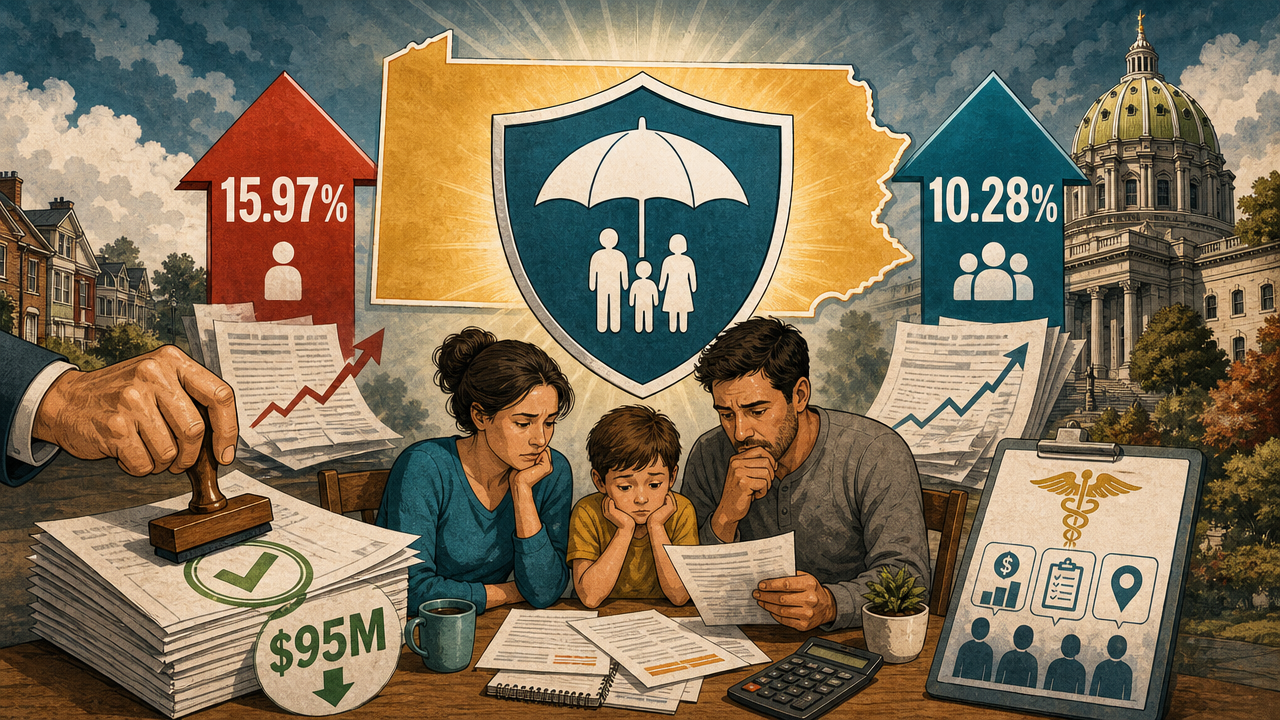
Pennsylvania approves 2027 ACA premium increases, a warning sign for households buying their own coverage
What happened
Pennsylvania’s insurance department approved average 2027 premium increases of 15.97% for people who buy coverage on their own and 10.28% for small employers. The department said it rejected $95 million in rate increases that it found were not justified. These are sticker-price changes for plans sold in Pennsylvania; what a particular household pays will still depend on income, tax credits, plan choice, and location.
What it means for voters
This is a state decision, but it lands in a national fight over Affordable Care Act affordability. For Pennsylvania residents who do not get insurance through a job, higher premiums can mean tighter monthly budgets or a need to switch plans during enrollment. Small businesses may also face higher benefit costs. Congress controls federal premium tax credits, while state insurance departments review insurer rates, so neither level of government alone determines the final bill a family sees.
What to watch
Watch for 2027 open-enrollment details, plan comparisons, and any congressional action affecting federal ACA tax credits before coverage takes effect on January 1, 2027.
Context from earlier events
Pennsylvania approved average individual-market increases of 21.5% for 2026, making the newly approved 15.97% average increase lower but still substantial.
Disability rights; healthcare; long-term care; federal courts; accountability Nationwide, with direct effects on federal health and social-service rules
Federal court removes parts of a 2024 disability-services rule about community integration
What happened
A federal judge in Texas approved an agreement that removes community-integration language from parts of the 2024 HHS rule implementing Section 504 of the Rehabilitation Act. The removed provisions had spelled out requirements around serving people with disabilities in the most integrated setting appropriate to their needs. The underlying Section 504 law, the Americans with Disabilities Act, and the Supreme Court’s Olmstead decision remain in force.
What it means for voters
For people who rely on home- and community-based services, the change removes federal regulatory language that had made the community-living expectation clearer. It does not automatically change anyone’s Medicaid services or force someone into an institution. Still, families, state agencies, and advocates may face more uncertainty when they argue over what services must be available and where care should be provided. Federal courts approved the agreement; HHS writes these regulations; states administer many Medicaid long-term-care services.
What to watch
Watch whether HHS issues replacement guidance, whether states change service policies, and whether new lawsuits test the continuing protections under Section 504, the ADA, and Olmstead.
Context from earlier events
The 2024 HHS rule had described community integration as part of the department’s Section 504 regulations. The court order removed specific regulatory provisions, rather than overturning the statutes themselves.
Primary and independent sources
- American Council of the Blind Final Ruling Issued in Texas v. Kennedy
- National Council on Independent Living Statement on Texas v. Kennedy Order Rescinding Community Integration Provisions of Section 504 Regulations
- Federal Register Nondiscrimination on the Basis of Disability in Programs or Activities Receiving Federal Financial Assistance
Voting; mail ballots; federal courts; independent agencies Nationwide
Postal Service halts work on a system tied to federal mail-ballot restrictions
What happened
The U.S. Postal Service says it stopped work on a computer system tied to President Trump’s attempt to restrict mail voting after the Supreme Court rejected the administration’s request to put the order into effect for the 2026 election. USPS said its employees will not enforce the new federal election-mail rules this year and that election mail will continue under established procedures.
What it means for voters
For voters who use mail ballots, this means the proposed federal eligibility system and uniform-envelope requirements will not be used in the 2026 federal election. State and local election officials still set many of the practical rules, including ballot deadlines and signature procedures. USPS still urges voters to mail ballots early, and mail-ballot voters should follow their local election office’s instructions rather than assume a postmark alone will save a late ballot.
What to watch
Watch the underlying court case, any later attempt to revive the federal restrictions, and local ballot-return deadlines in each state.
Context from earlier events
The Supreme Court rejected the administration’s request to enforce the order ahead of the midterms. USPS then said it would not enforce the related requirements for this election.
Benefits; immigration; healthcare; food assistance; housing; federal courts Nationwide
New federal public-charge rule is now in effect as states challenge it in court
What happened
A Department of Homeland Security rule that took effect September 18 rescinded the 2022 public-charge regulation. The change gives immigration officials broader discretion when deciding whether a person seeking admission or a green card is likely to become dependent on government support. A coalition of states and cities has sued, arguing that the rule could discourage eligible immigrants from using food, health, and housing assistance.
What it means for voters
The rule does not cancel Medicaid, SNAP, CHIP, or housing aid. But people applying for immigration status may worry that accepting benefits could hurt their case, even when they or a family member may be eligible. That fear can affect whether families seek medical care, food help, or rental assistance. DHS controls the immigration rule; federal courts will decide whether it stays in place; states and local agencies run or help deliver many public-benefit programs.
What to watch
Watch for a court decision on whether the rule is paused, plus implementation guidance from USCIS and local benefit agencies.
Context from earlier events
The 2022 rule had set clearer limits on what benefits immigration officials could weigh. The new rule rescinds that framework rather than replacing it with another detailed regulation.
Primary and independent sources
Jobs; wages; immigration; high-skilled work; executive power Nationwide
White House extends H-1B entry restriction tied to a $100,000 payment
What happened
President Trump extended for another year a restriction on entry for certain H-1B specialty workers outside the United States unless the sponsoring employer makes a $100,000 payment. The proclamation applies to workers seeking entry to carry out an H-1B petition and includes a national-interest exception that the Homeland Security secretary can grant. It does not say that every person already working in the United States on an H-1B visa must pay the fee.
What it means for voters
Employers that depend on new H-1B hires may face much higher costs or delays, which can affect hiring plans in fields such as technology, engineering, healthcare, and higher education. Supporters say the restriction protects job opportunities for U.S. workers. Critics and affected employers may argue that it makes it harder to fill specialized roles. The White House imposed the entry restriction, while DHS, the State Department, and Labor Department are responsible for carrying it out.
What to watch
Watch for agency instructions on exceptions and compliance, court challenges, and the joint agency recommendation due after the next H-1B lottery on whether to extend the policy again.
Context from earlier events
The proclamation extends a similar 2025 restriction through September 2027 and follows related DHS and Labor Department rulemaking on the H-1B program.
Paychecks; farm labor; food supply; federal courts; labor regulation Nationwide, especially agricultural states
Court presses Labor Department for a faster replacement rule on farmworker wage floors
What happened
A federal judge said the Labor Department could not wait nine to twelve more months to replace a farmworker-wage formula the court had already found unlawful. The case concerns wage floors for many H-2A temporary agricultural jobs. The parties were ordered to file a status report by September 28 on a quicker timeline and whether the current rule should be formally set aside before a replacement takes effect; a court conference is scheduled for October 1.
What it means for voters
These wage floors affect H-2A workers and U.S. farmworkers doing corresponding jobs. A higher lawful wage floor can raise workers’ pay, while employers may face higher labor costs. The court has not set the replacement wages yet, and there is no direct evidence that today’s court deadline will change grocery prices. Still, farm labor costs are one factor in the broader food system.
What to watch
Watch for the parties’ September 28 filing and the October 1 court conference. The key next question is whether the judge requires an interim wage method before Labor completes a longer final rule.
Context from earlier events
The court found in August that the Labor Department’s interim wage methodology was arbitrary, procedurally defective, and inconsistent with the agency’s duty to protect against adverse effects on U.S. workers’ wages.
Primary and independent sources
- U.S. District Court for the Eastern District of California via Justia United Farm Workers et al. v. United States Department of Labor et al. — Order
- U.S. Department of Labor OFLC Announces Updates to Implementation of the H-2A Adverse Effect Wage Rate Methodology for Non-Range Occupations Interim Final Rule; Compliance with District Court Order
- Federal Register Labor Certification Process for the Temporary Employment of Foreign Workers in Agriculture in the United States: Adverse Effect Wage Rate Updates for Non-Range Occupations
How this briefing was made
We used official records to verify government actions and independent reporting to add context. We also checked popular political videos on YouTube for topic leads. Popularity helped us decide what to investigate, but it was not treated as proof or public opinion. Every included claim still had to be checked against the linked sources.