The daily civic brief
U.S. Civic & Pocketbook Scan — September 26, 2026
Today’s biggest verified developments touch health coverage, job benefits, homebuying rules, drinking-water infrastructure, and the rules for a U.S. House election. The immediate changes are limited in several of these stories: some are new data or voluntary programs, while one court order directly settles which congressional map Missouri will use this fall. The practical question for households is whether these moves change access, costs, or representation now—or set up decisions that could do so later.
Today's audio briefing
Today's spoken briefing
Hear the latest national briefing and what to watch next for every headline. A restrained instrumental bed plays in the web player.
Voting; redistricting; federal courts; representation Missouri; national implications for U.S. House representation
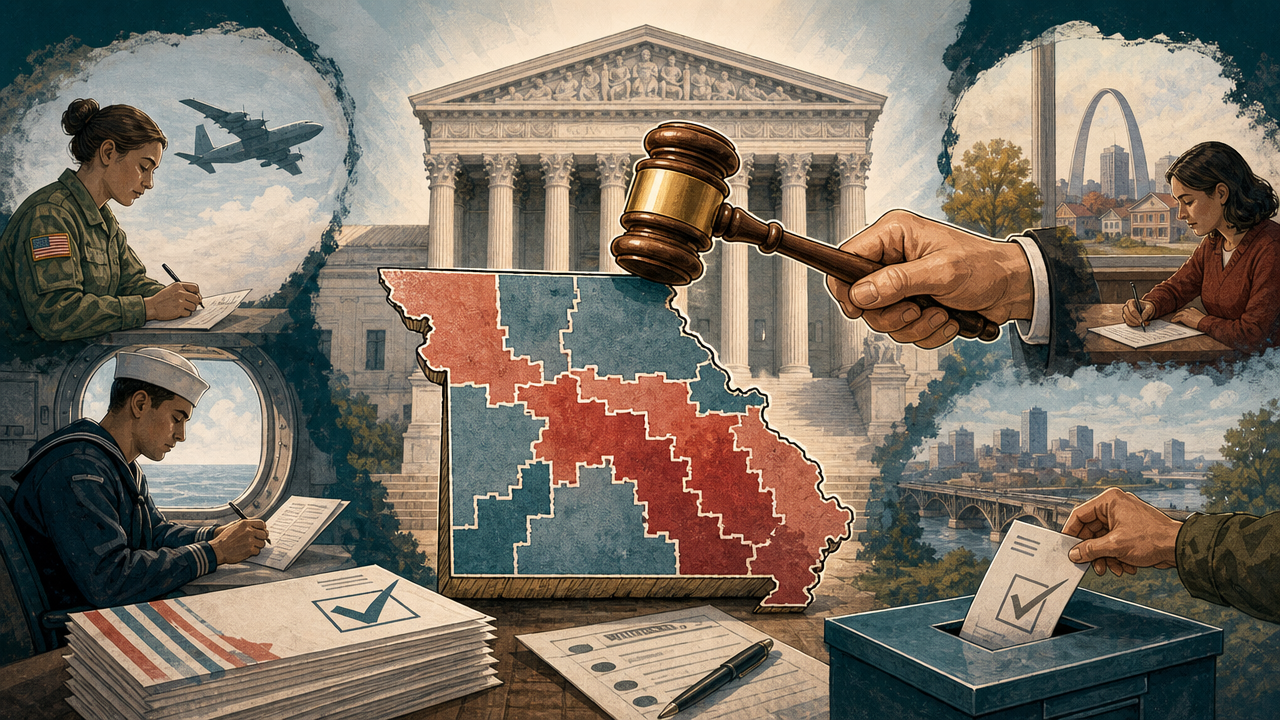
Supreme Court keeps Missouri’s 2022 congressional map in place for the November election
What happened
The U.S. Supreme Court on September 25 blocked lower-court orders that would have required Missouri to use a newer 2025 congressional map in this year’s general election. The Court said the 2022 map remains in use while the legal fight continues. It noted that absentee, military, and overseas voting had already begun and ballots using the older map had already been printed and mailed.
What it means for voters
This decides which district lines Missouri voters will use for their U.S. House races this November. District lines affect which communities vote together and who can represent them in Congress. The decision does not settle whether the 2025 map is legal in the long run; it settles the election rule for this cycle, mainly to avoid changing ballots after voting has started. Federal courts control the constitutional dispute, while Missouri election officials run the election under the map now in effect.
What to watch
Watch for the next rulings in the underlying map case after the election. The Court’s order is about which map applies now, not a final answer on the broader legal challenge.
Context from earlier events
On September 21, a federal appeals panel had backed the newer map. The Supreme Court’s September 25 order stayed that result after earlier emergency orders had already kept the 2022 map in place.
Healthcare costs; Medicaid; CHIP; federal-state government; accountability Nationwide; participating states
CMS and 37 states launch voluntary effort to measure Medicaid and CHIP by health results
What happened
The Centers for Medicare & Medicaid Services announced September 25 that 37 states are starting a voluntary partnership called Investing in Health Outcomes. The group says it will focus more on measures such as prevention, chronic-disease care, and behavioral health, and less on duplicative reporting paperwork. CMS says a review across 42 states found roughly 450 reporting requirements tied to about 260 different quality measures.
What it means for voters
Medicaid and CHIP serve millions of people with low or moderate incomes, including children, older adults, and people with disabilities. This does not change anyone’s eligibility, benefits, doctor network, or monthly bill today. But it could shape how federal and state officials judge managed-care plans and future payment policies, which can affect whether people get timely appointments and care for ongoing conditions. CMS runs the federal program rules; states administer Medicaid and CHIP day to day.
What to watch
Watch which states join beyond the first 37, what measures they adopt, and whether CMS connects the pledge to future payment rules or public performance reporting.
Context from earlier events
CMS said its May 2026 analysis found large overlap and variation in state Medicaid quality reporting, including different ways of measuring similar diabetes outcomes.
Paychecks; health insurance; paid leave; childcare; economic life Nationwide
New federal data show major gaps in job-based health coverage and paid leave
What happened
The Bureau of Labor Statistics released new March 2026 benefit data on September 25. Seventy-one percent of private-sector workers had access to employer medical benefits, but access was 47% among private-sector service workers. Eighty-one percent of private-sector workers had access to paid sick leave, compared with 59% of part-time workers. Among workers enrolled in single-coverage plans, private employers paid an average 80% of the premium and workers paid 20%.
What it means for voters
Benefits are part of what a job pays, even though they do not show up in the hourly wage. A worker without health coverage may face higher out-of-pocket medical bills, and a worker without paid leave may have to choose between a paycheck and staying home when sick or caring for family. These figures are national survey data, not a new federal rule. Employers, unions, and state and local laws often determine the details, while federal tax and labor policy shape the overall system.
What to watch
Watch for the full BLS tables and future state or federal proposals on paid leave, job-based insurance, and benefit protections for part-time and lower-wage workers.
Context from earlier events
The prior day’s federal work-schedule release found that many workers still have little control over their hours. The new benefits report shows another part of job quality: whether work comes with health coverage and time off.
Primary and independent sources
Housing; mortgage access; home repair costs; federal rulemaking Nationwide
FHA opens comment period on possible changes to home-condition rules for insured mortgages
What happened
The Federal Housing Administration is taking comments through November 6 on proposed updates to the property rules homes must meet for an FHA-insured mortgage. FHA says its standards have not had a broad update in more than two decades and may add costs or limit financing for first-time and lower-income buyers. The agency says the draft is not policy yet, so current FHA property rules still apply.
What it means for voters
FHA-backed loans are a common path to homeownership for buyers with smaller down payments or less established credit. Looser or clearer property rules could make more homes eligible and reduce repair delays before closing. But safety and condition standards also protect buyers and the federal mortgage-insurance fund from financing homes with serious problems. HUD and FHA control this federal loan-insurance policy; local building codes and inspections still control many separate housing rules.
What to watch
Watch public comments through November 6, 2026, and whether FHA issues a final policy with changes to repair, safety, manufactured-housing, water, or sewer requirements.
Context from earlier events
FHA’s current handbook says FHA-insured homes must meet property-acceptability rules intended to ensure that they are safe, sound, and secure.
Primary and independent sources
- U.S. Department of Housing and Urban Development FHA INFO Messages: Single Family Housing Industry News
- Orrick InfoBytes FHA seeks feedback on proposed overhaul of single-family minimum property requirements
- U.S. Department of Housing and Urban Development FHA Single Family Housing Policy Handbook 4000.1
Utilities; drinking water; tribal communities; federal spending Northeastern Montana; tribal and rural-water policy significance
Congress extends authorization for Fort Peck rural water work through 2028
What happened
President Trump signed H.R. 7250 on September 25, extending authorization for the Fort Peck Reservation Rural Water System. The law moves the project’s authorization deadline from 2026 to 2028. The water system serves the Fort Peck Indian Reservation and nearby rural communities in northeastern Montana.
What it means for voters
Reliable drinking water is a basic household utility, and unfinished water systems can mean higher costs, unreliable service, or delayed connections for families and businesses. This law does not itself guarantee every dollar needed to finish construction; it keeps the federal legal authority in place for two more years. Congress passed the extension, the president signed it, and federal agencies carry out the underlying water-infrastructure work alongside local and tribal partners.
What to watch
Watch future federal appropriations and construction updates. The extension gives the project time, but funding levels and project progress will decide how much gets built by 2028.
Context from earlier events
House testimony this year said the connected systems already provide drinking water to more than 18,000 residents in northeastern Montana, including people on the Fort Peck Indian Reservation, while work remained to be completed.
Primary and independent sources
Federal budget; public services; taxes; government operations Nationwide
Congress already passed a short-term federal funding law, avoiding an October 1 shutdown deadline
What happened
Congress approved a short-term funding measure in early August that keeps federal agencies funded into early December, according to the Associated Press. That means the federal fiscal year’s September 30 end does not currently create the usual immediate October 1 shutdown risk. The law postpones, rather than resolves, the larger fight over full-year federal spending.
What it means for voters
A shutdown can disrupt federal workers’ pay, customer service, loan processing, national parks, inspections, and some grant activity, though programs funded differently can operate under separate rules. Because the stopgap measure is already in place, households should not expect an immediate broad shutdown on October 1. But Congress still has to decide funding later this fall, and that debate can affect staffing and services people use.
What to watch
Watch for the exact early-December expiration date and whether Congress passes full-year spending bills or another short-term extension before then.
Context from earlier events
Congress usually acts close to the September 30 funding deadline. This year’s Senate action came unusually early, in August, before the final stretch of the midterm campaign season.
Primary and independent sources
How this briefing was made
We used official records to verify government actions and independent reporting to add context. We also checked popular political videos on YouTube for topic leads. Popularity helped us decide what to investigate, but it was not treated as proof or public opinion. Every included claim still had to be checked against the linked sources.