The daily civic brief
U.S. Civic & Pocketbook Scan — September 22, 2026
Today’s biggest practical threads are borrowing costs, fuel costs, access to public benefits, housing supply, and the rules that decide who represents people in Congress. Some of these are new actions; others are court fights or policy talks that could change daily life later, not today. The immediate pressure point for many households is the mix of higher gas prices and higher interest rates.
Today's audio briefing
Today's spoken briefing
Hear the latest national briefing and what to watch next for every headline. A restrained instrumental bed plays in the web player.
Economic life; interest rates, jobs, prices, mortgages, and credit cards Nationwide
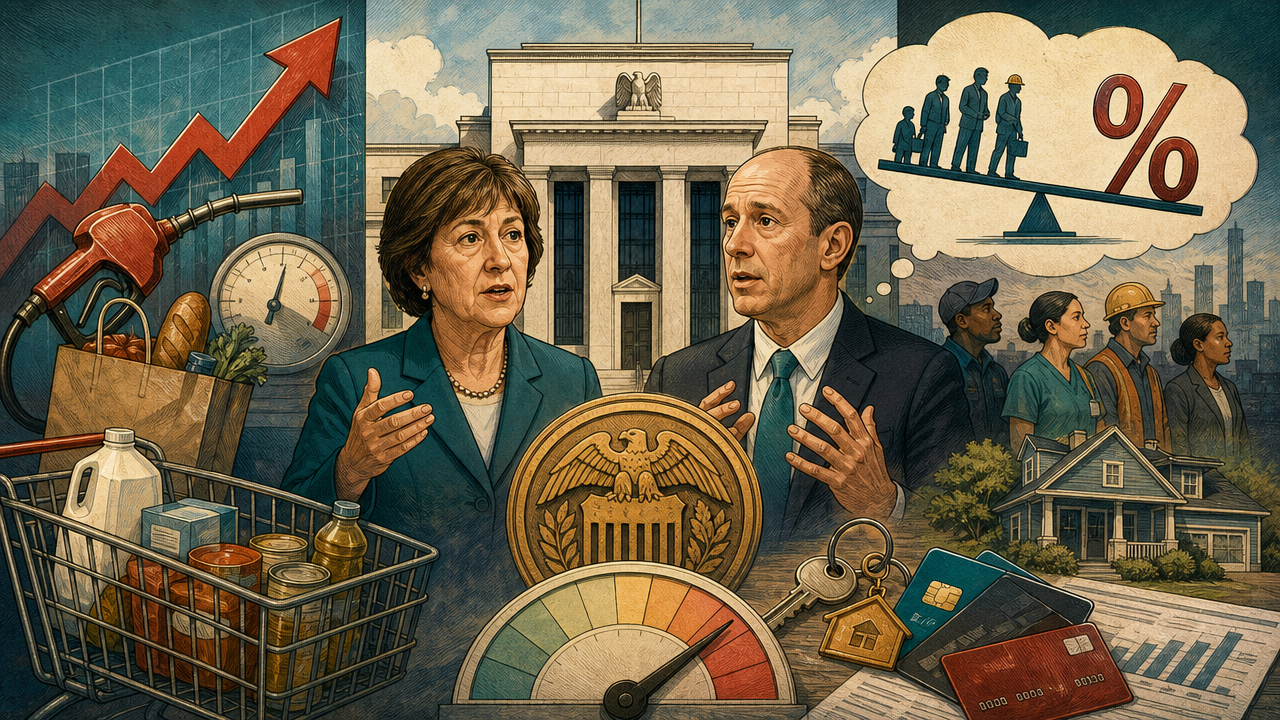
Fed officials say sticky inflation could keep borrowing costs high
What happened
A Federal Reserve official said September 21 that stubborn inflation and energy-price pressure were key reasons for last week’s quarter-point interest-rate increase. Boston Fed President Susan Collins said she expects rates may need to stay higher, while Chicago Fed President Austan Goolsbee warned that getting inflation down can involve a hard tradeoff with jobs. The Federal Reserve, not Congress or the White House, sets its benchmark interest-rate target.
What it means for voters
The Fed’s rate does not set your mortgage or credit-card rate directly, but it strongly affects what banks charge. Higher rates can make new mortgages, car loans, credit-card balances, and small-business borrowing more expensive. The tradeoff is that keeping demand cooler can help slow price increases, but it can also make hiring weaker. Nothing in this week’s comments changes a household bill by itself; the rate increase announced September 16 is already in effect.
What to watch
Watch for the Fed’s next rate meeting and for new inflation, jobs, and fuel-price data. The key question is whether price pressure eases enough for the Fed to pause rather than raise rates again.
Context from earlier events
On September 16, the Federal Reserve raised its target range to 3.75%–4%, its first increase in three years. The new comments explain why some Fed officials think inflation risks remain unresolved.
Economic life; gasoline, transportation, groceries, and inflation Nationwide
Gas prices are nearing $4.48 a gallon as oil markets stay volatile
What happened
The national average for regular gasoline had climbed to nearly $4.48 a gallon by September 21, according to AAA figures reported by the Associated Press. Oil fell somewhat Monday, but it remained far above its price earlier this summer as energy shipments through the Strait of Hormuz stayed disrupted by the Iran war. The White House and Congress influence military and energy policy, but neither sets the pump price day to day.
What it means for voters
A higher fill-up hits commuters, delivery drivers, and people who must drive for work first. It can also raise costs later for groceries, rides, travel, and other goods moved by truck. The recent dip in oil is a sign that prices can move both ways, but it is not proof that gasoline prices will quickly return to earlier levels.
What to watch
Watch weekly Energy Information Administration and AAA fuel data, oil shipments through the Strait of Hormuz, and any new federal action on fuel supply or emergency waivers.
Context from earlier events
The EPA and Energy Department issued a temporary fuel waiver effective September 1 to allow more gasoline supply in response to unusual supply conditions. That step may help at the margin, but global crude-oil supply and refinery conditions still matter heavily at the pump.
Voting; redistricting, federal courts, and representation Missouri; national implications for House representation
Missouri’s congressional-map fight heads toward another Supreme Court test
What happened
A federal appeals panel ruled September 21 that Missouri should use a newer congressional map for the November election, saying the state should not switch maps between its primary and general election. But the ruling does not change ballots right now because the U.S. Supreme Court has already blocked that map while the dispute continues. Missouri is currently using the 2022 districts for the November election.
What it means for voters
District lines decide which voters are grouped together and which candidates can realistically win a U.S. House seat. That affects who represents Missourians on federal taxes, health programs, food aid, housing, and spending bills. More than a million potential Missouri voters could be affected by the redraw, according to an AP estimate, but voters should follow instructions from local election officials because the map remains in court.
What to watch
The groups challenging the map say they will ask the U.S. Supreme Court to intervene again. Watch for a high-court order, which could settle which districts Missouri uses in November.
Context from earlier events
The Missouri Supreme Court earlier ruled that a referendum petition prevented the newer map from taking effect and ordered use of the 2022 map. The federal appeals ruling creates a direct conflict over the election rules.
Accountability; presidency, press freedom, and the courts Washington, D.C.; national accountability significance
CNN, MS NOW, and Politico sue after losing White House access
What happened
CNN, MS NOW, and Politico filed suit September 21 after the Trump administration barred them from White House access. The outlets argue that selectively excluding them because of coverage violates the First Amendment and denied them notice or a fair process. President Trump says the action targets what he calls “fake news,” not press freedom. A court, not the White House or the news outlets, will decide the legal claims.
What it means for voters
This is not a household-bill story, but it affects whether reporters can question officials in the building where federal decisions on taxes, healthcare, benefits, housing, and war are made. Access does not guarantee good reporting, and the government can set neutral security rules. The central issue is whether access can be taken away based on unfavorable coverage.
What to watch
Watch for the outlets’ request for fast court relief and for the administration’s legal response. A judge could decide whether the restrictions remain while the case moves forward.
Context from earlier events
The access dispute followed reports on September 19 that the three outlets’ reporters were denied entry after the president publicly criticized their coverage.
Primary and independent sources
Healthcare costs, food aid, housing assistance, immigration, and federal courts Nationwide; effects vary by immigrant status and state program
Court fights begin over a broader immigration rule tied to public benefits
What happened
A coalition of states and local governments has sued to block the Trump administration’s new public-charge policy. USCIS says its July final rule removed the 2022 limits on what immigration officers may consider when deciding whether some applicants are likely to become dependent on public support. The states argue the new approach goes too far and could count lawful use of benefits by a U.S.-citizen family member against a noncitizen applicant. Those are allegations in a pending lawsuit, not a court finding.
What it means for voters
A public-charge review can matter for certain people applying for a visa, entry, or a green card. It does not apply to every immigrant or every benefit program. Still, confusing rules can cause eligible families to avoid healthcare, nutrition help, or housing assistance out of fear. Households affected should use official agency information or qualified legal-aid help rather than rumors or social-media posts.
What to watch
Watch for a court request to pause the rule, DHS’s legal response, and clearer agency guidance on who is covered and how specific benefits will be weighed.
Context from earlier events
USCIS announced in July that it had rescinded the 2022 regulation and would return more discretion to officers deciding public-charge cases. The state lawsuit filed this month is the first major pushback described in today’s scan.
Primary and independent sources
- U.S. Citizenship and Immigration Services US Citizenship and Immigration Services Rescinds 2022 Public Charge Regulation
- California Department of Justice Attorney General Bonta Sues to Block Trump Administration’s New Public Charge Rule
- Oregon Department of Justice Public Charge Rule lawsuit tracker
Housing, rent, federal-local government, and public investment New York City; federal-local housing significance
Trump and New York’s mayor agree to keep talking about 12,000 affordable homes
What happened
President Trump and New York City Mayor Zohran Mamdani met September 21 and agreed to deepen talks over a proposed 12,000-home affordable-housing project above Sunnyside Yard in Queens, according to the mayor and reporting on the meeting. No federal funding commitment, permit, or construction approval was announced. The project would require continued work among city, state, transit, and likely federal actors.
What it means for voters
This is a local project, but it matters nationally because it shows the basic housing bottleneck: building a large number of lower-cost homes often requires land, transit coordination, financing, permits, and more than one level of government. If it moves forward, it could add homes in a high-rent city. For now, it does not change anyone’s rent or guarantee a unit.
What to watch
Watch for a formal funding plan, agreements with rail and transit authorities, environmental review steps, and details about who could qualify for the proposed apartments and at what rent levels.
Context from earlier events
Sunnyside Yard has been discussed for redevelopment for decades. The new development is the agreement by the president and mayor to keep working on it, not an approved construction deal.
How this briefing was made
We used official records to verify government actions and independent reporting to add context. We also checked popular political videos on YouTube for topic leads. Popularity helped us decide what to investigate, but it was not treated as proof or public opinion. Every included claim still had to be checked against the linked sources.