The daily civic brief
U.S. Civic News Scan — September 20, 2026
Today’s scan leads with changes that could touch jobs, public spending, health and housing services, and the ability of people to follow and take part in government. The clearest new pocketbook items are fresh state job data, federal homelessness-and-treatment funding, and a White House move that could reshape some government purchasing from Canada. A separate set of developments concerns access to voting help and independent coverage of the White House.
Today's audio briefing
Today's spoken briefing
Hear the latest national briefing and what to watch next for every headline. A restrained instrumental bed plays in the web player.
Jobs, paychecks, and state economic conditions Nationwide; state-level effects vary
New state jobs report shows hiring was limited in August
What happened
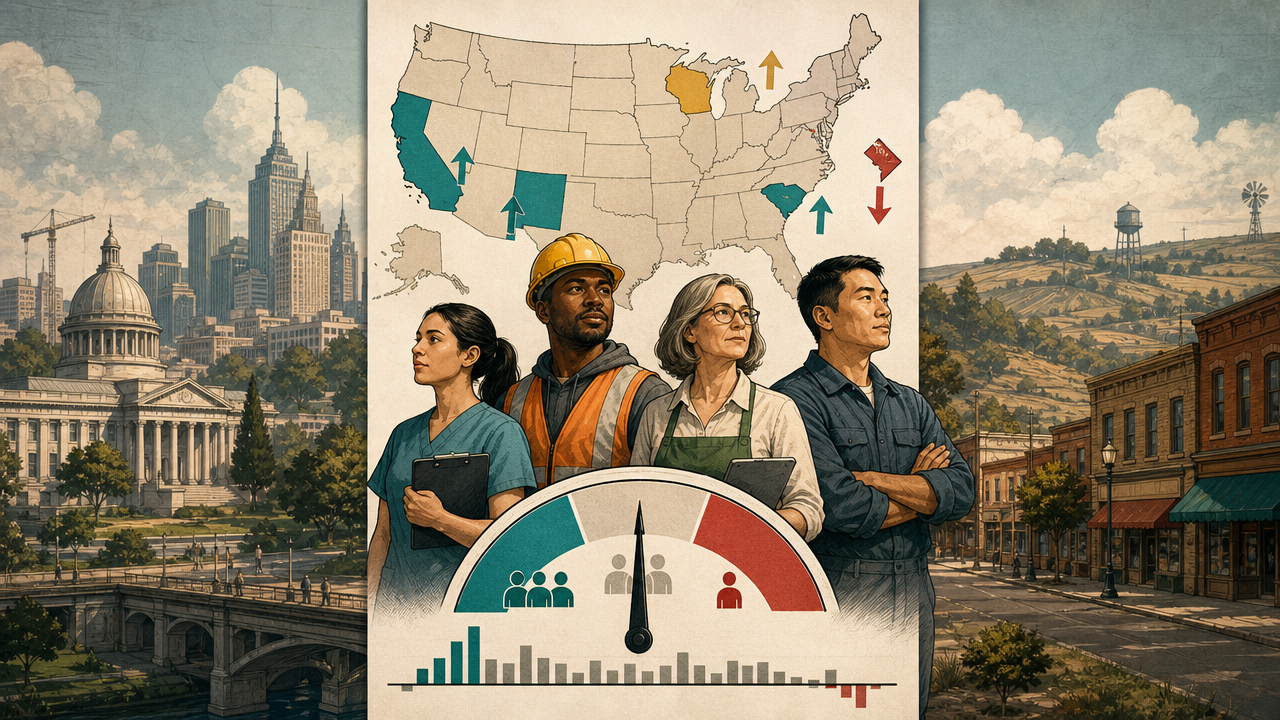
The Bureau of Labor Statistics reported September 18 that unemployment rates fell in eight states and the District of Columbia in August, while the national rate held at 4.1%. Payroll employment rose in just four states—California, Wisconsin, South Carolina, and New Mexico—and was essentially unchanged in the other states and Washington, D.C. Over the year, payroll employment rose in eight states and fell in D.C.
What it means for voters
This is a snapshot of where finding work may be getting easier or harder. It does not change unemployment-benefit rules or wages by itself, but it helps households, local officials, and employers see where job growth is concentrated. The biggest August job gains were in California, Wisconsin, South Carolina, and New Mexico; D.C. had the nation’s highest unemployment rate at 5.7%. BLS is part of the federal executive branch, while states run most unemployment-insurance systems.
What to watch
The next national jobs report, covering September, is scheduled for October 2. BLS will also release metro-area employment data on September 30.
Context from earlier events
No relevant context from earlier events was found.
Housing insecurity, behavioral health, and federal grants Nationwide; funds go to states and territories
HHS sends $42.3 million to states and territories for homelessness and addiction planning
What happened
The Department of Health and Human Services announced September 18 that it awarded $42.3 million in supplemental block-grant funding to states and territories for its “Treatment First” approach to homelessness and addiction. HHS says the money is aimed mainly at planning, training, data systems, partnerships, workforce capacity, and coordination—not direct treatment services. Another $2 million went to the national office and regional centers of the Addiction Technology Transfer Center Network.
What it means for voters
People experiencing homelessness, addiction, or serious mental illness may eventually see changes in how local systems connect shelter, health care, recovery support, and work services. But this announcement does not itself create a new benefit, guarantee housing, or pay for an individual’s treatment. States and local providers will decide how to use the grants within federal rules, so the practical effect will differ by place.
What to watch
HHS and state agencies should identify recipients, program plans, and any service changes. Watch for whether states use the money for outreach, treatment links, recovery supports, or administrative systems—and whether those investments lead to more available services.
Context from earlier events
No relevant context from earlier events was found.
Taxes, government contracts, trade, and prices Nationwide; federal contractors and suppliers are most directly affected
White House tells agencies to look for alternatives to Canadian products in federal purchasing
What happened
A September 16 White House memorandum directs federal purchasing officials to identify Canadian-origin items that may legally be removed or made unavailable in civilian federal procurement and to notify agencies about domestic alternatives. The administration says it is responding to Canadian policies it considers unfair to U.S. firms seeking government contracts in Canada. The memorandum does not itself list products that will be barred or set a date when purchasing rules will change.
What it means for voters
Federal contracts can affect jobs at suppliers, prices paid by taxpayers, and the goods bought for government agencies. Companies that sell Canadian-made products to the federal government could face lost business if agencies act on the directive; U.S. producers could gain opportunities. Whether the change raises procurement costs or improves competition will depend on the products, available U.S. alternatives, contract terms, and actions taken under existing law.
What to watch
Watch for instructions from the Office of Management and Budget, the U.S. Trade Representative, and the Federal Acquisition Regulatory Council identifying products or changing contract rules. Canada’s response could also affect U.S. firms that sell to Canadian governments.
Context from earlier events
The White House has already ordered import restrictions on specified Canadian alcoholic beverages, dairy products, and motor-vehicle-related products that are due to take effect September 29.
Primary and independent sources
Government accountability, press freedom, and the presidency Washington, D.C.; national accountability significance
CNN, MS NOW and Politico reporters say the White House revoked their access
What happened
Reporters from CNN, MS NOW, and Politico said they were denied entry to the White House on September 19 after President Trump said he was barring the outlets over coverage he called “fake news.” Associated Press reported that the reporters’ credentials were deactivated or taken when they arrived. The outlets said they were considering or pursuing steps to defend their First Amendment rights; no court has yet resolved the dispute.
What it means for voters
This does not change a household bill or benefit directly. But White House press access affects how independently journalists can question officials about taxes, health care, disasters, federal spending, and decisions that reach everyday life. The president controls access to the White House complex, but courts can review government actions that allegedly violate constitutional protections.
What to watch
Watch for a formal White House explanation, any lawsuit by the affected news organizations, and a court decision on whether the restrictions are lawful.
Context from earlier events
No relevant context from earlier events was found.
Primary and independent sources
Voting, civic participation, and election infrastructure Nationwide; strongest reported effects are in targeted states and House districts
Voter-engagement groups report funding and staffing gaps as voting begins
What happened
Several progressive voter-engagement and racial-justice groups told the Associated Press that they are facing funding shortfalls and staff reductions during the 2026 midterm campaign. The report says some groups are cutting back in-person organizing and turning more to online tools, multilingual information, and ride-sharing partnerships. These are private groups, not election offices, and their finances do not change any state’s voting rules or ballot-counting procedures.
What it means for voters
Voters may notice fewer registration drives, fewer door-to-door contacts, or less help getting to the polls in some communities. Still, official registration deadlines, polling places, early-voting dates, and ballot rules are set by state and local election authorities—not advocacy groups. This matters because turnout work can shape who hears about those official options, especially for people who do not follow election news closely.
What to watch
Check your state or local election office directly for registration status, voting dates, ID rules, mail-ballot deadlines, and polling locations. Watch for further reporting on whether campaign parties, nonprofits, or local groups replace the lost organizing capacity.
Context from earlier events
Early voting and mail-ballot distribution are already beginning in some states for the 2026 midterm election.
Primary and independent sources
Utilities, local fees, water quality, and federal-state power Maryland, Virginia, Pennsylvania, Delaware, New York, West Virginia, and Washington, D.C.
White House order tells agencies to examine stormwater fees around Chesapeake Bay
What happened
President Trump’s September 16 executive order revoked a 2009 Chesapeake Bay restoration order and directed federal agencies to focus Bay-related resources on projects with measurable water-quality results. It also tells the Environmental Protection Agency to work with seven Bay jurisdictions and the District of Columbia to assess financial burdens from stormwater-management fees and explore approaches that do not increase costs for residents. The order does not repeal any state or local fee on its own.
What it means for voters
Some households and businesses in the Bay watershed pay stormwater fees through utility bills, taxes, or property-related charges. The order could influence federal funding priorities and put pressure on state and local officials to revisit fees, but those state and local governments control whether their own charges remain, change, or end. There is a tradeoff: lower fees can reduce near-term household costs, while fee revenue can pay for drainage, runoff control, and water-quality projects.
What to watch
Watch for EPA discussions with the affected states and local governments, changes to federal grant priorities, and any city, county, or state proposals to change stormwater charges.
Context from earlier events
No relevant context from earlier events was found.
Primary and independent sources
How this briefing was made
We used official records to verify government actions and independent reporting to add context. We also checked popular political videos on YouTube for topic leads. Popularity helped us decide what to investigate, but it was not treated as proof or public opinion. Every included claim still had to be checked against the linked sources.