The daily civic brief
U.S. civic briefing
Alaska’s Senate result remains unfinished while ballot review continues / The next Senate can block or confirm presidential nominees / State election results could reset budgets, schools, taxes, and housing policy / Health plans will have to offer more price information by phone / USDA will allow certain guaranteed rural home loans for properties with income-producing ADUs / Federal workers have until November 16 to comment on OPM’s FMLA rule
Estimated 4-minute catch-up · 6 stories
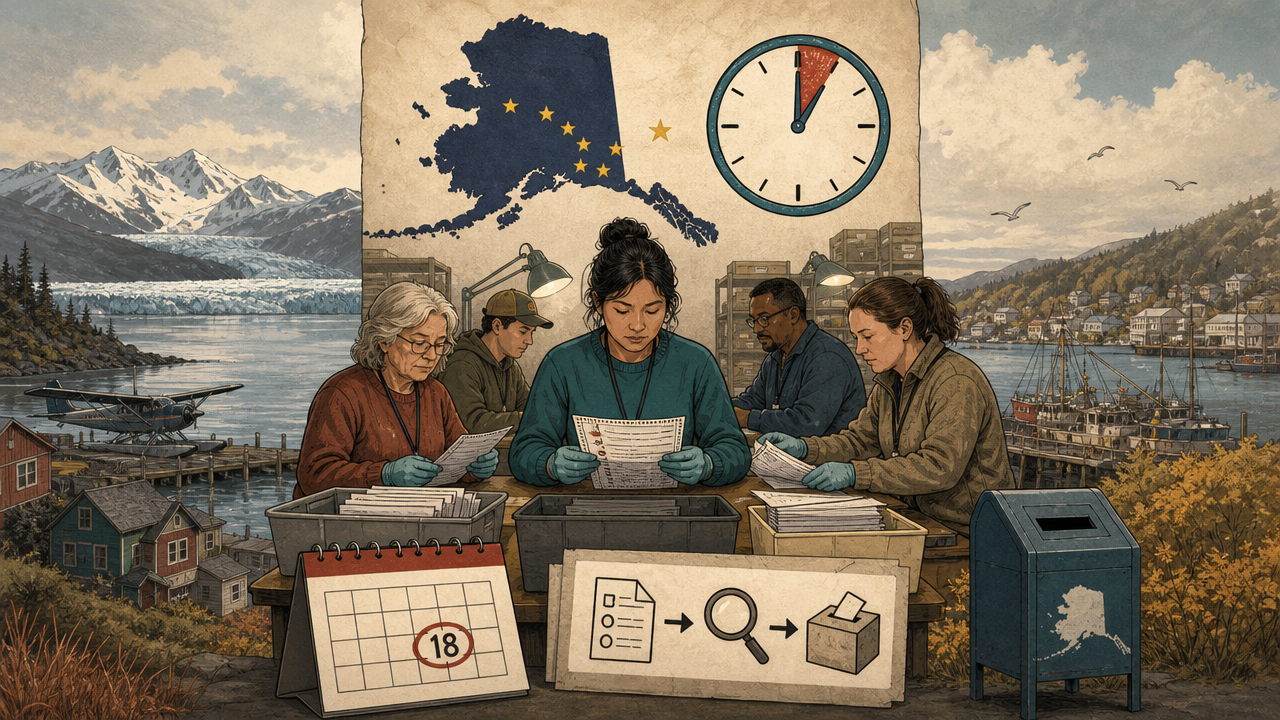
Voting; election administration; Senate representation Alaska
Alaska’s Senate result remains unfinished while ballot review continues
What happened
As of November 6, Alaska’s U.S. Senate race had not been called by The Associated Press. Alaska’s Division of Elections says ranked-choice results will not be available until November 18, after eligible ballots have been reviewed and counted.
What it means for voters
This is what a normal unfinished count looks like in a ranked-choice state: election workers keep reviewing eligible ballots before the final tabulation. Alaska voters still do not have a certified senator-elect, so the state’s representation in the next Senate is not final yet. For everyone else, the practical lesson is simple: close races can take days or weeks without that being proof that anything went wrong.
Save stories & follow topics · Link to this story
Get the context & analysis
As of November 6, Alaska’s U.S. Senate race had not been called by The Associated Press. Alaska’s Division of Elections says ranked-choice results will not be available until November 18, after eligible ballots have been reviewed and counted. Election-night results remain unofficial until certification.
What to watch
Watch the Alaska Division of Elections for updated unofficial totals and the ranked-choice tabulation expected no earlier than November 18, 2026. The Division, not a campaign or the federal government, runs the count and certification process.
Context from earlier events
Alaska uses ranked-choice voting, so the state’s official site says the ranked-choice report is delayed until eligible ballots are reviewed and counted.
Check sources (2)
Representation; Congress; federal courts; accountability Nationwide
The next Senate can block or confirm presidential nominees
What happened
AP reported that Democrats will hold at least 54 Senate seats in the next Congress, with Alaska and Mississippi still unresolved. The new Congress begins January 3, 2027.
What it means for voters
This is bigger than party labels. Senate control can shape who gets confirmed to run agencies that touch workplace safety, labor rules, health coverage, housing, and consumer protections. It also shapes which federal judges are confirmed. But no new law changes automatically on January 3: the House, Senate, president, agencies, and courts still have separate jobs.
Save stories & follow topics · Link to this story
Get the context & analysis
AP reported that Democrats will hold at least 54 Senate seats in the next Congress, with Alaska and Mississippi still unresolved. The new Congress begins January 3, 2027. Under the Constitution, the president nominates federal judges and many executive officers, while the Senate decides whether to give advice and consent.
What to watch
As of November 6, 2026, watch final state certifications, then the organization of the new Congress beginning January 3, 2027. Watch the Senate’s committee assignments and whether the White House sends nominees requiring Senate confirmation.
Context from earlier events
The Constitution divides appointment power between the president and the Senate, rather than giving either branch complete control.
Check sources (3)
Representation; state government; taxes; education; housing Multiple states
State election results could reset budgets, schools, taxes, and housing policy
What happened
AP reported that Democrats gained full control of state government in at least five states where power had been divided, and also broke or prevented Republican supermajorities in several legislative chambers. In Texas, Gov.-elect Gina Hinojosa will face a split Legislature: Democrats won the state House while Republicans kept the state Senate.
What it means for voters
State government is where a lot of daily-life policy gets decided: school funding, state taxes, utility rules, housing programs, public transit support, labor standards beyond federal minimums, and insurance oversight. A governor can propose budgets and sign or veto bills, but lawmakers control legislation and appropriations. Split control, like Texas will have, can slow major changes or force compromise.
Save stories & follow topics · Link to this story
Get the context & analysis
AP reported that Democrats gained full control of state government in at least five states where power had been divided, and also broke or prevented Republican supermajorities in several legislative chambers. In Texas, Gov.-elect Gina Hinojosa will face a split Legislature: Democrats won the state House while Republicans kept the state Senate. These outcomes still move through each state’s certification and transition process.
What to watch
Watch each state’s official election certification, leadership elections in the legislatures, and 2027 session calendars. No single national date determines when every new governor or legislature can start acting.
Context from earlier events
AP described the state-level shifts as the largest single-election change in partisan state-government power since 2010.
Check sources (2)
Healthcare; insurance; consumer costs; federal regulation Nationwide
Health plans will have to offer more price information by phone
What happened
A final rule from the Departments of Labor, Health and Human Services, and Treasury updates health-plan price-transparency requirements. It requires plans and insurers to make certain cost-sharing information available by phone as well as through online tools and on paper upon request.
What it means for voters
For workers with job-based coverage and people buying individual coverage, getting a price estimate before care can help with planning for deductibles and coinsurance. Still, a price tool is not a promise that a medical bill will be low, and the rule itself does not lower premiums, deductibles, or provider prices. The rule also updates notices about limits on balance-billing protections, which could help people understand when extra charges may still be possible.
Save stories & follow topics · Link to this story
Get the context & analysis
A final rule from the Departments of Labor, Health and Human Services, and Treasury updates health-plan price-transparency requirements. It requires plans and insurers to make certain cost-sharing information available by phone as well as through online tools and on paper upon request. The rule is effective December 7, 2026; different technical requirements begin on later dates, including January 1, March 6, and September 6, 2027.
What to watch
Watch health plans and insurers for implementation as the rule becomes effective on December 7, 2026. Consumer-facing plan-year requirements begin January 1, 2027, while other file and website requirements start March 6 and September 6, 2027.
Context from earlier events
The departments said the older transparency rules were meant to help consumers compare care costs and reduce unexpected out-of-pocket charges.
Check sources (1)
Primary and independent sources
Housing; mortgages; small business; federal regulation Nationwide
USDA will allow certain guaranteed rural home loans for properties with income-producing ADUs
What happened
USDA’s Rural Housing Service issued a final rule allowing its Single Family Housing Guaranteed Loan Program to finance eligible single-family homes with income-producing accessory dwelling units, or ADUs. The rule also clarifies eligibility for homes set up for home-based operations using ordinary residential features.
What it means for voters
For eligible rural homebuyers, this could expand the kinds of properties that can qualify for a USDA-backed guaranteed loan. An ADU can mean a separate small living space, but the rule does not guarantee loan approval, lower mortgage payments, rental income, or local permission to build or rent one. Local zoning, lender underwriting, property condition, and program eligibility still matter.
Save stories & follow topics · Link to this story
Get the context & analysis
USDA’s Rural Housing Service issued a final rule allowing its Single Family Housing Guaranteed Loan Program to finance eligible single-family homes with income-producing accessory dwelling units, or ADUs. The rule also clarifies eligibility for homes set up for home-based operations using ordinary residential features. It is scheduled to take effect December 28, 2026.
What to watch
Watch USDA Rural Development and participating lenders for program guidance before the December 28, 2026 effective date. Homebuyers should also check local zoning and rental rules, which USDA does not control.
Context from earlier events
The final rule follows a March 2026 proposal to update the guaranteed-loan program’s treatment of ADUs and home-based operations.
Check sources (1)
Work; family leave; federal employees; benefits Nationwide
Federal workers have until November 16 to comment on OPM’s FMLA rule
What happened
The Office of Personnel Management issued a direct final rule updating the federal government’s Title 5 Family and Medical Leave Act regulations. It incorporates earlier statutory changes involving which civilian and military service counts toward leave eligibility, use of certain annual and sick leave during unpaid FMLA leave, and coverage rules for some Veterans Health Administration employees.
What it means for voters
This affects many federal civilian workers, not private-sector workers or most state and local workers. For an eligible federal employee balancing a new child, illness, or caregiving, the service-credit rules can affect when FMLA and paid parental leave eligibility starts. The rule does not change the separate federal FMLA system that generally applies to private employers and state or local government workers.
Save stories & follow topics · Link to this story
Get the context & analysis
The Office of Personnel Management issued a direct final rule updating the federal government’s Title 5 Family and Medical Leave Act regulations. It incorporates earlier statutory changes involving which civilian and military service counts toward leave eligibility, use of certain annual and sick leave during unpaid FMLA leave, and coverage rules for some Veterans Health Administration employees. It is scheduled to take effect December 14, 2026, unless OPM receives significant adverse comments by November 16.
What to watch
Watch the OPM docket through November 16, 2026. If OPM receives significant adverse comments, it says it will withdraw the affected parts and issue a proposed-rule notice instead of letting those provisions take effect on December 14.
Context from earlier events
OPM says the rule puts into regulation statutory amendments enacted in 2021 and 2023 that had previously been reflected in agency guidance.
Check sources (1)
Primary and independent sources
You're caught up on this briefing. Choose topics and save stories to return on your own schedule.
How this briefing was made
We used official records to verify government actions and independent reporting to add context. We also searched recent election-related videos on YouTube for topic leads. Search rank and popularity were not treated as proof or public opinion. We also checked recent uploads from preferred news and public-affairs channels on YouTube for topic leads. Channel preference was not treated as proof or an endorsement. Every included claim still had to be checked against the linked sources.