The daily civic brief
U.S. civic briefing
Mississippi’s Senate race is still too close to call / Alaska’s Senate count remains unfinished after a ballot-name dispute / State-level election results could reshape budgets and public rules / HUD keeps its Section 3 job-opportunity benchmarks in place for federally assisted projects
Estimated 3-minute catch-up · 4 stories
Today's audio briefing
Today's spoken briefing
Hear the latest national briefing and what to watch next for every headline. A restrained instrumental bed plays in the web player.
Read the audio transcript
Voting; election administration; Senate representation Mississippi
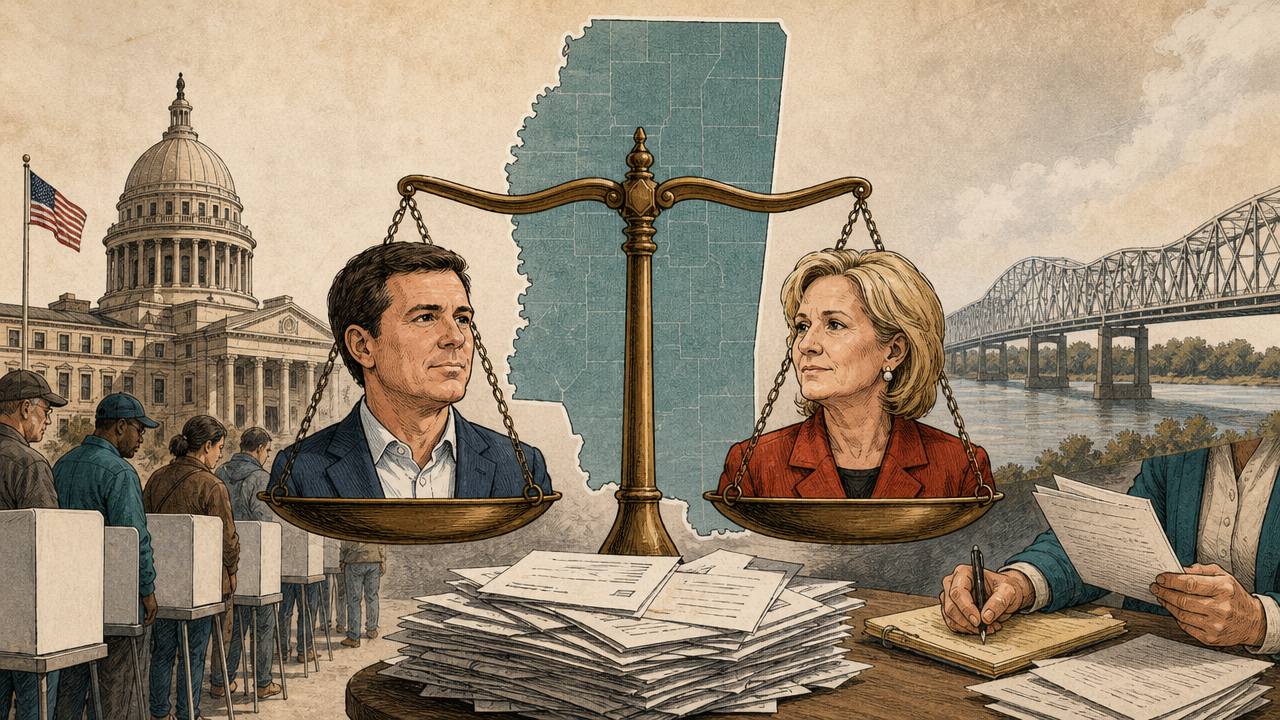
Mississippi’s Senate race is still too close to call
What happened
As of 2026-11-05, The Associated Press had not called Mississippi’s U.S. Senate race. AP reported that Democrat Scott Colom led Republican Sen. Cindy Hyde-Smith by only a few dozen votes.
What it means for voters
This is about who may represent Mississippi in the U.S. Senate for the next six years. A tiny margin does not by itself show fraud or a broken election. It means election workers still have to finish the lawful count and canvass. For families, the practical stake is representation: senators vote on federal taxes, labor rules, health programs, disaster aid, farm policy, and judges. No final winner should be treated as official until the state completes its process.
Save stories & follow topics · Link to this story
Get the context & analysis
As of 2026-11-05, The Associated Press had not called Mississippi’s U.S. Senate race. AP reported that Democrat Scott Colom led Republican Sen. Cindy Hyde-Smith by only a few dozen votes. Mississippi does not have an automatic recount process; a challenger can ask a court to order one.
What to watch
As of 2026-11-05, watch the Mississippi Secretary of State and county election authorities for updated totals, official certification information, or any court filing seeking a recount. No recount order was confirmed in the sources reviewed.
Context from earlier events
No relevant context from earlier events was found.
Check sources (2)
Voting; election administration; Senate representation Alaska
Alaska’s Senate count remains unfinished after a ballot-name dispute
What happened
Alaska’s U.S. Senate race remained uncalled as of 2026-11-05. The contest includes Republican incumbent Dan Sullivan, Democrat Mary Peltola, and another candidate named Daniel J.
What it means for voters
Alaskans deserve a final count based on the ballots actually cast, not guesses made before certification. The contest matters nationally because it fills a Senate seat, but the day-to-day point is simple: voters should expect lawful counting, published results, and state-run certification. The prior lawsuit’s dismissal did not establish that any ballot was invalid or that misconduct happened.
Save stories & follow topics · Link to this story
Get the context & analysis
Alaska’s U.S. Senate race remained uncalled as of 2026-11-05. The contest includes Republican incumbent Dan Sullivan, Democrat Mary Peltola, and another candidate named Daniel J. Sullivan. A federal judge had already dismissed the Justice Department’s pre-election effort to block a possible certification based on the name-confusion dispute; that earlier case does not decide the election result.
What to watch
As of 2026-11-05, watch the Alaska Division of Elections for updated statewide results and certification notices. No final result or new court order changing the count was confirmed in the sources reviewed.
Context from earlier events
On November 1, 2026, a federal judge dismissed the Justice Department’s requested pre-election remedy involving the possible certification of this Senate contest. That dismissal did not settle the election itself.
Representation; state government; public services Multiple states
State-level election results could reshape budgets and public rules
What happened
AP reported that Democrats won full control of state government in at least five states where power had previously been divided, while also gaining other governors’ offices and legislative chambers. These are projected election outcomes that still depend on each state’s certification process, but the changes could alter which party sets legislative agendas in 2027.
What it means for voters
State government is where a lot of everyday rules get made. Governors propose budgets and sign or veto bills. State legislatures write laws on wages, worker protections, school funding, transit, health coverage, utilities, housing rules, and election administration. Full control can make action easier, but it does not guarantee a specific law, and it can also reduce the leverage of the minority party. The real impact will depend on the bills, budgets, and court rulings that come next.
Save stories & follow topics · Link to this story
Get the context & analysis
What to watch
As of 2026-11-05, watch each state’s official certification, then its legislative organization votes and 2027 session agendas. No single national date governs when all new state governments can begin acting.
Context from earlier events
No relevant context from earlier events was found.
Housing; work; federal programs Nationwide
HUD keeps its Section 3 job-opportunity benchmarks in place for federally assisted projects
In effect: HUD’s benchmark notice became effective on November 4, 2026. It retains the existing 25% Section 3 worker and 5% Targeted Section 3 worker labor-hour benchmarks rather than changing them. Verify status
What happened
A HUD notice that took effect November 4 keeps the existing nationwide Section 3 benchmarks for certain HUD-assisted housing and community-development projects. The benchmarks are 25% of total labor hours worked by Section 3 workers and 5% by Targeted Section 3 workers.
What it means for voters
Section 3 is meant to connect low- and very low-income people, including certain public-housing and Section 8 residents, with work and contracting opportunities generated by covered HUD-funded projects. This does not guarantee a job to any one person or set a quota for a particular employer. But it gives public agencies and contractors a benchmark to meet as part of showing they made the required effort on covered projects. For communities facing redevelopment or federally supported construction, it is one lever for asking whether local residents are getting access to the work.
Save stories & follow topics · Link to this story
Get the context & analysis
A HUD notice that took effect November 4 keeps the existing nationwide Section 3 benchmarks for certain HUD-assisted housing and community-development projects. The benchmarks are 25% of total labor hours worked by Section 3 workers and 5% by Targeted Section 3 workers. HUD said its available reporting data were still too limited and unrepresentative to justify changing the benchmarks now.
What to watch
As of 2026-11-05, watch HUD for future benchmark updates and for project-level reporting from public housing agencies and other recipients. HUD’s notice says it will continue gathering data and considering comments about the experience of grantees, contractors, and other stakeholders.
Context from earlier events
HUD’s prior Section 3 framework required periodic benchmark updates. The agency said the relatively new reporting system had not yet produced three full years of broad enough data for a revision.
Check sources (2)
Primary and independent sources
You're caught up on this briefing. Choose topics and save stories to return on your own schedule.
How this briefing was made
We used official records to verify government actions and independent reporting to add context. We also searched recent election-related videos on YouTube for topic leads. Search rank and popularity were not treated as proof or public opinion. We also checked recent uploads from preferred news and public-affairs channels on YouTube for topic leads. Channel preference was not treated as proof or an endorsement. Every included claim still had to be checked against the linked sources.