The daily civic brief
U.S. Civic Daily Scan — September 24, 2026
Today’s biggest verified developments touch healthcare bills, voting rules, government accountability, food safety, and paychecks. The clearest immediate household change is still ahead: Medicare is proposing lower lab-test payments for 2027, while courts are settling rules that affect how people get information and cast ballots in the 2026 election. Several other stories are active disputes, so the next court order or agency decision matters as much as today’s headline.
Today's audio briefing
Today's spoken briefing
Hear the latest national briefing and what to watch next for every headline. A restrained instrumental bed plays in the web player.
Accountability; First Amendment; presidency and press access Washington, D.C.
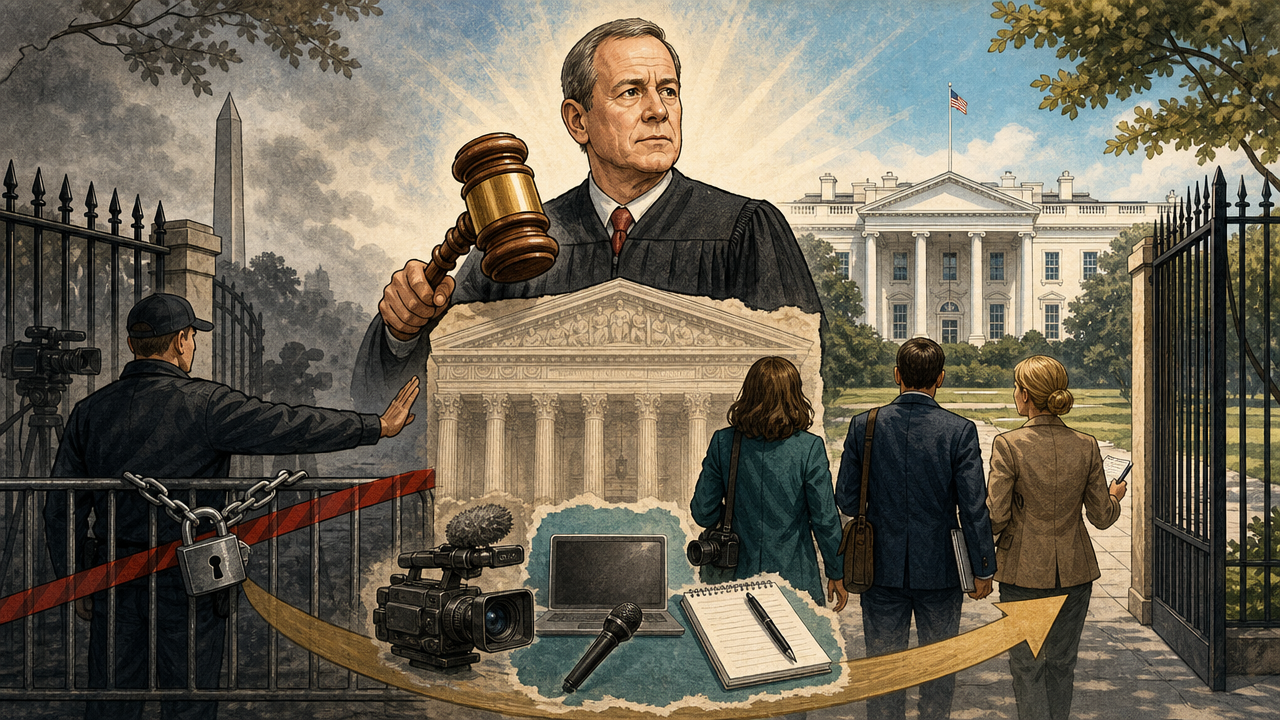
Federal judge orders the White House to restore access for CNN, MS NOW, and Politico
What happened
A federal judge early September 24 temporarily blocked President Trump’s ban on CNN, MS NOW, and Politico from White House grounds. Judge Timothy Kelly ordered the administration to immediately restore the outlets’ access while the lawsuit continues. The news organizations say they were singled out because of their coverage; the White House had described the outlets’ reporting as harmful or “fake news.”
What it means for voters
This isn’t a change to anyone’s rent or paycheck today, but it matters to the public’s ability to see independent reporting on the president and federal agencies. White House access helps reporters question officials, attend events, and compare what the government says with what records show. The federal court—not the president and not the media companies—will decide the broader constitutional dispute.
What to watch
Watch for the White House’s response, any appeal, and a later ruling on whether the ban violated the First Amendment or due-process protections.
Context from earlier events
The three outlets filed suit after their reporters were denied access beginning September 19, following Trump’s September 18 announcement that he was barring them.
Voting; redistricting; federal and state courts Missouri, with national implications for U.S. House representation
Missouri’s congressional-map fight returns to the Supreme Court as absentee voting starts
What happened
A federal appeals panel said Missouri should use a newer congressional map in the November election, but that ruling is not in effect because the U.S. Supreme Court has already blocked the map while the case continues. Missouri is currently set to use the older 2022 districts. Opponents of the newer map said they will ask the Supreme Court to intervene again.
What it means for voters
Congressional maps decide which voters are grouped together for U.S. House elections, so they can affect representation and which party has a better shot at a seat. The timing is also a practical problem: overseas and military absentee ballots have already gone out, and changing district lines late could mean replacement ballots, added county costs, and voter confusion. Missouri election officials administer ballots, state courts interpret state law, and federal courts decide federal constitutional claims.
What to watch
Watch for an emergency Supreme Court filing and whether the Court keeps the 2022 map in place for the November election. Missouri voters should rely on their county election authority for the district and ballot that applies to them.
Context from earlier events
Missouri’s Supreme Court had directed use of the 2022 map after finding that a referendum challenge blocked the newer map. The U.S. Supreme Court also previously put the newer map on hold.
Voting; privacy; federal-state authority Virginia, with national implications for federal access to voter data
Virginia attorney general asks DHS to explain alleged voter-record searches
What happened
Virginia Attorney General Jay Jones says the Department of Homeland Security may have broken state election laws if its employees used the state’s voter-lookup tools while investigating possible noncitizen voting. His letter asks DHS to confirm whether it directed staff to access voters’ information without permission and to preserve records. The allegation comes from an anonymous whistleblower report; DHS had not publicly answered the letter when the Associated Press reported it.
What it means for voters
Voter rolls contain personal information, and states set many of the rules for who can access detailed registration records. People should not assume their vote or registration is at risk from this letter alone: no court has ruled that DHS broke the law. But the dispute shows a real tension between federal enforcement efforts and state rules designed to protect voter data and prevent misuse of election systems.
What to watch
Watch for a DHS response, release of access logs or other records, and any state or federal investigation. Also watch related federal lawsuits seeking detailed voter data from states.
Context from earlier events
The administration has pursued a national effort focused on noncitizen voting, while state officials and voting-rights groups have challenged federal requests for voter information. Research cited by AP says voting by noncitizens is extremely rare.
Healthcare costs; Medicare; federal rulemaking and taxpayer spending Nationwide
Medicare proposes lower payments for many lab tests starting in 2027
What happened
The Centers for Medicare & Medicaid Services released preliminary 2027 payment rates for Medicare laboratory tests. CMS says Medicare currently pays about 16% more on average than private insurers for the tests covered by the review and estimates the proposed alignment could save about $1 billion each year. The rates are not final yet; the public has a 30-day comment period, and CMS expects final rates in November.
What it means for voters
Medicare patients should not assume their own copays will drop by 16%—that number describes potential payment-rate changes across tests, not a guaranteed bill reduction for each person. Still, the policy could affect premiums and taxpayer spending over time. Labs, hospitals, doctor offices, and rural providers may see lower Medicare payments, which could create pressure in places that rely heavily on Medicare revenue. Congress set the payment framework, and CMS is carrying it out.
What to watch
Watch for public comments from hospitals, labs, patient groups, and rural providers. CMS expects to publish final 2027 rates in November, with rates taking effect January 1, 2027.
Context from earlier events
Congress created the market-based lab-payment method in 2014, but later laws delayed the next full data-reporting cycle. The 2026 appropriations law set the updated reporting and gradual phase-in schedule.
Primary and independent sources
- Centers for Medicare & Medicaid Services CMS Announces New Preliminary Medicare Payment Rates for Laboratory Services, Saving Taxpayers an Estimated $1 Billion Annually
- Centers for Medicare & Medicaid Services Preliminary Calendar Year (CY) 2027 Medicare Clinical Laboratory Fee Schedule Payment Rates
Groceries; food safety; federal-state public health Nationwide, with food-supply links to Mexico
FDA shifts its lettuce-outbreak work from response to prevention
What happened
The Food and Drug Administration says the multistate Cyclospora outbreak linked to iceberg lettuce has ended, but its investigation and prevention work continue. The FDA, CDC, and state and local health departments traced the outbreak to lettuce from Taylor Farms de Mexico; the supplier began a voluntary recall in July. FDA says it inspected growers and collected samples in Mexico and will use lessons from the outbreak in future prevention work.
What it means for voters
This is a grocery and public-health story, not proof that any one shopper is currently at risk. The outbreak is over, but foodborne illness can mean missed work, medical bills, and extra pressure on households already paying more at the store. FDA writes federal food-safety rules and investigates outbreaks, while state and local health departments often identify cases and interview sick people.
What to watch
Watch for FDA’s final findings on how the contamination happened and whether it recommends new supplier, import, inspection, or retail-food practices. Shoppers should use current recall alerts rather than old social-media posts when deciding whether food is safe.
Context from earlier events
FDA issued its updated 2026 Food Code on September 17. That model code can guide state, tribal, territorial, and local food-safety rules, but those governments decide whether and how to adopt it.
Primary and independent sources
Community perspectives
Reporting that adds community impact and context. Official records remain the factual foundation.
Paychecks; prices; economic life Nationwide
New federal data show inflation-adjusted worker compensation fell in the second quarter
What happened
The Bureau of Labor Statistics’ revised second-quarter productivity report found that nonfarm business productivity rose at a 1.4% annual rate while hourly compensation rose 2.6%. After accounting for consumer prices, real hourly compensation fell at a 3.3% annual rate in that quarter. BLS also reported that labor’s share of nonfarm-business output was 52.8%, the lowest in its series going back to 1947.
What it means for voters
This does not mean every worker took a pay cut. It is a broad economic measure, and it includes wages plus benefits rather than the exact pay stub of any one household. But it helps explain why families can feel squeezed even when pay is rising in dollars: if everyday prices rise faster, that money buys less. The BLS measures the data; the Federal Reserve, Congress, employers, and state governments influence different pieces of wages, prices, taxes, and job conditions.
What to watch
Watch the September jobs report due October 2, plus future inflation and wage data. Those reports will show whether pay is catching up with household costs or whether the second-quarter pattern continues.
Context from earlier events
BLS says the productivity figures are revised as more complete data arrive. The report measures the whole nonfarm business sector, so it should not be used to judge the experience of a particular industry, employer, or worker.
Primary and independent sources
How this briefing was made
We used official records to verify government actions and independent reporting to add context. We also checked popular political videos on YouTube for topic leads. Popularity helped us decide what to investigate, but it was not treated as proof or public opinion. Every included claim still had to be checked against the linked sources.