The daily civic brief
U.S. Civic News Scan — September 23, 2026
Today’s biggest household-impact news is in health coverage, energy costs, college funding, and election administration. The clearest immediate change is that federal health officials canceled Marketplace coverage tied to about 315,000 enrollments, affecting more than 760,000 people, while saying the plans were unauthorized. Oil prices eased after U.S.-Iran contacts, but fuel costs remain far above where they were before the war, so the relief at the pump is far from certain.
Today's audio briefing
Today's spoken briefing
Hear the latest national briefing and what to watch next for every headline. A restrained instrumental bed plays in the web player.
Healthcare costs; insurance coverage; federal executive agencies Nationwide, mainly states using the federal health-insurance Marketplace
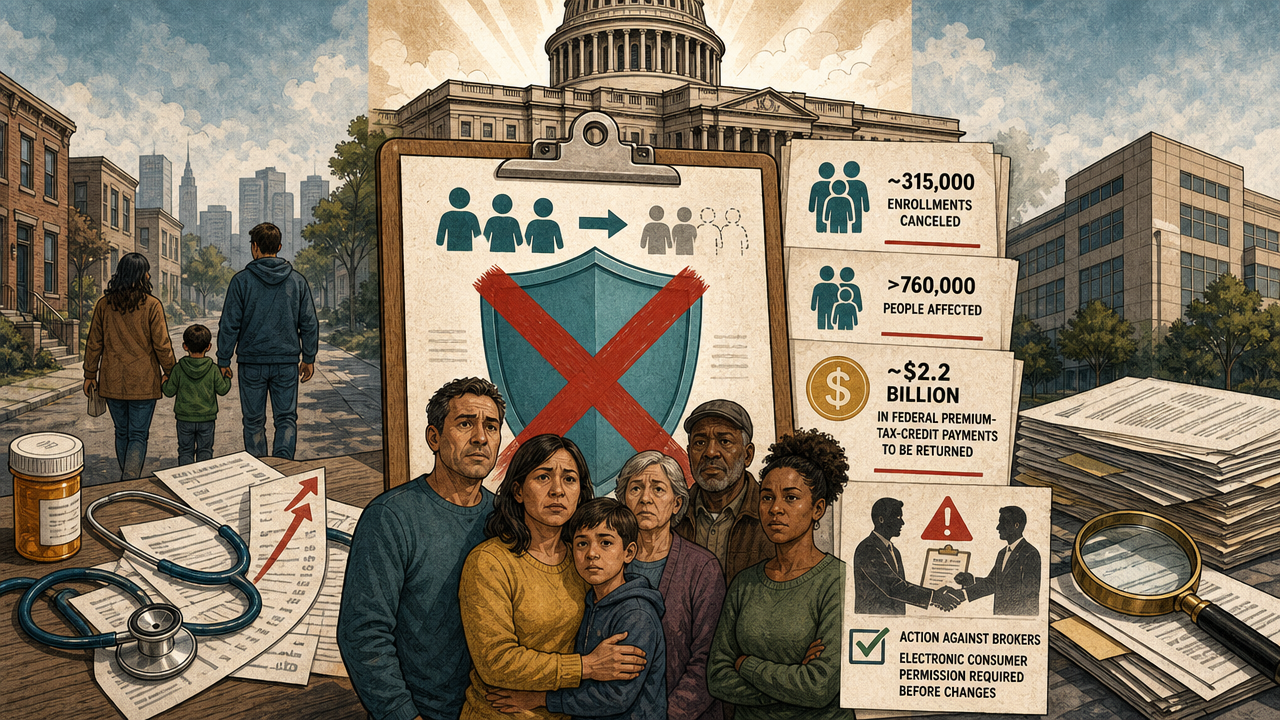
CMS says it canceled ACA Marketplace coverage affecting more than 760,000 people
What happened
The Centers for Medicare & Medicaid Services said September 22 that it had canceled about 315,000 Affordable Care Act Marketplace enrollments covering more than 760,000 people. CMS said its review with insurance companies found the enrollments were unauthorized and estimated that ending them would return about $2.2 billion in federal premium-tax-credit payments. The agency also said it is taking action against brokers and will require electronic consumer permission before a broker can make changes to an application or enrollment.
What it means for voters
This is an immediate coverage issue, not just a political announcement. A person whose plan was canceled may need to confirm whether they still have insurance, whether a broker changed their plan without permission, and what options they have before needing care or filling a prescription. CMS says the goal is to stop improper subsidies and unauthorized sign-ups; the practical tradeoff is that agencies and insurers need to sort out fraud without wrongly cutting off eligible people. CMS runs the federal Marketplace, while state insurance departments oversee many insurance and broker rules.
What to watch
Watch for details on how affected consumers are notified, how they can appeal or re-enroll if they believe a cancellation was wrong, and whether state-based Marketplaces take similar steps.
Context from earlier events
CMS has been tightening Marketplace verification rules since 2025 and reported earlier this year that it had already ended subsidies or coverage for many enrollments it found ineligible or unauthorized.
Primary and independent sources
- Centers for Medicare & Medicaid Services Federal Marketplace (FFE and SBE-FP) Anti-Fraud Actions
- Centers for Medicare & Medicaid Services CMS Cracks Down on Fraud, Waste, and Abuse in the Federal Health Insurance Marketplace
- Associated Press Trump administration to remove 760,000 Affordable Care Act enrollees over fraud claims
Utilities; energy jobs; taxpayer spending; federal-state power New York and California, with national energy-policy implications
New York and California sue over federal offshore-wind lease buyouts
What happened
New York, California, and other states filed lawsuits September 22 challenging Trump administration deals to buy back offshore-wind leases from developers. The states argue the Interior Department improperly used taxpayer money to cancel projects and redirect investment toward other energy projects. The administration’s agreements remain in place unless a court blocks them.
What it means for voters
Electricity bills are shaped by power supply, grid upgrades, fuel costs, and state utility rules. The lawsuits do not change anyone’s bill today, but they could affect which power projects get built, where energy jobs go, and how much federal money is spent to end existing leases. Supporters of the buyouts favor shifting away from offshore wind; the states argue the cancellations could make it harder to add power as electricity demand grows. Federal agencies control offshore leases, while states make many decisions about electricity planning and utility regulation.
What to watch
Watch for the court complaints, the federal government’s response, and any request by the states to pause the buyout payments or lease cancellations while the cases move forward.
Context from earlier events
The administration announced plans in June to buy back offshore-wind leases. The September 22 suits challenge specific deals involving projects off New York and California.
Primary and independent sources
- New York State Office of the Attorney General Attorney General James and Governor Hochul Announce Lawsuit Challenging Trump Administration’s Illegal Offshore Wind Deals
- California Department of Justice During Climate Week, Attorney General Bonta Announces Second Lawsuit Challenging Unlawful Trump Administration Offshore Wind Deal
- Associated Press New York, California sue to block cancellation of wind projects
Schools; college access; workforce; federal spending Nationwide
Education Department announces $174 million in additional HBCU funding and $61 million for tribal colleges
What happened
The U.S. Department of Education announced September 22 that it will provide more than $174 million in one-time additional funding for Historically Black Colleges and Universities. It also announced more than $61 million in additional one-time funding for Tribally Controlled Colleges and Universities. The department said the money builds on earlier fiscal-year 2025 and 2026 funding commitments.
What it means for voters
For students, families, and campus workers, federal institutional aid can support the schools that provide classes, student services, facilities, and job training. The announcement does not automatically reduce a student’s tuition bill or erase debt, and the department did not say that every school will receive the same amount. Congress supplies the money through federal appropriations; the Education Department decides grants and administration within the rules Congress sets.
What to watch
Watch for the grant notices showing how much each eligible college receives, what the money can pay for, and whether schools use it for student support, campus repairs, workforce programs, or other needs.
Context from earlier events
The department says this follows a $438 million one-time additional HBCU investment in fiscal year 2025.
Gasoline; groceries; transportation; presidential foreign policy Nationwide, with global oil-market effects
U.S.-Iran meeting brings a small oil-price drop, but fuel costs are still elevated
What happened
Oil prices fell again early September 23 after President Trump said U.S. and Iranian officials met on the sidelines of the United Nations General Assembly. Brent crude was reported at about $98.99 a barrel and U.S. crude at about $89.84, both below recent highs but still much higher than before the Iran war. The meeting did not produce a public agreement to end the conflict or restore normal oil flows.
What it means for voters
A lower oil price can eventually help gasoline and diesel costs, which matter for commuting, delivery costs, and grocery prices. But oil-market moves do not show up instantly at every gas station, and prices can climb again if the conflict worsens or shipping routes remain disrupted. The president leads foreign policy and military operations; Congress controls war powers and federal spending, but neither branch directly sets the price on the sign outside a gas station.
What to watch
Watch for a verified description from U.S. or Iranian officials about the talks, changes in oil shipping through the Strait of Hormuz, and whether retail gasoline prices actually follow oil lower over the next several days.
Context from earlier events
National gasoline prices had been near $4.48 a gallon on September 21 as oil shipping remained disrupted. The new contact with Iran is a development that could affect, but does not guarantee, future fuel prices.
Voting; election administration; federal criminal enforcement Utah, with national relevance for mail voting
Former Utah postal worker is indicted over alleged disposal of about 300 mail ballots
What happened
The Justice Department announced September 22 that a federal grand jury indicted a former U.S. Postal Service letter carrier in Utah on charges related to allegedly throwing away mail, including about 300 mail ballots sent to registered voters for a June primary election. The department says the ballots were found in a dumpster. An indictment is an accusation, and the defendant is presumed innocent unless proven guilty.
What it means for voters
People using mail ballots depend on election offices and the Postal Service to get their vote from their home to election officials. This case does not show a nationwide problem with mail voting, and it does not change state ballot rules. But it is a reminder that voters using mail ballots should check state deadlines, use ballot-tracking tools where available, and contact local election officials quickly if a ballot does not arrive or is not recorded as received. States run elections; federal prosecutors enforce federal laws against election-related crimes.
What to watch
The defendant’s next court appearance is scheduled for November 30. Also watch whether Utah election officials describe any steps taken to notify affected voters or improve mail handling before the November election.
Context from earlier events
The alleged conduct involved ballots for Utah’s June 23, 2026, primary, while many states are already preparing or conducting voting for the November midterms.
Primary and independent sources
How this briefing was made
We used official records to verify government actions and independent reporting to add context. We also checked popular political videos on YouTube for topic leads. Popularity helped us decide what to investigate, but it was not treated as proof or public opinion. Every included claim still had to be checked against the linked sources.