The daily civic brief
U.S. Civic & Pocketbook Scan — October 4, 2026
Today’s biggest verified household-cost action is a one-time $90 Medicare payment for some people in Original Medicare, with deposits expected this week. State-level fights in California also show how health-care funding, insurance premiums, disaster recovery, and taxes can land on family budgets. A federal voting-rights ruling in Florida is another reminder that courts can reshape election rules, but this case is not the final word.
Today's audio briefing
Today's spoken briefing
Hear the latest national briefing and what to watch next for every headline. A restrained instrumental bed plays in the web player.
Healthcare costs; Medicare; federal executive branch Nationwide
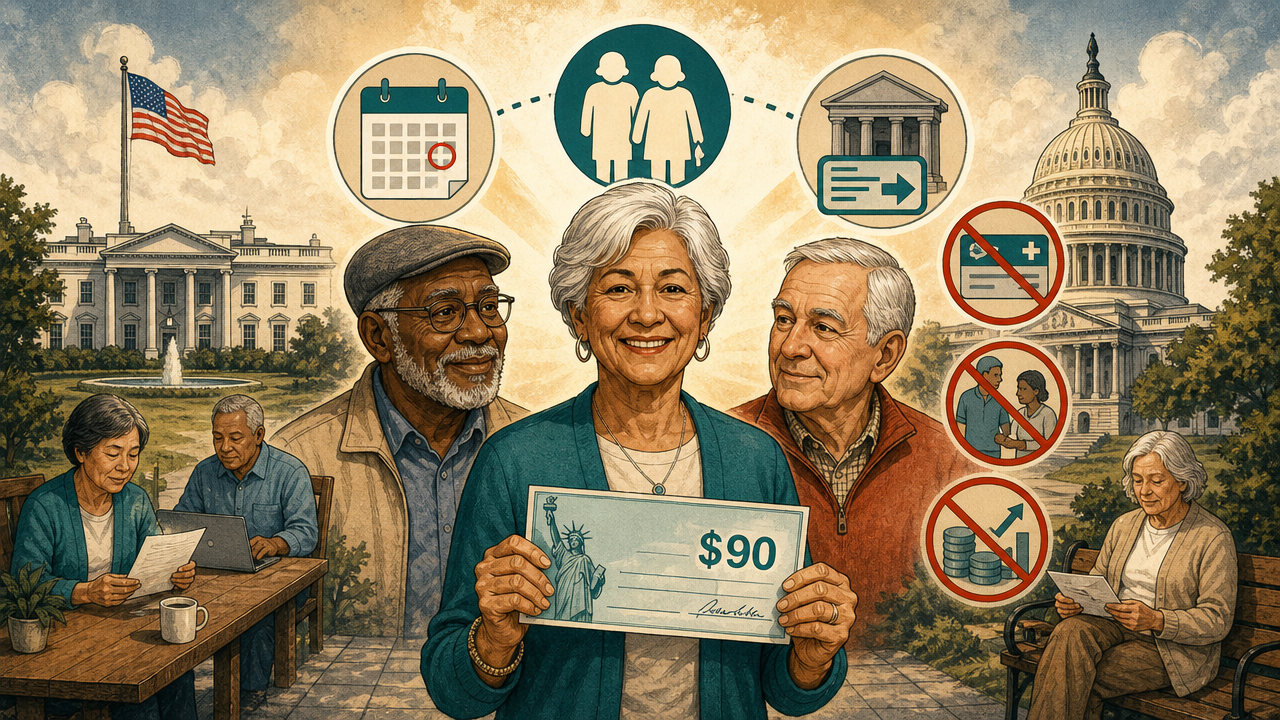
Some Original Medicare members are set to receive a one-time $90 payment this month
What happened
CMS says eligible people in Original Medicare Part B will receive a one-time $90 payment in October to help with premiums. Most payments are expected by direct deposit around October 8; people without direct deposit may receive a Treasury check later in the month. CMS says Medicare Advantage members, people whose Part B premiums are paid through Medicaid assistance, and people paying Medicare’s higher-income surcharge are not eligible.
What it means for voters
For an eligible household, this is $90 in short-term help, not a permanent cut in the monthly Medicare premium. The executive branch is using money in the Medicare Improvement Fund for the payment. People should be careful about scams: CMS says beneficiaries can check eligibility through 1-800-MEDICARE, and payment-status questions can go to Social Security beginning October 15. This does not change Medicare Advantage premiums or benefits.
What to watch
Whether payments arrive on the announced schedule, how CMS handles eligibility questions, and whether Congress or the administration proposes a longer-lasting change to Medicare premium costs.
Context from earlier events
Congress created the Medicare Improvement Fund in 2008. CMS says past Congresses generally used money from the fund to help pay for other laws rather than making direct beneficiary payments.
Voting; federal courts; state authority Florida, with possible national legal consequences
Florida federal judge dismisses a noncitizen-voting prosecution and finds the federal law unconstitutional
What happened
A federal district judge in South Florida dismissed a criminal case against a woman accused of voting in federal elections while not a U.S. citizen. The judge concluded that the federal law used in the case went beyond Congress’s constitutional authority because states set voter qualifications. The ruling does not legalize noncitizen voting nationwide, and it does not erase state laws that prohibit it.
What it means for voters
Election rules are often shared across levels of government: states run elections and set many voter qualifications, while Congress can regulate parts of federal election administration. This ruling could affect how federal prosecutors bring similar cases if it survives appeal, but it is one district-court decision, not a nationwide Supreme Court ruling. Voters should not assume their own state’s voter-registration or eligibility rules have changed.
What to watch
Whether the Justice Department appeals, whether another federal court reaches a different answer, and whether an appeals court or the Supreme Court takes up the constitutional question.
Context from earlier events
Congress enacted the federal criminal ban on noncitizen voting in 1996. The case raises a continuing constitutional question about where state authority over voter qualifications ends and federal authority over federal elections begins.
Health insurance; Medicaid; state taxes; state courts California, with relevance to other states facing Medicaid funding pressure
Doctors and health plans challenge California’s new health-plan tax
What happened
The California Medical Association and the California Association of Health Plans filed a case directly with the California Supreme Court challenging a new managed-care-organization tax. The groups argue the state’s law conflicts with Proposition 35, a voter-approved measure on how this kind of tax should work and how revenue should be used. State officials have said the tax approach is tied to changes in federal Medicaid financing rules.
What it means for voters
The case is about a hard budget tradeoff: California is trying to maintain funding for Medi-Cal, its Medicaid program, while the challengers say higher taxes on commercial health plans could be passed along in premiums. The challengers estimate about $100 more per covered person each year, or roughly $400 for a family of four; that is their projection, not a settled result. No court has ruled yet, so households should not treat a premium increase as guaranteed from this lawsuit alone.
What to watch
Whether the California Supreme Court agrees to hear the case, whether the federal government approves the state’s tax arrangements, and how insurers reflect any new costs in future premium filings.
Context from earlier events
California has used taxes on managed-care plans for decades to support Medi-Cal. Proposition 35, approved in 2024, made a version of that tax permanent in state law and directed revenue toward Medi-Cal improvements, subject to federal approval.
Taxes; healthcare funding; food assistance; ballot measures California
California voters will decide whether to impose a one-time tax on billionaire wealth
What happened
California Proposition 40 will be on the November 3 ballot. It would impose a one-time tax of up to 5% on covered assets above $1 billion for certain taxpayers, with 90% of revenue directed to health care and 10% to food assistance or education-related programs. The state’s nonpartisan fiscal analysis estimates temporary revenue in the tens of billions of dollars over several years, along with a possible ongoing drop of less than $1 billion per year in income-tax revenue from billionaires.
What it means for voters
Most households would not pay this proposed tax directly. The bigger question for voters is whether a one-time tax can responsibly support health care and food-assistance needs, especially if those needs continue after the money is spent. The measure would change state law only if voters approve it; it is not in effect today. California voters—not Congress or the White House—control this decision.
What to watch
The November 3 vote, campaign disclosures, and how voters weigh the measure against other California ballot propositions that could affect whether it takes effect.
Context from earlier events
The measure is part of a broader state-level debate over how to pay for health programs as federal Medicaid financing and state budget pressures change.
Homeowners insurance; renters insurance; disaster recovery; state regulation California, with lessons for disaster-prone states
California signs stronger insurance-claim protections for wildfire and disaster survivors
What happened
California has enacted the Disaster Recovery Reform Act, a package of insurance-claim rules for people recovering from declared disasters such as wildfires. The state insurance department says the law strengthens claim-payment rules, reduces some paperwork barriers, and increases penalties for insurers that delay or mishandle claims.
What it means for voters
For homeowners and renters who lose property in a wildfire or other declared disaster, insurance delays can mean trouble paying for temporary housing, replacing belongings, or starting repairs. California’s governor and Legislature control these insurance rules, not the federal government. The law does not lower every premium or guarantee every claim will be paid, but it is meant to give policyholders stronger protections once a covered disaster happens.
What to watch
The law’s implementation dates, insurance department regulations or guidance, and whether insurers change rates or policy terms in response to the new requirements.
Context from earlier events
The state says this is its largest update of disaster-claim handling rules in more than 30 years. It follows repeated complaints from wildfire survivors about underinsurance, delays, and claim disputes.
Elections; taxes; housing; utilities; state government California
California governor candidates put taxes, utility bills, housing, and cost of living at the center of their only scheduled debate
What happened
Democrat Xavier Becerra and Republican Steve Hilton held their only scheduled televised debate in California’s governor’s race. They argued over high taxes, housing costs, homelessness, energy bills, immigration, and the role of the Trump administration. Neither candidate’s debate proposal is state policy yet; California voters choose the next governor on November 3.
What it means for voters
A governor can sign or veto state bills, propose a budget, appoint agency leaders, and influence housing, utility, labor, health-care, and insurance policy. But a governor cannot change state taxes, utility rates, or housing rules alone: the Legislature, independent regulators, local governments, courts, and sometimes voters also have a say. The practical voter question is which plans have a workable path through those institutions and how the state would pay for them.
What to watch
Whether either candidate releases more detailed cost estimates, which proposals could pass the Legislature, and whether voters receive mail ballots as expected in early October.
Context from earlier events
California’s high housing, energy, tax, and insurance costs have been central issues throughout the 2026 governor’s race. The debate came shortly before ballots were scheduled to reach many voters.
How this briefing was made
We used official records to verify government actions and independent reporting to add context. We also checked popular political videos on YouTube for topic leads. Popularity helped us decide what to investigate, but it was not treated as proof or public opinion. Every included claim still had to be checked against the linked sources.