The daily civic brief
U.S. Civic & Pocketbook Scan — October 2, 2026
Today’s biggest practical developments are in health coverage, prescription-drug costs, school expenses, and voting access. A few are final government actions, while others are proposed rules or court cases that could still change. The key question for households is whether a change takes effect now, starts in 2027, or depends on state choices and court rulings.
Today's audio briefing
Today's spoken briefing
Hear the latest national briefing and what to watch next for every headline. A restrained instrumental bed plays in the web player.
Healthcare costs; prescriptions; Medicare; executive-branch rulemaking Nationwide, in a randomly selected group of areas
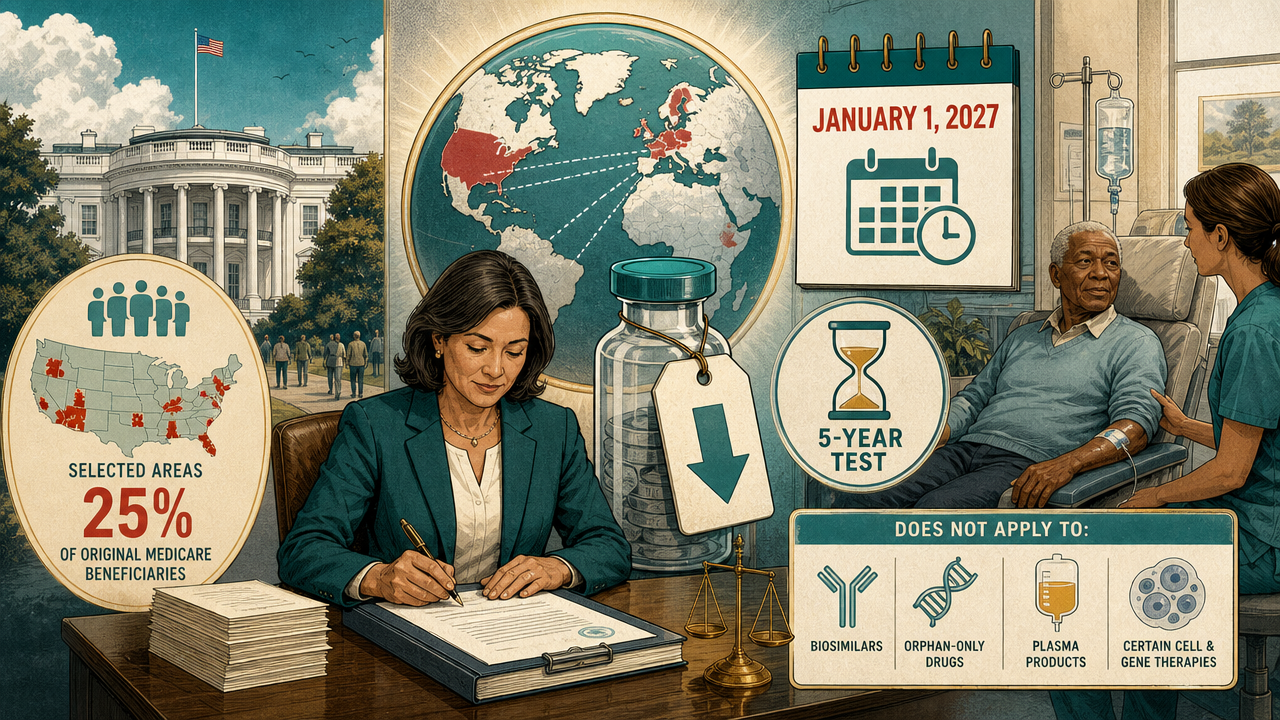
Medicare finalizes a five-year test aimed at lowering prices for some doctor-administered drugs
What happened
The Centers for Medicare & Medicaid Services finalized its GLOBE payment model on September 30. Beginning January 1, 2027, it will use drug prices in comparable countries to help calculate manufacturer rebates for certain drugs covered under Original Medicare Part B. The test will run for five years and apply to people in selected areas covering about 25% of Original Medicare beneficiaries. It does not apply to every Part B drug: biosimilars, orphan-only drugs, plasma products, and certain cell and gene therapies are excluded.
What it means for voters
Part B covers many medicines given in a doctor’s office or clinic, including some cancer and infusion treatments. CMS is trying to lower what Medicare and patients spend, but this is a payment-model test, not an immediate cut in every patient’s bill. Whether a person is included will depend on where they live and which medicine they receive. CMS controls this federal Medicare model; Congress created the broader Medicare law and can change it.
What to watch
CMS will identify the selected areas and drugs before the January 1, 2027 start. Watch for provider and patient guidance on whether the rebate formula changes access, billing, or out-of-pocket costs.
Context from earlier events
Part B drug spending has grown faster than overall drug spending, according to CMS. The new model builds on Medicare’s existing drug-inflation rebate program rather than replacing Part B coverage rules.
Healthcare costs; Medicaid; CHIP; immigration; state and federal government Nationwide, with effects varying by state
Federal Medicaid and CHIP funding limits for some noncitizens took effect October 1
What happened
A federal law change took effect October 1 that limits when states can receive federal Medicaid and CHIP matching funds for certain noncitizens. CMS says emergency Medicaid remains federally matched, and states can still use an existing option to cover lawfully residing children and pregnant people. States must update eligibility, verification, and claims systems; some may choose to spend state money to preserve coverage beyond what the federal government now helps pay for.
What it means for voters
For affected people, this can mean losing full health coverage or receiving a notice asking for more information. It can also shift costs to states, hospitals, clinics, and families if states do not replace the lost federal share. This is not a change for every immigrant or every Medicaid enrollee. Congress enacted the underlying law, CMS issued implementation guidance, and state Medicaid agencies decide how to run their programs within those federal limits.
What to watch
People who receive a state Medicaid or CHIP notice should read it quickly and use the appeal or renewal instructions if they think it is wrong. Watch for state announcements on who keeps coverage with state-only funds and who moves to emergency-only coverage.
Context from earlier events
CMS issued state guidance in April for this October 1 implementation date. The change is among the first major eligibility provisions from the 2025 Working Families Tax Cut law to take effect.
Primary and independent sources
- Centers for Medicare & Medicaid Services CMS Issues Guidance to Implement New Limits on Federal Medicaid and CHIP Funding for Certain Noncitizens
- U.S. Department of Health and Human Services Section 71109: Implementation of Alien Medicaid Eligibility
- Michigan Department of Health and Human Services Changes to Medicaid for Certain Non-citizens
Schools; taxes; household budgets; federal and state government Nationwide, but only in states that participate
Treasury proposes federal tax-credit rules for K–12 scholarships starting in 2027
What happened
Treasury and the IRS released proposed rules October 1 for the new Federal Scholarship Tax Credit. Starting January 1, 2027, taxpayers could receive a nonrefundable federal tax credit of up to $1,700 for donations to approved scholarship organizations, or up to $3,400 for married couples filing jointly. Those organizations would use donations for eligible K–12 expenses, which can include private-school tuition, tutoring, special-needs services, books, and equipment. The proposal says 30 states have opted in, but the rules are not final.
What it means for voters
This is not a direct payment automatically sent to parents. It is a tax incentive for donors, with scholarship organizations distributing the money. Families in participating states may have another way to seek help with certain education expenses in 2027, while public-school families could potentially use scholarships for tutoring or other eligible costs. Critics argue that tax-supported scholarship programs can steer resources away from public schools; supporters argue they widen families’ choices. The federal government sets the tax-credit framework, while states choose whether to participate and maintain lists of eligible organizations.
What to watch
Watch for final regulations, participating-state lists, approved scholarship organizations, and clear rules on eligible expenses before the January 1, 2027 launch.
Context from earlier events
Many states already run private-school choice programs. This new federal credit uses the tax code and private scholarship organizations rather than sending a federal school voucher directly to families.
Primary and independent sources
Federal courts; immigration; household finances; due process Nationwide
Supreme Court will decide whether some detained immigrants must get bond hearings
What happened
The U.S. Supreme Court agreed October 1 to hear a case about whether immigrants already living in the country have a right to a bond hearing while fighting deportation. Lower federal appeals courts have split: most have said detention without a hearing violates federal law, while the 5th and 8th Circuits have allowed mandatory detention under the administration’s reading of the law. The Court has not decided the issue yet.
What it means for voters
A bond hearing is where an immigration judge can consider whether someone can be released while their case proceeds. For families, being held without that hearing can mean lost wages, child-care disruption, rent trouble, and legal costs. The Supreme Court controls the legal answer nationwide; Congress could also rewrite the underlying immigration law. The decision will not itself decide who may remain in the country.
What to watch
The Court is expected to hear arguments in the coming months. Watch for the argument date and whether the justices limit their ruling to people recently detained, or set a wider rule for people who have lived in the United States for years.
Context from earlier events
The case reached the Supreme Court because federal appeals courts issued conflicting decisions on the detention law. The person at the center of this case had lived in the United States for about two decades, according to court reporting.
Voting; federal administration; election access; accountability Nationwide, with direct effects on overseas U.S. citizens and state election offices
Lawsuit challenges a change to an overseas-voter registration form
What happened
The Democratic National Committee sued October 1 over an alleged federal change to the overseas-voter Federal Post Card Application. The lawsuit says the Defense Department used an emergency process to remove a box used by U.S. citizens who have never lived in the country but may vote through a parent’s state connection in 38 states. The Defense Department had not responded to the Associated Press request for comment. The lawsuit is an allegation, not a court ruling, and the affected eligibility rules still vary by state.
What it means for voters
The standard federal form is used by military and overseas voters to register and request an absentee ballot. This dispute is narrow, but it could matter before the November election for eligible citizens abroad who have never lived in the United States. Federal law protects absentee voting for overseas citizens, while states decide key details such as voting residence and eligibility for these particular citizens.
What to watch
Watch for the government’s response, any request for an emergency court order, and instructions from state election offices and the Federal Voting Assistance Program for affected overseas voters.
Context from earlier events
The federal overseas-voting law requires states to accept the Federal Post Card Application from covered military and overseas voters. State rules differ on whether citizens who have never lived in the United States may vote based on a parent’s last residence.
Taxes; savings; children; household finances Nationwide
IRS rules now spell out how new child investment accounts can be opened and funded
What happened
Temporary IRS regulations that took effect September 30 set operating rules for new Trump Accounts, a type of tax-advantaged account for children established by federal law. The rules cover opening an initial account, including automatic enrollment by Treasury in certain circumstances, and qualified contributions. Separately proposed rules say that, before the child turns 18, account money generally must be invested in low-fee, non-leveraged funds that track indexes made mostly of U.S. companies. Eligible children born from 2025 through 2028 can be elected for a $1,000 pilot contribution.
What it means for voters
For parents and guardians, this creates a new savings option, but it is not the same as cash for current bills, child care, or college tuition today. Investment balances can rise or fall, and not every child is eligible for the $1,000 pilot contribution. The account rules come from a federal law passed by Congress; Treasury and the IRS are writing the procedures needed to operate it.
What to watch
Watch for further IRS guidance, participating account providers, and the October 20 deadline for comments on the proposed investment rules. Families should compare fees, investment choices, tax treatment, and withdrawal limits before assuming this account is better than other savings options.
Context from earlier events
The investment proposal would generally require funds to stay in a low-fee U.S.-equity index mutual fund or exchange-traded fund during the child’s growth period, which ends at the close of the calendar year the child turns 17.
How this briefing was made
We used official records to verify government actions and independent reporting to add context. Topic selection came from current public records and news research. Every included claim still had to be checked against the linked sources.