Listen to this story
Healthcare costs; insurance; surprise bills; federal administration Nationwide
Federal health officials seek fixes for the system that resolves many surprise-billing disputes
In effect: The federal independent-dispute-resolution process has operated since 2022 under the No Surprises Act. CMS says officials are now considering changes to improve its cost and administration. Verify status
What happened
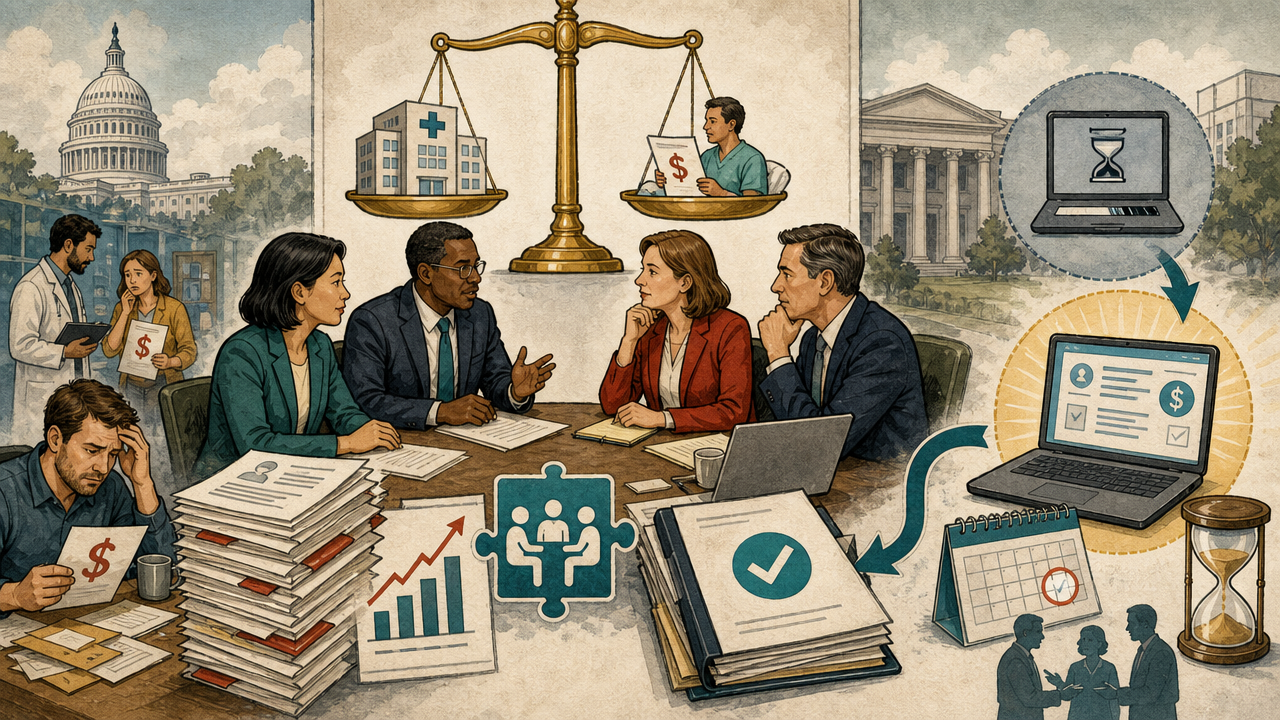
Federal health, labor, and treasury officials met with the organizations that decide out-of-network payment disputes under the No Surprises Act. CMS says the program has received and closed more than 7 million disputes since April 2022, but case volume and administrative costs have grown faster than expected.
What it means for voters
The No Surprises Act generally protects insured patients from many surprise bills after emergency care or certain out-of-network treatment. But the dispute process behind the scenes can affect what insurers and providers pay each other, and those costs can eventually influence premiums, provider networks, and availability of care. No new patient charge or benefit was announced at this meeting.
Find my representatives · Look up elected officials for your address.
Save stories & follow topics · Open this story
Get the context & analysis
Federal health, labor, and treasury officials met with the organizations that decide out-of-network payment disputes under the No Surprises Act. CMS says the program has received and closed more than 7 million disputes since April 2022, but case volume and administrative costs have grown faster than expected. The agencies are considering operational and regulatory changes, including a planned late-2026 replacement for the current online portal.
What to watch
Watch for proposed rules or operational changes to the federal dispute process, and for the late-2026 launch of the new IDR Gateway. Patients should still review bills, explanations of benefits, and appeal options when they receive an unexpected charge.
Context from earlier events
The No Surprises Act created a process in which independent reviewers can decide certain payment fights between insurers and out-of-network providers, instead of sending the patient the full disputed bill.