Listen to this story
Paychecks; jobs; wages; Federal Reserve; economic life Nationwide
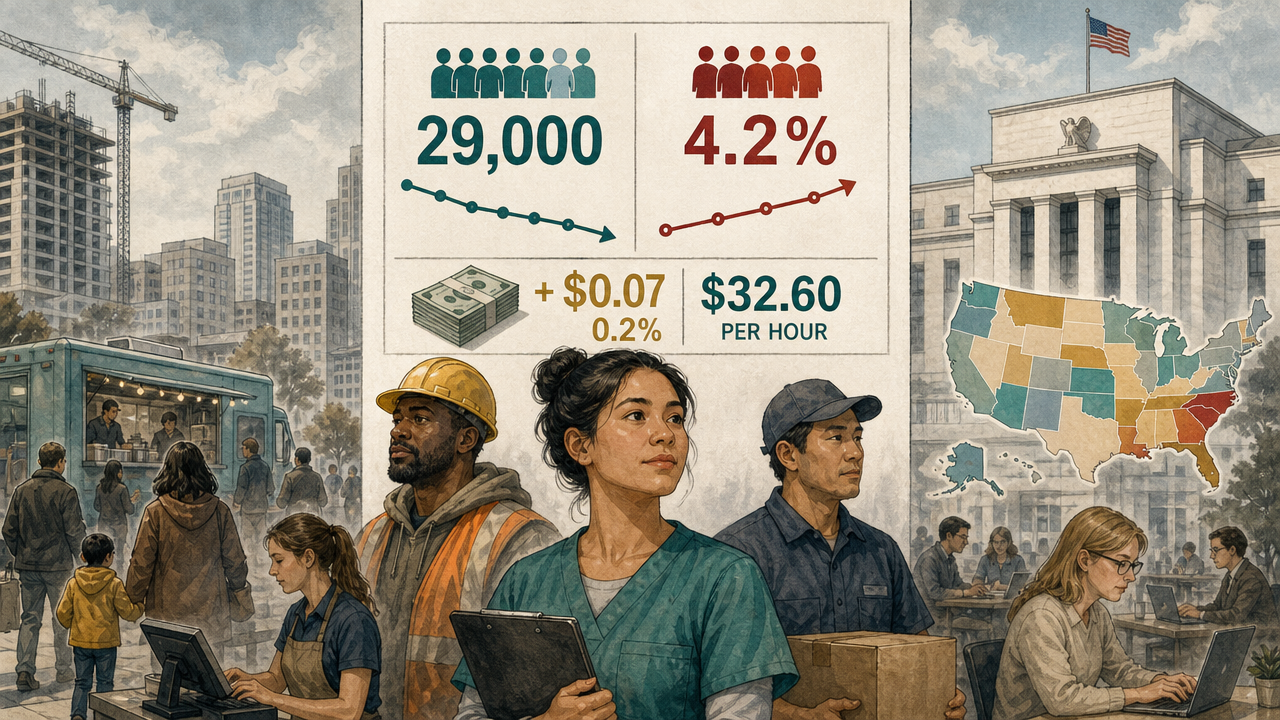
September hiring slowed to 29,000 jobs, while unemployment rose to 4.2%
In effect: This is an official federal statistical release, not a proposed rule or bill. It reports labor-market conditions measured for September 2026. Verify status
What happened
The Bureau of Labor Statistics reported that employers added 29,000 jobs in September and that the unemployment rate rose from 4.1% to 4.2%. Average hourly earnings for private-sector production and nonsupervisory workers rose 7 cents, or 0.2%, to $32.60.
What it means for voters
A slower hiring market can make it harder for people looking for work to find a job or negotiate a better paycheck. For workers who are already employed, a modest pay increase may not go far if rent, food, insurance, or debt payments are rising faster. The report can also influence future Federal Reserve decisions that affect borrowing costs for cars, homes, and credit cards.
Find my representatives · Look up elected officials for your address.
Save stories & follow topics · Open this story
Get the context & analysis
The Bureau of Labor Statistics reported that employers added 29,000 jobs in September and that the unemployment rate rose from 4.1% to 4.2%. Average hourly earnings for private-sector production and nonsupervisory workers rose 7 cents, or 0.2%, to $32.60. The report is a national snapshot, so conditions can still look very different by state, occupation, and neighborhood.
What to watch
The next inflation report is due October 14, and the next national jobs report is scheduled for November 6. Watch whether hiring picks up, whether layoffs rise, and whether pay grows faster than household costs.
Context from earlier events
The BLS report follows a period of weaker hiring growth and is one of the main public data sources used by workers, employers, lawmakers, and the Federal Reserve.