Listen to this story
Voting; federal courts; state election administration Nationwide, with state-by-state election effects
Supreme Court order leaves mail-voting restrictions in legal limbo close to the midterms
Challenged in court: The Supreme Court’s emergency action did not settle the legality of the executive order. Further lawsuits and state-specific election rules remain active factors. Verify status
What happened
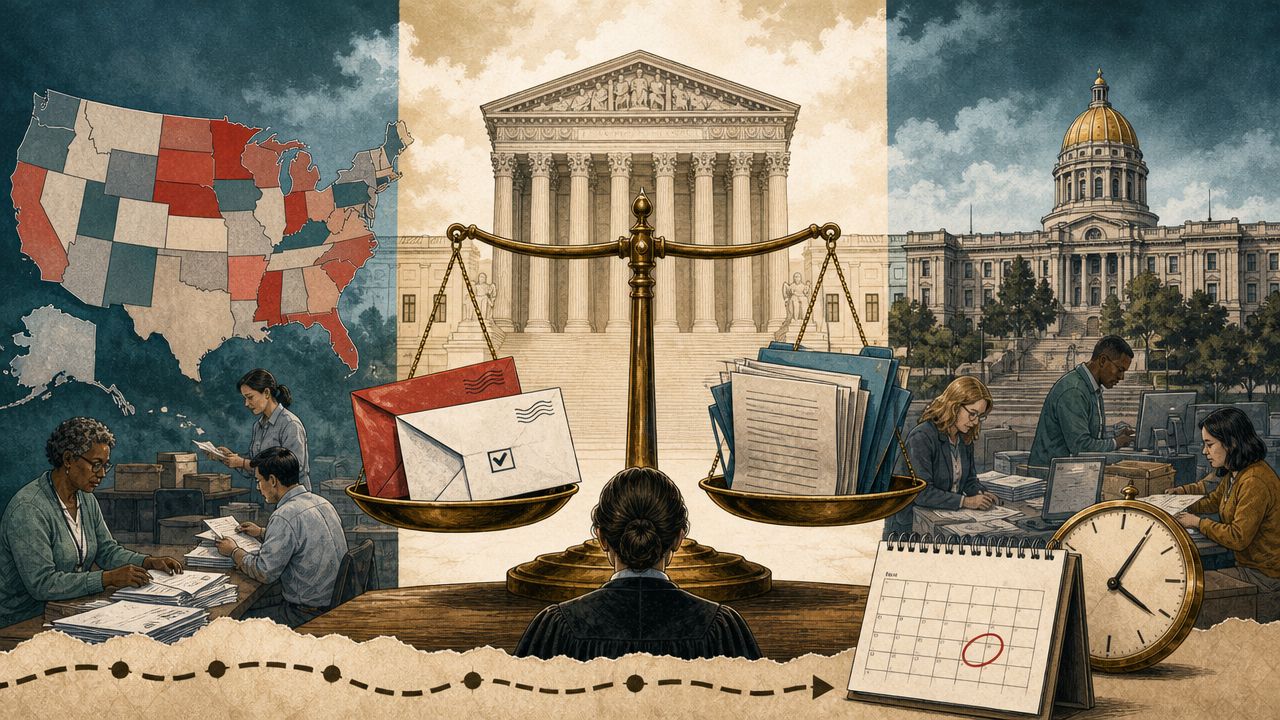
In late August, the Supreme Court cleared a procedural path for the Trump administration to pursue parts of its executive order on mail voting, but it did not decide whether the order is legal. States and other challengers can still bring additional cases, and the practical rules for November vary by state.
What it means for voters
Mail voting is used by military voters, older voters, people with disabilities, people working long shifts, and many voters who cannot easily get to the polls. Because rules can change through court orders or state guidance, voters should not assume a national headline changes their own ballot rules. The reliable source for a voter’s deadline, ID requirement, ballot tracking, and return options is their state or local election office.
Find my representatives · Look up elected officials for your address.
Save stories & follow topics · Open this story
Get the context & analysis
In late August, the Supreme Court cleared a procedural path for the Trump administration to pursue parts of its executive order on mail voting, but it did not decide whether the order is legal. States and other challengers can still bring additional cases, and the practical rules for November vary by state. The administration’s order includes federal efforts involving voter information and mail-ballot procedures, while states still run most election operations.
What to watch
Watch for new court orders, Postal Service implementation steps, and state election-office notices before the November 3 election. Overseas and military voters should check their ballot status especially early.
Context from earlier events
The White House issued Executive Order 14399 on March 31, 2026. Litigation over implementation has continued as states prepare for the November 3 midterm election.