Listen to this story
Voting; U.S. Senate; trade; healthcare; utilities Michigan
Michigan Senate candidates clash over tariffs, healthcare, gas, and data-center rules in first debate
Proposed: The policy ideas discussed in the debate are campaign positions, not bills that have passed Congress or rules now in effect. Verify status
What happened
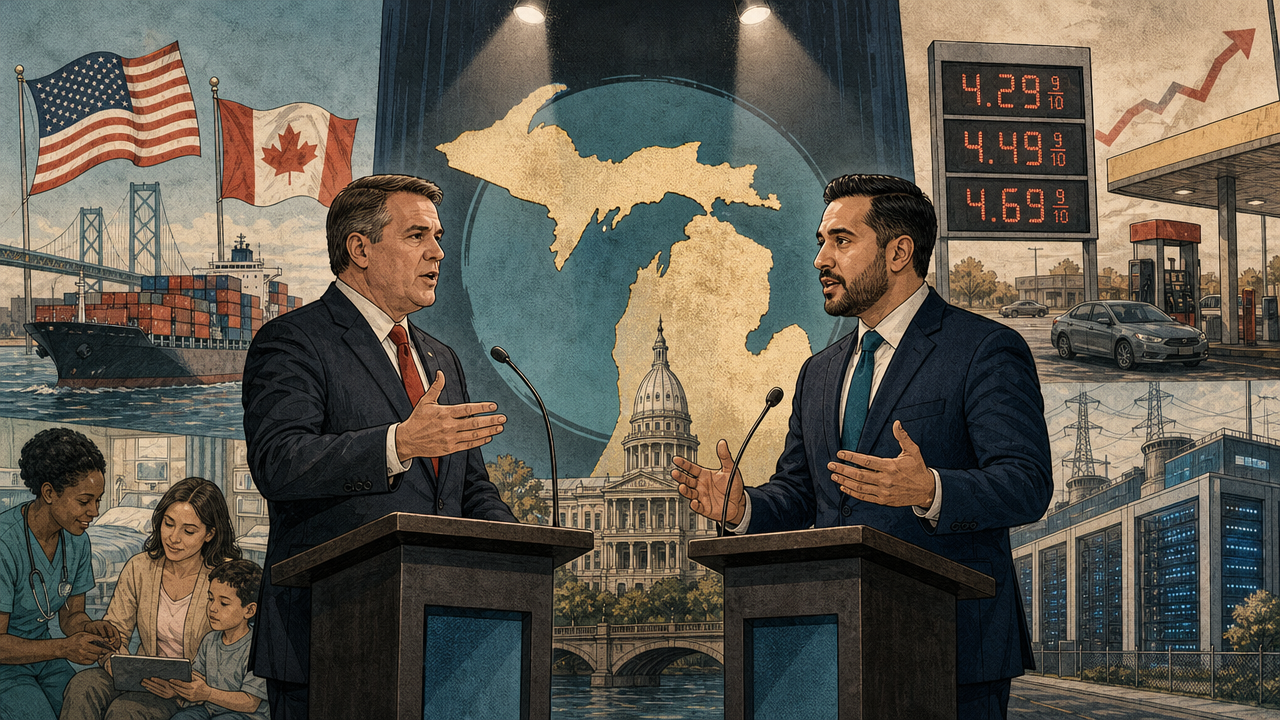
Republican Mike Rogers and Democrat Abdul El-Sayed held their first televised debate for Michigan’s open U.S. Senate seat on October 8. The exchange was often personal, but it also covered trade with Canada, healthcare, gas prices, and regulation of data centers.
What it means for voters
This was not a vote and it changed no policy today. It matters because Michigan voters will choose a senator who could help decide control of the Senate and vote on national laws affecting taxes, health coverage, trade, energy, and labor. A debate is most useful when voters use it to compare actual proposals, not just the sharpest lines.
Find my representatives · Look up elected officials for your address.
Save stories & follow topics · Open this story
Get the context & analysis
Republican Mike Rogers and Democrat Abdul El-Sayed held their first televised debate for Michigan’s open U.S. Senate seat on October 8. The exchange was often personal, but it also covered trade with Canada, healthcare, gas prices, and regulation of data centers. Rogers repeated his call to end the Canada tariff dispute; the candidates offered competing views on the role of federal policy in lowering costs.
What to watch
The candidates’ next debate, specific written plans on healthcare and energy bills, and whether either campaign explains how its proposals would pass Congress and be paid for.
Context from earlier events
The seat is open because Democratic Sen. Gary Peters is retiring. Michigan is a closely watched Senate contest because control of the chamber may be decided by a small number of races.