Listen to this story
Jobs; paychecks; tariffs; prices; executive branch Nationwide, with concentrated effects in manufacturing communities
Federal tariffs remain in force as factory workers report uneven job effects
In effect: Current import duties imposed through federal trade authority remain active. Their rates and country coverage can change, and legal challenges have already altered the administration’s earlier tariff approach. Verify status
What happened
Federal import tariffs remain in place after earlier broad tariffs were struck down by the Supreme Court. The administration is now using other trade-law authority for duties generally ranging from 10% to 12.5% on imports from 60 economies, according to the Associated Press.
What it means for voters
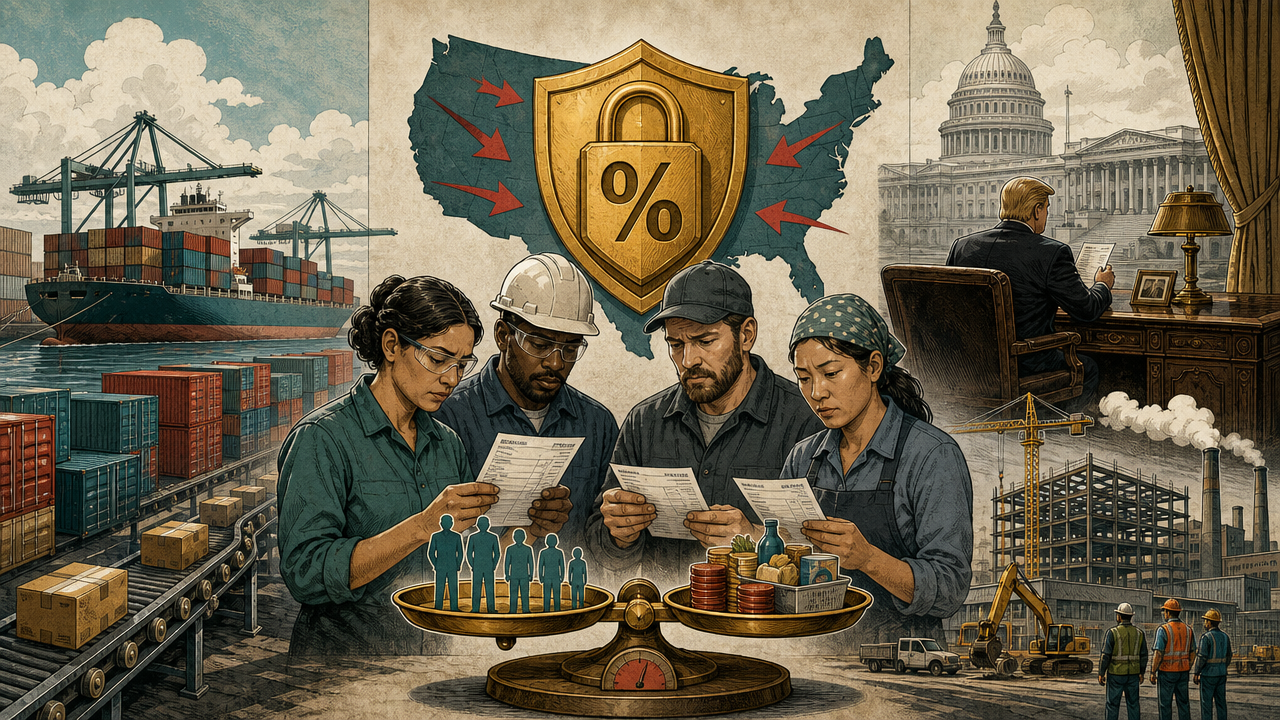
Tariffs are taxes paid at the border on imported goods. They can help some domestic producers compete, but they can also raise costs for companies that rely on imported parts and materials. For workers, the effects are uneven: some factories may gain business, while companies that cannot absorb higher input costs can cut jobs or raise prices. The president can impose certain tariffs under trade laws, while Congress can change those laws or limit executive action.
Find my representatives · Look up elected officials for your address.
Save stories & follow topics · Open this story
Get the context & analysis
Federal import tariffs remain in place after earlier broad tariffs were struck down by the Supreme Court. The administration is now using other trade-law authority for duties generally ranging from 10% to 12.5% on imports from 60 economies, according to the Associated Press. A separate AP report found that manufacturing employment is lower than when President Trump returned to office, although the White House says factory construction and output point to future gains.
What to watch
Whether companies pass tariff costs on through prices, add or cut jobs, and whether Congress takes up proposals to limit unilateral tariff authority. Local job reports matter more than national promises for workers in affected towns.
Context from earlier events
The administration’s broadest earlier tariffs were struck down by the Supreme Court in February 2026. The White House then shifted to other statutory authority for current duties.