The daily civic brief
U.S. Civic & Pocketbook Scan — October 12, 2026
Today’s biggest practical political stories are about fuel costs, trade policy, health-price information, and voting rules that are already changing in several states. A lot of campaign talk is still floating around, but the useful part is where government decisions can affect a gas bill, a job, a medical bill, or the steps needed to cast a ballot.
Estimated 4-minute catch-up · 6 stories
Today's audio briefing
Today's spoken briefing
Hear the latest national briefing and what to watch next for every headline. A restrained instrumental bed plays in the web player.
Read the audio transcript
Fuel prices; energy policy; Congress; White House accountability Nationwide
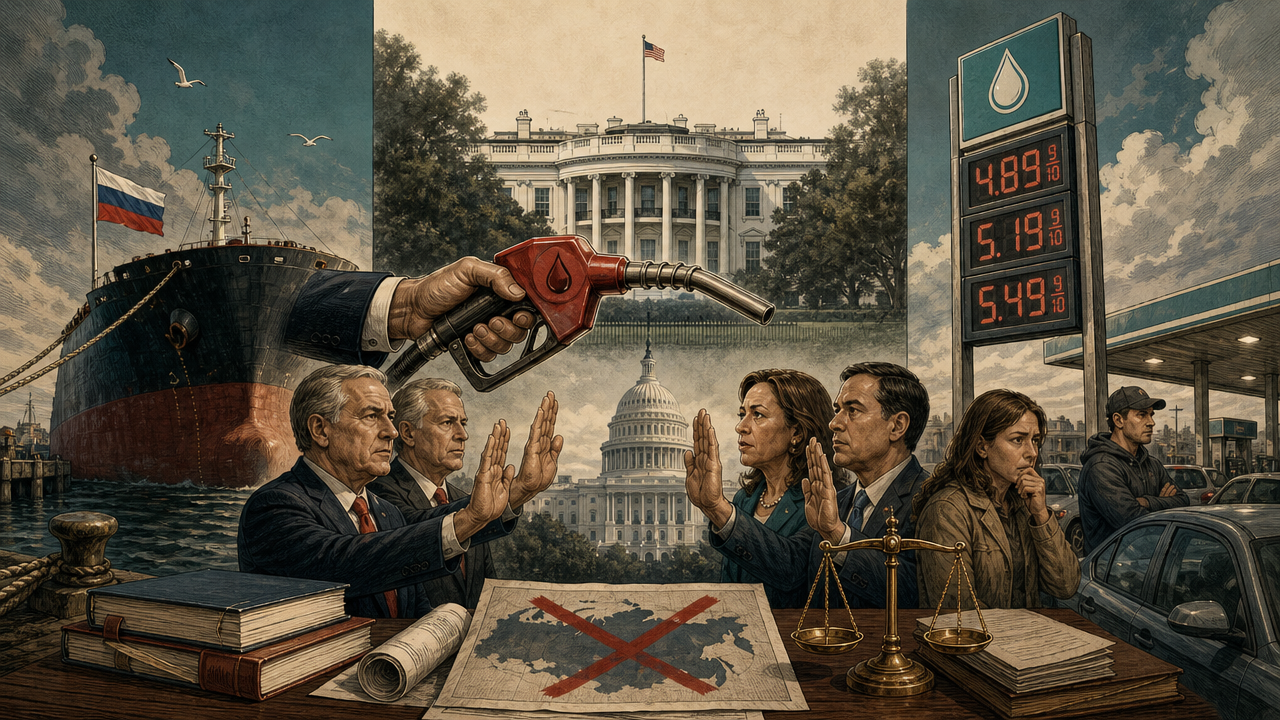
Russian diesel-import plan faces bipartisan pushback, and cheaper fuel is not guaranteed
Proposed: The president announced a planned diesel arrangement, but reporting on October 11 said senators were challenging whether the administration can legally carry it out. The practical terms and implementation remain unclear. Verify status
What happened
President Donald Trump said Friday that Russia would supply diesel to the United States and global market, starting with more than 300,000 tons and followed by larger shipments. On Sunday, four Republican and two Democratic senators called for the administration to reverse course, arguing that the plan conflicts with existing U.S. restrictions on Russian energy imports.
What it means for voters
Diesel costs ripple into household budgets because trucks, farms, construction crews, and delivery companies use it. Higher diesel prices can raise the cost of groceries and other goods, but the evidence so far does not support a promise of quick relief from this specific import plan. Congress writes energy-import restrictions, while the White House carries out foreign-policy and trade decisions; lawmakers are now questioning whether this plan follows the law.
Save stories & follow topics · Link to this story
Get the context & analysis
President Donald Trump said Friday that Russia would supply diesel to the United States and global market, starting with more than 300,000 tons and followed by larger shipments. On Sunday, four Republican and two Democratic senators called for the administration to reverse course, arguing that the plan conflicts with existing U.S. restrictions on Russian energy imports. Energy experts cited by the Associated Press said the announced volume is unlikely to make a meaningful dent in high diesel prices.
What to watch
Whether the administration publishes a legal explanation, moves forward with purchases, or changes the plan after pressure from Congress. Watch also for actual diesel-price movement rather than campaign claims about what the deal might do.
Context from earlier events
Congress banned Russian energy imports in 2022 after Russia invaded Ukraine. The senators say the new diesel plan would run against that earlier restriction.
Check sources (1)
Primary and independent sources
Jobs; paychecks; tariffs; prices; executive branch Nationwide, with concentrated effects in manufacturing communities
Federal tariffs remain in force as factory workers report uneven job effects
In effect: Current import duties imposed through federal trade authority remain active. Their rates and country coverage can change, and legal challenges have already altered the administration’s earlier tariff approach. Verify status
What happened
Federal import tariffs remain in place after earlier broad tariffs were struck down by the Supreme Court. The administration is now using other trade-law authority for duties generally ranging from 10% to 12.5% on imports from 60 economies, according to the Associated Press.
What it means for voters
Tariffs are taxes paid at the border on imported goods. They can help some domestic producers compete, but they can also raise costs for companies that rely on imported parts and materials. For workers, the effects are uneven: some factories may gain business, while companies that cannot absorb higher input costs can cut jobs or raise prices. The president can impose certain tariffs under trade laws, while Congress can change those laws or limit executive action.
Save stories & follow topics · Link to this story
Get the context & analysis
Federal import tariffs remain in place after earlier broad tariffs were struck down by the Supreme Court. The administration is now using other trade-law authority for duties generally ranging from 10% to 12.5% on imports from 60 economies, according to the Associated Press. A separate AP report found that manufacturing employment is lower than when President Trump returned to office, although the White House says factory construction and output point to future gains.
What to watch
Whether companies pass tariff costs on through prices, add or cut jobs, and whether Congress takes up proposals to limit unilateral tariff authority. Local job reports matter more than national promises for workers in affected towns.
Context from earlier events
The administration’s broadest earlier tariffs were struck down by the Supreme Court in February 2026. The White House then shifted to other statutory authority for current duties.
Check sources (2)
Voting; state government; election administration; access Nationwide, with different rules by state
New state voting rules are changing what some voters need to do before Election Day
In effect: The listed state requirements are in force for the 2026 election in the states described, though some face active legal challenges. Federal proposals for a national proof-of-citizenship rule and national voter-ID requirement did not take effect for this election. Verify status
What happened
More than three dozen election laws passed in Republican-controlled states are taking effect for the first time this year, according to the Associated Press. Examples include New Hampshire no longer accepting student IDs for voting, Utah requiring added information on mail-ballot envelopes, and Ohio requiring proof of citizenship for some voter-registration transactions while ending its mail-ballot grace period.
What it means for voters
There is no single national ballot rule for this election. States run elections, so the paperwork, ID, registration, and mail-ballot deadlines depend on where a voter lives. A missed envelope detail or a ballot arriving after a state deadline can mean a vote is not counted. Supporters say stricter rules protect election integrity; critics say document and travel requirements can burden eligible voters, especially people without easy access to records or transportation.
Save stories & follow topics · Link to this story
Get the context & analysis
More than three dozen election laws passed in Republican-controlled states are taking effect for the first time this year, according to the Associated Press. Examples include New Hampshire no longer accepting student IDs for voting, Utah requiring added information on mail-ballot envelopes, and Ohio requiring proof of citizenship for some voter-registration transactions while ending its mail-ballot grace period. Some of the laws are being challenged in court.
What to watch
Check the official election office in your state before voting, especially if using a mail ballot, registering for the first time, or relying on a student ID. Court rulings could still alter some rules before November 3.
Context from earlier events
State voting-law changes have continued since a wave of new rules began after the 2020 election. Courts, election offices, and state legislatures—not the White House alone—control most of the rules voters encounter.
Check sources (1)
Primary and independent sources
Healthcare costs; insurance; federal regulation; consumer information Nationwide
New federal health-price rule will expand how insurance cost data can be found and used
Passed: The agencies finalized the regulation on October 5. It has staged effective and applicability dates, so not every consumer-facing requirement starts immediately. Verify status
What happened
The Departments of Health and Human Services, Labor, and Treasury finalized updated health-insurance price-transparency rules on October 5. The rule requires plans and insurers to make their public pricing files easier to locate and more complete, and it expands the amount of out-of-network payment data disclosed.
What it means for voters
This does not set a doctor’s price or guarantee lower bills. It is meant to make it easier for patients, employers, and tool builders to see negotiated rates and likely out-of-pocket costs before care. That can be useful when comparing hospitals, imaging centers, or insurance options, but it will still take time for insurers and consumer tools to put the data into forms regular people can use.
Save stories & follow topics · Link to this story
Get the context & analysis
The Departments of Health and Human Services, Labor, and Treasury finalized updated health-insurance price-transparency rules on October 5. The rule requires plans and insurers to make their public pricing files easier to locate and more complete, and it expands the amount of out-of-network payment data disclosed. It also requires personalized cost-sharing information to be available by phone as well as online for plan years beginning on or after January 1, 2027.
What to watch
The rule becomes effective 60 days after its Federal Register publication. The price-file changes begin five months after publication, while some new files begin 11 months after publication. The phone-based cost-sharing requirement starts for plan years beginning January 1, 2027, or later.
Context from earlier events
Federal transparency rules already required insurers to publish large pricing files and provide online cost-sharing tools. The new rule tries to address complaints that the data was too hard to find, compare, and use.
Prescription drugs; Medicaid; state-federal government; taxpayer costs Nationwide, administered through participating state Medicaid programs
Medicaid drug-payment model moves into its next phase after states’ sign-up deadline
In effect: CMS says the GENEROUS Model began in January 2026 and runs for five years. State participation and agreements determine where and how it operates. Verify status
What happened
CMS says 40 states and Puerto Rico had signed agreements by its September announcement to join the GENEROUS Medicaid drug-payment model, while all 50 states, Washington, D.C., and Puerto Rico had applied. The model seeks to have participating drug manufacturers provide certain outpatient drugs to participating Medicaid programs at prices tied to lower prices in other countries.
What it means for voters
Medicaid is jointly funded by states and the federal government, so lower drug spending could affect state budgets as well as federal spending. The program is not a blanket promise that every prescription will suddenly cost less at the pharmacy. Effects depend on each state’s participation, manufacturer agreements, and the drugs covered by the model.
Save stories & follow topics · Link to this story
Get the context & analysis
CMS says 40 states and Puerto Rico had signed agreements by its September announcement to join the GENEROUS Medicaid drug-payment model, while all 50 states, Washington, D.C., and Puerto Rico had applied. The model seeks to have participating drug manufacturers provide certain outpatient drugs to participating Medicaid programs at prices tied to lower prices in other countries. The remaining states had until September 30 to sign agreements, and CMS says the five-year model began in January 2026.
What to watch
CMS has not yet provided a final public accounting in this release of which additional states signed after the September 30 deadline, which drugs will be covered in each setting, or how savings will show up for patients. Those details matter more than the headline estimate.
Context from earlier events
Medicaid coverage rules and payment systems are largely administered by states within federal requirements. That shared structure means the same federal model can work differently from one state to another.
Check sources (1)
Voting; U.S. Senate; trade; jobs; representation Michigan, with national implications for Senate control
Michigan Senate candidates put the Canada tariff dispute near the center of a pivotal race
In effect: The Canada tariff dispute Rogers criticized is part of active federal trade policy; the debate itself created no new rule or law. Verify status
What happened
Republican Mike Rogers and Democrat Abdul El-Sayed debated October 8 in the race for Michigan’s open U.S. Senate seat. The debate was often combative, but Rogers repeated his criticism of the administration’s tariffs on Canada and said he had pressed the White House for a deal to end the dispute.
What it means for voters
A Senate race matters beyond ads and debate clips because senators vote on taxes, trade laws, health programs, judges, and cabinet officials. Michigan has deep ties to manufacturing and cross-border trade, so tariffs can affect auto suppliers, farms, retailers, and workers. The debate did not change federal tariff policy, but it gave voters a concrete point of disagreement to test before Election Day.
Save stories & follow topics · Link to this story
Get the context & analysis
Republican Mike Rogers and Democrat Abdul El-Sayed debated October 8 in the race for Michigan’s open U.S. Senate seat. The debate was often combative, but Rogers repeated his criticism of the administration’s tariffs on Canada and said he had pressed the White House for a deal to end the dispute. The winner will replace retiring Sen. Gary Peters, and both parties view the seat as important to control of the Senate.
What to watch
Watch for more details from both candidates on how they would vote on tariff authority, healthcare costs, and energy policy—not just whether they criticize the current approach. Michigan voters will decide the seat on November 3, 2026.
Context from earlier events
The user-provided popularity lead about this debate was independently verified through Associated Press reporting. The concrete civic point is the open Senate seat and the candidates’ differing approach to a live trade dispute, not the debate’s personal attacks.
Check sources (2)
You're caught up on this briefing. Choose topics and save stories to return on your own schedule.
How this briefing was made
We used official records to verify government actions and independent reporting to add context. We also checked popular political videos on YouTube for topic leads. Popularity helped us decide what to investigate, but it was not treated as proof or public opinion. Every included claim still had to be checked against the linked sources.