The daily civic brief
U.S. Civic & Pocketbook Scan — October 11, 2026
Today’s scan puts household money decisions first: getting a mortgage, paying for college, transportation spending, and the rules that shape school rights and voting administration. The biggest near-term deadlines are for families filling out the 2027–28 FAFSA and for lenders preparing for a January 1 change in FHA mortgage scoring.
Estimated 4-minute catch-up · 5 stories
Today's audio briefing
Today's spoken briefing
Hear the latest national briefing and what to watch next for every headline. A restrained instrumental bed plays in the web player.
Read the audio transcript
Housing; mortgages; credit; federal regulation Nationwide
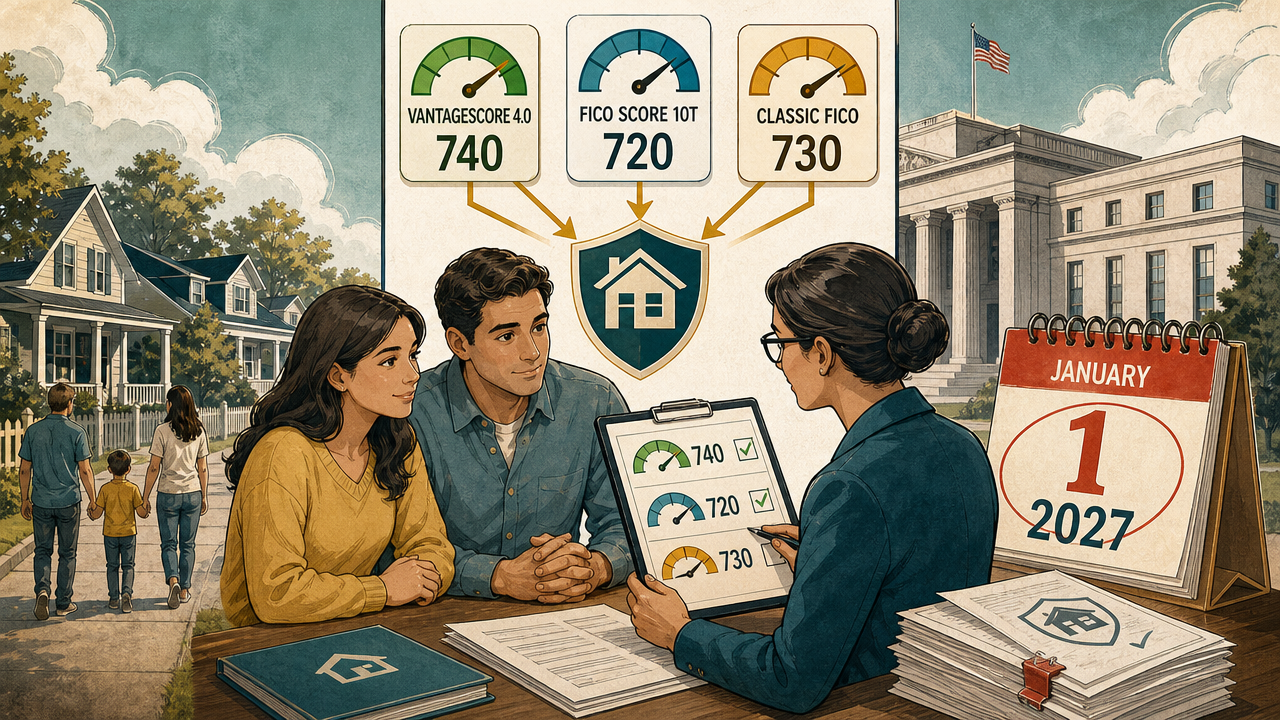
FHA confirms how newer credit scores will be used for federally insured mortgages starting January 1
Passed: FHA issued Mortgagee Letter 2026-11 and implementation guidance. The policy is set to apply to eligible FHA case numbers assigned on or after January 1, 2027; it is not yet required for loans assigned before that date. Verify status
What happened
The Federal Housing Administration issued updated guidance on October 8 for using VantageScore 4.0 and FICO Score 10T alongside Classic FICO in FHA-insured mortgage decisions. The guidance applies to Title II FHA case numbers assigned on or after January 1, 2027.
What it means for voters
This could matter to people trying to buy or refinance a home with an FHA loan, especially borrowers whose rent, utility, or other payment history may be treated differently by newer scoring models. It does not mean every borrower will qualify, get a better rate, or see an instant score increase. Lenders still set many parts of a loan decision, including income, debt, down payment, and underwriting rules. HUD, through FHA, controls this insurance-program policy; Congress sets the broader FHA laws.
Save stories & follow topics · Link to this story
Get the context & analysis
The Federal Housing Administration issued updated guidance on October 8 for using VantageScore 4.0 and FICO Score 10T alongside Classic FICO in FHA-insured mortgage decisions. The guidance applies to Title II FHA case numbers assigned on or after January 1, 2027. It tells lenders how to determine the credit score used when more than one score model is submitted.
What to watch
Watch how lenders, credit bureaus, and mortgage software companies implement the change before January 1, 2027, and whether lenders charge borrowers more to obtain the additional scores.
Context from earlier events
Federal housing-finance regulators approved FICO 10T and VantageScore 4.0 for use by Fannie Mae and Freddie Mac in 2022. The newer models can use more detailed payment-history information, but that does not guarantee the same result for every household.
College costs; student aid; schools; federal government Nationwide
The 2027–28 FAFSA is open, giving families an earlier start on college-aid applications
In effect: The 2027–28 FAFSA is already available to the public for aid covering the school year beginning July 1, 2027. Verify status
What happened
The Education Department says the 2027–28 Free Application for Federal Student Aid, known as FAFSA, is available online. The form is for students seeking federal aid for school attendance between July 1, 2027, and June 30, 2028.
What it means for voters
Filling out FAFSA can be the first step toward Pell Grants, federal student loans, work-study, and many state or college aid programs. Federal aid has a later deadline, but state and college deadlines can come much sooner and some awards run out. A family that waits could still qualify for federal aid but miss priority money from its state or school. The federal Education Department runs FAFSA, while states and colleges decide many separate aid deadlines and awards.
Save stories & follow topics · Link to this story
Get the context & analysis
The Education Department says the 2027–28 Free Application for Federal Student Aid, known as FAFSA, is available online. The form is for students seeking federal aid for school attendance between July 1, 2027, and June 30, 2028. The department says the new form includes clearer instructions, text-message invitations for contributors such as parents, and real-time information about potential Pell Grant eligibility.
What to watch
Students should check their college and state financial-aid deadlines now, not just the federal deadline. Families should also watch for the department’s planned pre-filled renewal information later this fall.
Context from earlier events
Congress required FAFSA to be launched by October 1 after past rollout problems disrupted financial-aid timelines for students and colleges.
Check sources (2)
Voting; federal courts; state election administration; public safety funding Nationwide
Federal judge blocks FEMA from tying some anti-terror grants to state election-rule changes
Challenged in court: A federal judge blocked the administration from enforcing the disputed grant condition. The underlying legal fight can continue through appeals or further court action. Verify status
What happened
A federal judge ruled on September 28 that the Trump administration cannot withhold part of certain federal counterterrorism grants from states and local governments unless they meet federal election-administration demands. Reporting said FEMA had proposed holding back 20% of some grants until jurisdictions complied with listed election-related conditions.
What it means for voters
The immediate issue is not a change to how a person registers or votes. It is whether the executive branch can use public-safety grant money to pressure states and cities to change election practices. States run most election operations, while Congress and federal courts can set or enforce limits on federal power. If the ruling stands, affected governments should not have to choose between those grant dollars and the disputed conditions during the case.
Save stories & follow topics · Link to this story
Get the context & analysis
A federal judge ruled on September 28 that the Trump administration cannot withhold part of certain federal counterterrorism grants from states and local governments unless they meet federal election-administration demands. Reporting said FEMA had proposed holding back 20% of some grants until jurisdictions complied with listed election-related conditions. The ruling blocks that funding condition while the case proceeds.
What to watch
Watch for an appeal, a request to pause the ruling, or a final decision on whether FEMA had legal authority to attach election conditions to these grants.
Context from earlier events
This dispute comes after several court fights over federal efforts to reshape state election rules ahead of the November 2026 midterm elections.
Schools; civil rights; federal regulation; families Nationwide
Education Department formally restores older Title IX regulations after 2024 rule was struck down
In effect: The Education Department’s final rule took effect September 29, 2026, recodifying the regulations that existed before the 2024 Title IX rule. Verify status
What happened
The Education Department issued a final rule effective September 29 that removes the 2024 Title IX regulation from the federal rulebook and restores the earlier regulatory text. The department said it took this step because the 2024 rule had been vacated and was no longer enforceable nationwide.
What it means for voters
For students, parents, teachers, and school staff, the practical rules for handling sex-discrimination complaints now follow the restored federal regulations rather than the 2024 version. School districts and colleges must apply federal requirements, but state laws and local school policies can add other protections or procedures where they do not conflict with federal law. This does not by itself settle every school dispute; individual cases can still go through school processes and courts.
Save stories & follow topics · Link to this story
Get the context & analysis
The Education Department issued a final rule effective September 29 that removes the 2024 Title IX regulation from the federal rulebook and restores the earlier regulatory text. The department said it took this step because the 2024 rule had been vacated and was no longer enforceable nationwide. Title IX is the federal law that bars sex discrimination in education programs receiving federal funding.
What to watch
Watch for new Education Department guidance, additional lawsuits, and changes to school or college complaint procedures as institutions update their policies.
Context from earlier events
The 2024 Title IX regulation faced challenges in multiple courts. The department says the nationwide vacatur left the earlier rules in force and made a formal update to the federal code necessary.
Check sources (2)
Transit and transportation; jobs; supply chains; federal spending Nationwide
Transportation Department awards $426 million for freight and highway projects in 12 states
Passed: The Transportation Department announced the grant awards under its INFRA program. Project delivery still depends on state and local implementation, contracting, and construction schedules. Verify status
What happened
The Transportation Department announced $426 million on October 1 for freight and highway projects in 12 states through the federal INFRA grant program. The department says the awards will fund projects meant to reduce bottlenecks, expand road capacity, and improve routes used by freight traffic.
What it means for voters
A road project will not cut a family’s grocery bill or commute time overnight. But truck delays, congestion, and poor freight routes can affect shipping costs, local traffic, and construction jobs over time. The federal Transportation Department awards the grants, while state and local agencies design, build, maintain, and often add matching funds for the projects. Residents near project corridors may see construction disruptions before they see any benefit.
Save stories & follow topics · Link to this story
Get the context & analysis
The Transportation Department announced $426 million on October 1 for freight and highway projects in 12 states through the federal INFRA grant program. The department says the awards will fund projects meant to reduce bottlenecks, expand road capacity, and improve routes used by freight traffic. The grants go to public infrastructure projects, not directly to households.
What to watch
Watch for each state transportation department’s project schedule, environmental reviews where required, local public meetings, and the final construction timeline.
Context from earlier events
The INFRA program is a federal grant program for nationally or regionally significant freight and highway projects, with decisions on individual projects carried out through state and local transportation agencies.
Check sources (1)
You're caught up on this briefing. Choose topics and save stories to return on your own schedule.
How this briefing was made
We used official records to verify government actions and independent reporting to add context. We also checked popular political videos on YouTube for topic leads. Popularity helped us decide what to investigate, but it was not treated as proof or public opinion. Every included claim still had to be checked against the linked sources.