Listen to this story
Voting; state government; election administration; access Nationwide, with different rules by state
New state voting rules are changing what some voters need to do before Election Day
In effect: The listed state requirements are in force for the 2026 election in the states described, though some face active legal challenges. Federal proposals for a national proof-of-citizenship rule and national voter-ID requirement did not take effect for this election. Verify status
What happened
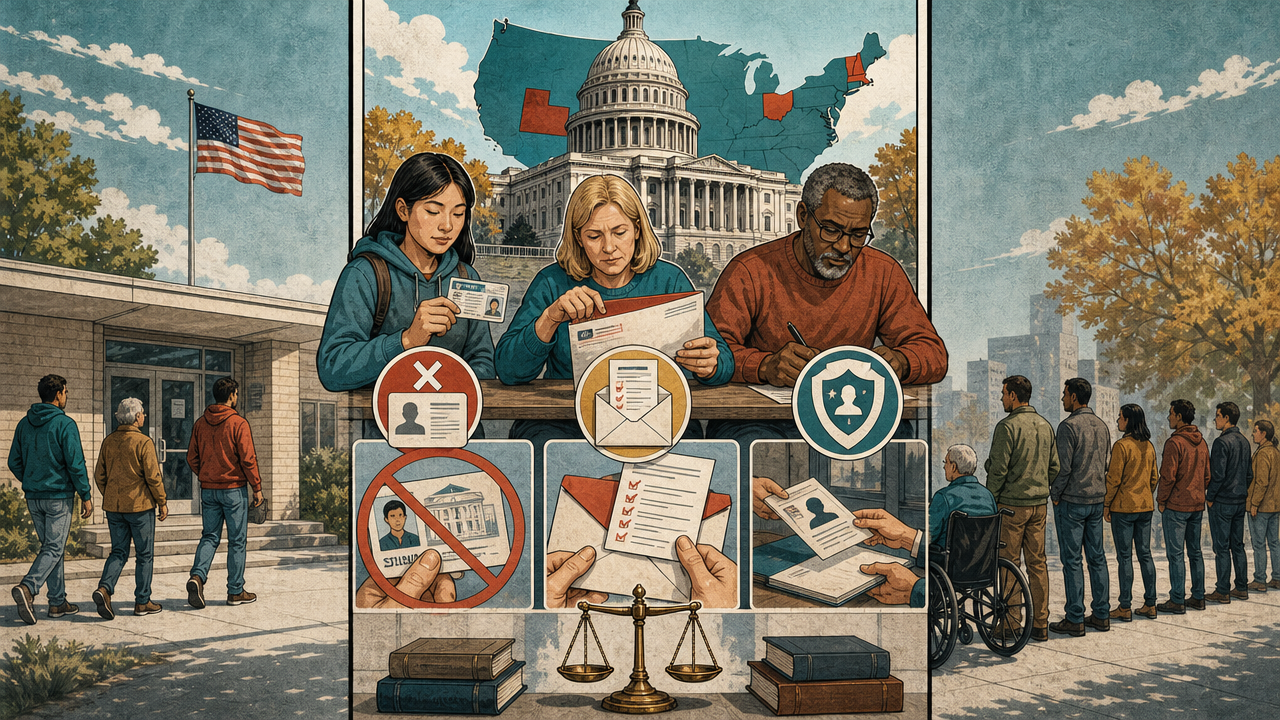
More than three dozen election laws passed in Republican-controlled states are taking effect for the first time this year, according to the Associated Press. Examples include New Hampshire no longer accepting student IDs for voting, Utah requiring added information on mail-ballot envelopes, and Ohio requiring proof of citizenship for some voter-registration transactions while ending its mail-ballot grace period.
What it means for voters
There is no single national ballot rule for this election. States run elections, so the paperwork, ID, registration, and mail-ballot deadlines depend on where a voter lives. A missed envelope detail or a ballot arriving after a state deadline can mean a vote is not counted. Supporters say stricter rules protect election integrity; critics say document and travel requirements can burden eligible voters, especially people without easy access to records or transportation.
Find my representatives · Look up elected officials for your address.
Save stories & follow topics · Open this story
Get the context & analysis
More than three dozen election laws passed in Republican-controlled states are taking effect for the first time this year, according to the Associated Press. Examples include New Hampshire no longer accepting student IDs for voting, Utah requiring added information on mail-ballot envelopes, and Ohio requiring proof of citizenship for some voter-registration transactions while ending its mail-ballot grace period. Some of the laws are being challenged in court.
What to watch
Check the official election office in your state before voting, especially if using a mail ballot, registering for the first time, or relying on a student ID. Court rulings could still alter some rules before November 3.
Context from earlier events
State voting-law changes have continued since a wave of new rules began after the 2020 election. Courts, election offices, and state legislatures—not the White House alone—control most of the rules voters encounter.