Listen to this story
Congress; federal budget; public services; federal workers Washington, D.C.; nationwide
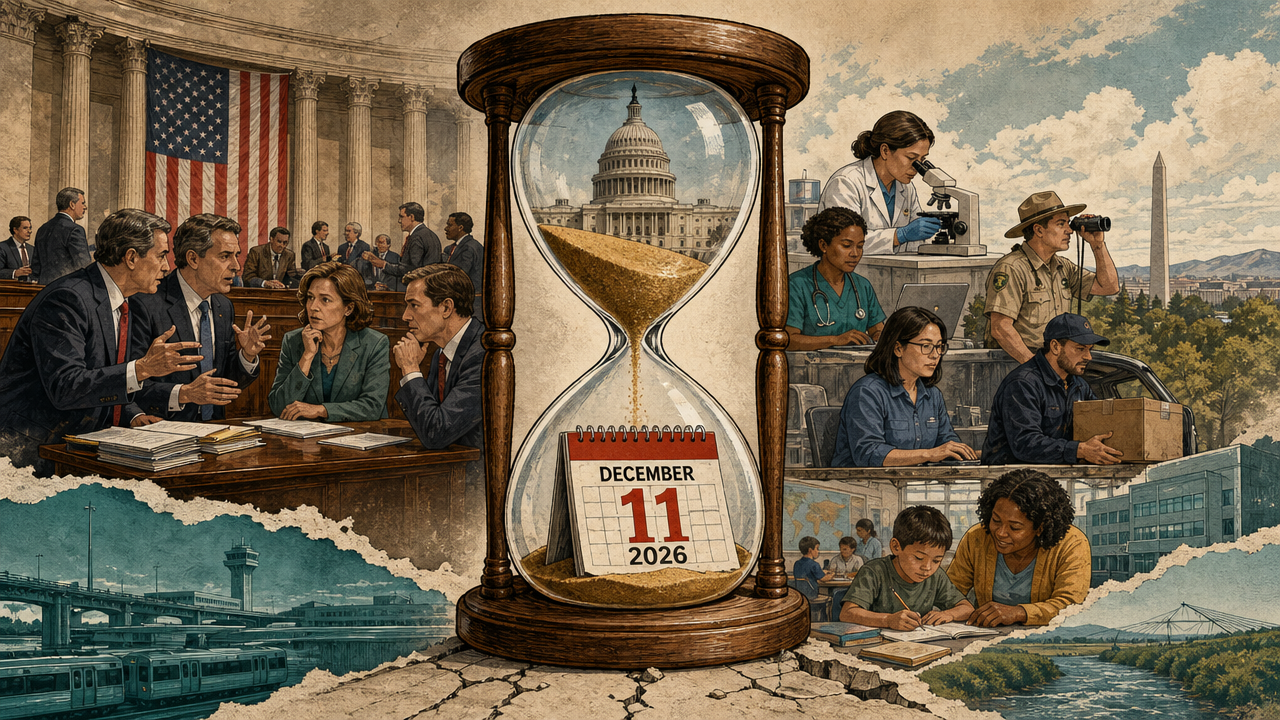
Congress has until December 11 to prevent a federal funding gap
In effect: Public Law 119-103 provides continuing appropriations through December 11, 2026. It remains the operating funding law as of November 23; a new law would be needed to continue funding after that date. Verify status
What happened
Current federal funding is set to expire on December 11, 2026, under the continuing appropriations law enacted in September. Congress must pass regular spending bills or another temporary funding law before then to avoid a funding gap beginning December 12.
What it means for voters
A funding gap can affect pay certainty for federal workers and contractors, delays in some public services, and the workload of people who keep essential operations running. What stays open and what pauses depends on agency shutdown plans and whether Congress passes a short-term extension before the deadline. There is no shutdown now, and a possible shutdown is not guaranteed. But households that depend on federal paychecks, contracts, inspections, loans, benefits processing, or public facilities have a reason to watch the talks closely.
Save stories & follow topics · Open this story
Get the context & analysis
Current federal funding is set to expire on December 11, 2026, under the continuing appropriations law enacted in September. Congress must pass regular spending bills or another temporary funding law before then to avoid a funding gap beginning December 12. Reuters reported on November 20 that lawmakers remained divided over a path forward.
What to watch
Watch Congress for an enacted full-year funding package or another continuing resolution before Friday, December 11, 2026. If neither becomes law in time, the funding gap would begin Saturday, December 12.
Context from earlier events
Congress enacted the current short-term funding law in September 2026, pushing the next deadline past the November election.