Listen to the full briefing. This edition does not have a separate audio clip for this story.
Healthcare costs; prescriptions; Medicare; executive-branch rulemaking Nationwide, in a randomly selected group of areas
Medicare finalizes a five-year test aimed at lowering prices for some doctor-administered drugs
What happened
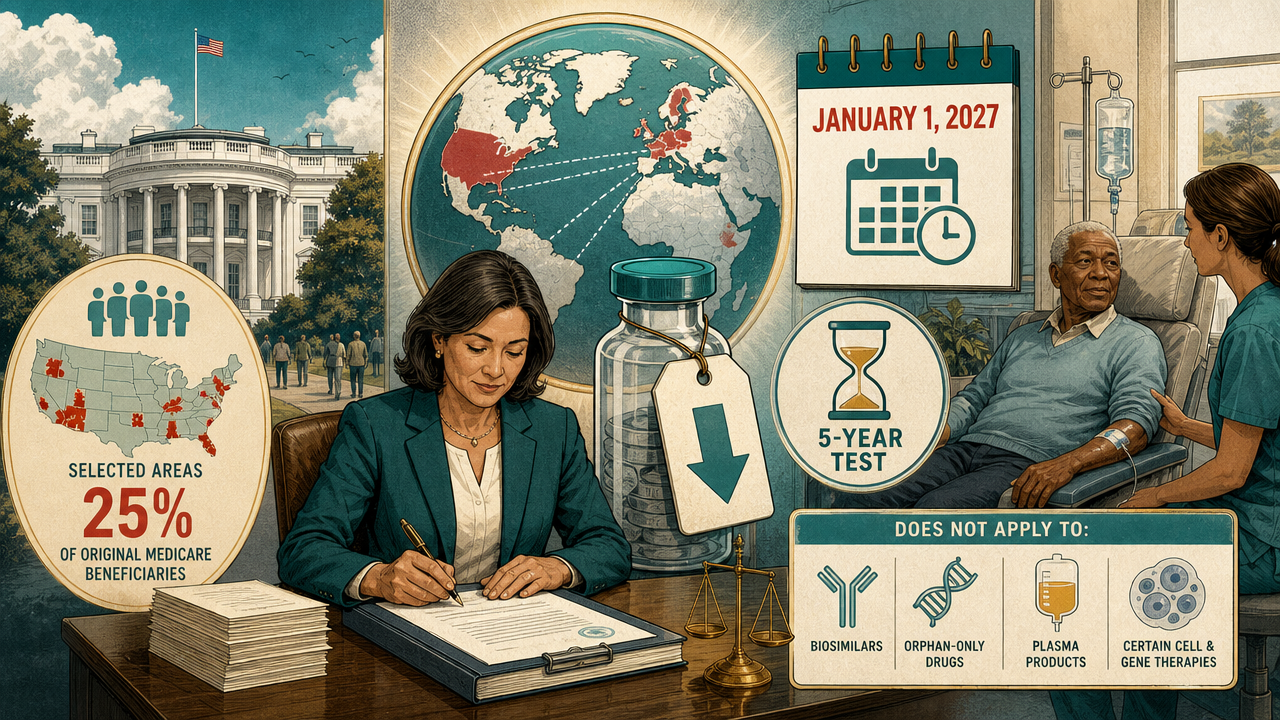
The Centers for Medicare & Medicaid Services finalized its GLOBE payment model on September 30. Beginning January 1, 2027, it will use drug prices in comparable countries to help calculate manufacturer rebates for certain drugs covered under Original Medicare Part B.
What it means for voters
Part B covers many medicines given in a doctor’s office or clinic, including some cancer and infusion treatments. CMS is trying to lower what Medicare and patients spend, but this is a payment-model test, not an immediate cut in every patient’s bill. Whether a person is included will depend on where they live and which medicine they receive. CMS controls this federal Medicare model; Congress created the broader Medicare law and can change it.
Find my representatives · Look up elected officials for your address.
Save stories & follow topics · Open this story
Get the context & analysis
The Centers for Medicare & Medicaid Services finalized its GLOBE payment model on September 30. Beginning January 1, 2027, it will use drug prices in comparable countries to help calculate manufacturer rebates for certain drugs covered under Original Medicare Part B. The test will run for five years and apply to people in selected areas covering about 25% of Original Medicare beneficiaries. It does not apply to every Part B drug: biosimilars, orphan-only drugs, plasma products, and certain cell and gene therapies are excluded.
What to watch
CMS will identify the selected areas and drugs before the January 1, 2027 start. Watch for provider and patient guidance on whether the rebate formula changes access, billing, or out-of-pocket costs.
Context from earlier events
Part B drug spending has grown faster than overall drug spending, according to CMS. The new model builds on Medicare’s existing drug-inflation rebate program rather than replacing Part B coverage rules.