The daily civic brief
U.S. Civic News Scan: Costs, Care, Voting, and Accountability
Today’s biggest verified civic developments include a major federal bank penalty, new rural-health funding, election-crime charges, and a Supreme Court case about public access to DOGE records. There is also a new House Democratic campaign agenda centered on health insurance, Medicaid, tariffs, and household costs, but it is a promise contingent on the November election—not a change in law today.
Estimated 4-minute catch-up · 5 stories
Today's audio briefing
Today's spoken briefing
Hear the latest national briefing and what to watch next for every headline. A restrained instrumental bed plays in the web player.
Read the audio transcript
Consumer banking; federal regulation; accountability Nationwide
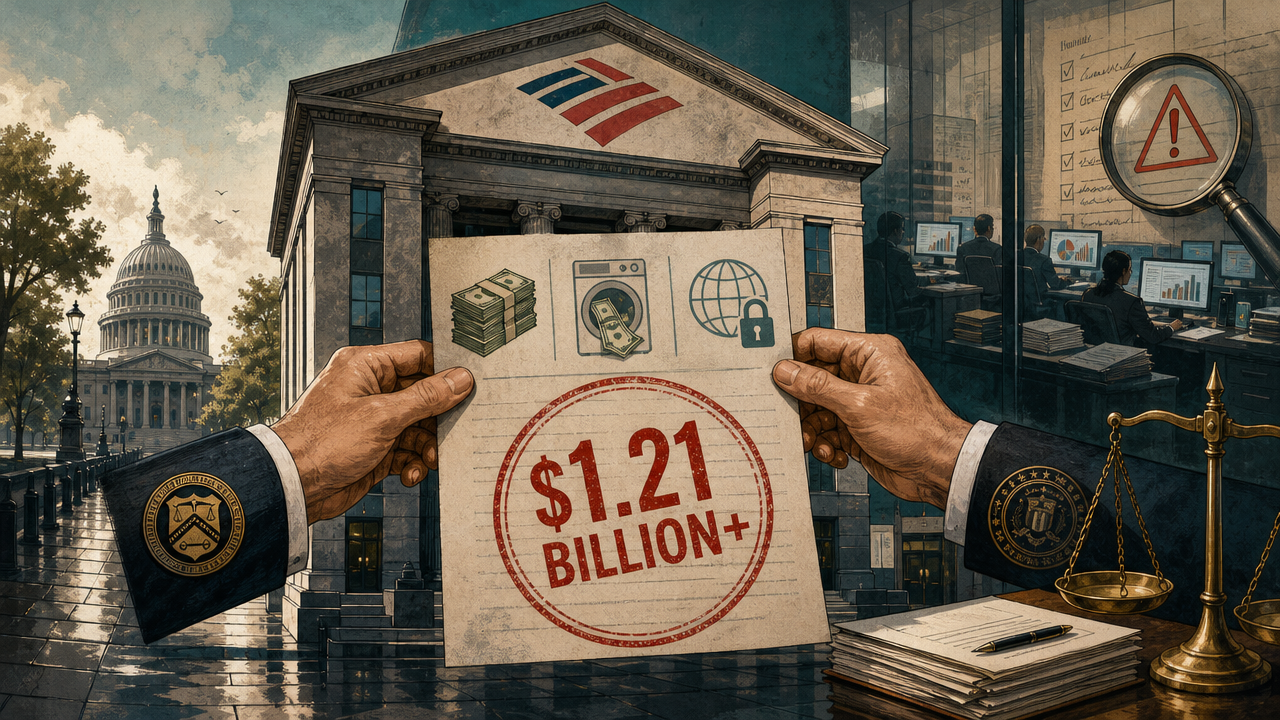
Treasury hits Bank of America with more than $1.21 billion in penalties
In effect: Treasury announced the penalties and related enforcement actions on October 13, 2026. The announcement does not itself establish that household banking prices will change. Verify status
What happened
The Treasury Department announced October 13 that Bank of America will face more than $1.21 billion in penalties over alleged failures in its anti-money-laundering and sanctions controls. Treasury said its Financial Crimes Enforcement Network assessed a $1.2 billion penalty, while the Office of the Comptroller of the Currency assessed a $750 million penalty that is included in the overall total.
What it means for voters
This does not change a customer’s checking-account fee, mortgage rate, or credit-card bill today. But it is a real test of whether bank regulators can make a huge institution fix weak controls before fraud, sanctions violations, or other illegal money movement harms customers and the wider financial system. The federal government—not Congress or state legislatures—enforces these banking rules through Treasury and its regulators.
Save stories & follow topics · Link to this story
Get the context & analysis
The Treasury Department announced October 13 that Bank of America will face more than $1.21 billion in penalties over alleged failures in its anti-money-laundering and sanctions controls. Treasury said its Financial Crimes Enforcement Network assessed a $1.2 billion penalty, while the Office of the Comptroller of the Currency assessed a $750 million penalty that is included in the overall total. Bank of America said it has invested heavily in its controls and staff who fight financial crime.
What to watch
Watch for the public enforcement orders and for details on required fixes, outside reviews, and whether regulators impose any additional customer-protection conditions.
Context from earlier events
:
Healthcare costs; rural hospitals; maternal care; workforce Nebraska and Missouri, with a federal-state model relevant nationwide
New rural-health awards target care access and staffing in Nebraska and Missouri
In effect: CMS announced these specific program awards on October 13, 2026. The funded projects still require state and local implementation before patients see the promised services. Verify status
What happened
CMS announced October 13 that Nebraska will receive more than $177 million through the Rural Health Transformation Program for recruiting providers, mobile care, remote monitoring, and service modernization. CMS also announced more than $2.3 million for Missouri projects that include child-care support for rural healthcare workers and nurse-midwife training.
What it means for voters
For rural families, the practical issue is whether money turns into nearby appointments, maternity care, mental-health support, and enough workers to keep services open. The awards are not a guaranteed cut in medical bills, and the money cannot by itself solve every hospital-budget problem. Congress created and funded the broader program; CMS is awarding federal dollars; state governments and providers control much of the on-the-ground rollout.
Save stories & follow topics · Link to this story
Get the context & analysis
CMS announced October 13 that Nebraska will receive more than $177 million through the Rural Health Transformation Program for recruiting providers, mobile care, remote monitoring, and service modernization. CMS also announced more than $2.3 million for Missouri projects that include child-care support for rural healthcare workers and nurse-midwife training. States and local providers will decide how to put the federal funds into practice.
What to watch
Look for state implementation plans, provider contracts, and plain details about which towns, clinics, workers, and patients will receive help. Missouri’s maternity-care and hospital-capacity challenges make those details especially important.
Context from earlier events
Missouri reporting earlier this year described rural hospitals facing financial strain and workforce shortages, including concerns that one-time transformation funding may not cover every long-term operating gap.
Check sources (3)
Primary and independent sources
- Centers for Medicare & Medicaid Services Trump Administration Announces More Than $177 Million to Recruit Rural Healthcare Workers, Expand Mobile Care, and Modernize Services Across Nebraska
- Centers for Medicare & Medicaid Services Trump Administration Announces New Funding to Support Rural Healthcare Workers and Expand Maternal Care Across Missouri
- Missouri Independent Rural hospitals in Missouri warn $50B grant funding won’t offset looming federal cuts
Voting; election administration; federal law enforcement Multiple states
Justice Department announces election-related charges against 16 people
Challenged in court: The Justice Department has filed criminal cases. The allegations must now be tested in federal courts, and the defendants remain presumed innocent. Verify status
What happened
The Justice Department said October 12 that it had brought charges involving 16 people in cases alleging illegal voting, fraudulent voter registration, false claims of citizenship, voting on behalf of deceased people, and related offenses. The cases are accusations, not convictions, and each defendant is presumed innocent unless proven guilty in court.
What it means for voters
Election crimes can be prosecuted under federal law, but these cases do not change who is eligible to vote or add a new voting requirement nationwide. Voters should get their registration, ID, absentee-ballot, and polling-place information from their state or local election office—not from viral posts that use individual criminal cases to make broad claims about an election.
Save stories & follow topics · Link to this story
Get the context & analysis
What to watch
Watch the individual court cases for plea agreements, trials, dismissals, or convictions. Also watch for clear public guidance from state election officials as early voting and Election Day approach.
Context from earlier events
New state voting rules are taking effect in many states this year, but those state rules are separate from these federal criminal cases.
Check sources (2)
Primary and independent sources
Community perspectives
Reporting that adds community impact and context. Official records remain the factual foundation.
Government accountability; federal courts; public records Nationwide
Supreme Court will hear dispute over public records from DOGE
Challenged in court: The Supreme Court accepted review in U.S. DOGE Service v. U.S. District Court for the District of Columbia. The underlying fight over access to records remains unresolved. Verify status
What happened
The Supreme Court agreed October 13 to hear a case about whether a government watchdog can obtain records and seek information connected to the U.S. DOGE Service, the government-efficiency operation associated with Elon Musk early in President Trump’s term. The case is about access to government information and the scope of court-ordered fact-finding while a public-records lawsuit proceeds; it is not a ruling on whether the requested records must be released.
What it means for voters
Government records can show how decisions were made about staffing, contracts, spending, and public services. That can matter to taxpayers and federal workers even when a court case does not directly change a household bill. The Supreme Court decides the legal rules; Congress writes public-records laws and can conduct oversight; the executive branch holds many of the records.
Save stories & follow topics · Link to this story
Get the context & analysis
What to watch
Watch for the Court’s argument date and a decision on how much discovery—a court-supervised process for obtaining information—a watchdog may pursue while its records case moves forward.
Context from earlier events
The dispute began after Citizens for Responsibility and Ethics in Washington sought DOGE-related records through the federal Freedom of Information Act.
National elections; healthcare costs; taxes; tariffs; congressional power Nationwide
House Democrats outline affordability agenda if voters give them the House
Proposed: House Democratic leaders described actions they say they would pursue if Democrats win control of the House. The plan has not been enacted and would require future congressional action. Verify status
What happened
House Democratic leaders said they would move quickly on Affordable Care Act premium tax credits, Medicaid changes, tariffs, and oversight if Democrats win House control in the November midterms. It is a campaign and governing plan, not legislation that has passed Congress.
What it means for voters
The proposal puts some of the biggest household questions on the ballot: whether health-insurance subsidies are restored, how Medicaid rules and funding are handled, and whether Congress changes tariff policy that can affect prices. But nothing changes for a family today. A new House majority would still need to pass bills through the Senate and, in most cases, obtain the president’s signature.
Save stories & follow topics · Link to this story
Get the context & analysis
House Democratic leaders said they would move quickly on Affordable Care Act premium tax credits, Medicaid changes, tariffs, and oversight if Democrats win House control in the November midterms. It is a campaign and governing plan, not legislation that has passed Congress. House Republican leaders have said they would instead continue the tax-cutting and spending-cut agenda they enacted with President Trump if they keep control.
What to watch
Watch the November 3 House elections, then whether either party can build enough support in both chambers of Congress for specific bills. The actual bill text, costs, and effective dates would matter more than a campaign promise.
Context from earlier events
Enhanced ACA premium tax credits expired in 2025, and the issue has become central to arguments about health-insurance costs heading into the midterms.
You're caught up on this briefing. Choose topics and save stories to return on your own schedule.
How this briefing was made
We used official records to verify government actions and independent reporting to add context. We also checked popular political videos on YouTube for topic leads. Popularity helped us decide what to investigate, but it was not treated as proof or public opinion. Every included claim still had to be checked against the linked sources.