The daily civic brief
U.S. Civic Update: Election Checks, Court Review, and Travel Disruption
As of November 14, 2026, post-election work remains a major part of the civic picture: Alaska has new called results, while Arizona’s county-level audit records are now complete but statewide certification is still ahead. Outside elections, the Supreme Court agreed to hear a major asylum-access case, and the FAA says last night’s nationwide ground stop was cancelled after communications problems affected air-traffic facilities. None of those later steps should be confused with a final court ruling, final certification, or a complete explanation of the FAA outage.
Estimated 4-minute catch-up · 5 stories
Today's audio briefing
Today's spoken briefing
Hear the latest national briefing and what to watch next for every headline. A restrained instrumental bed plays in the web player.
Read the audio transcript
Voting; election administration; governor; state representation Alaska
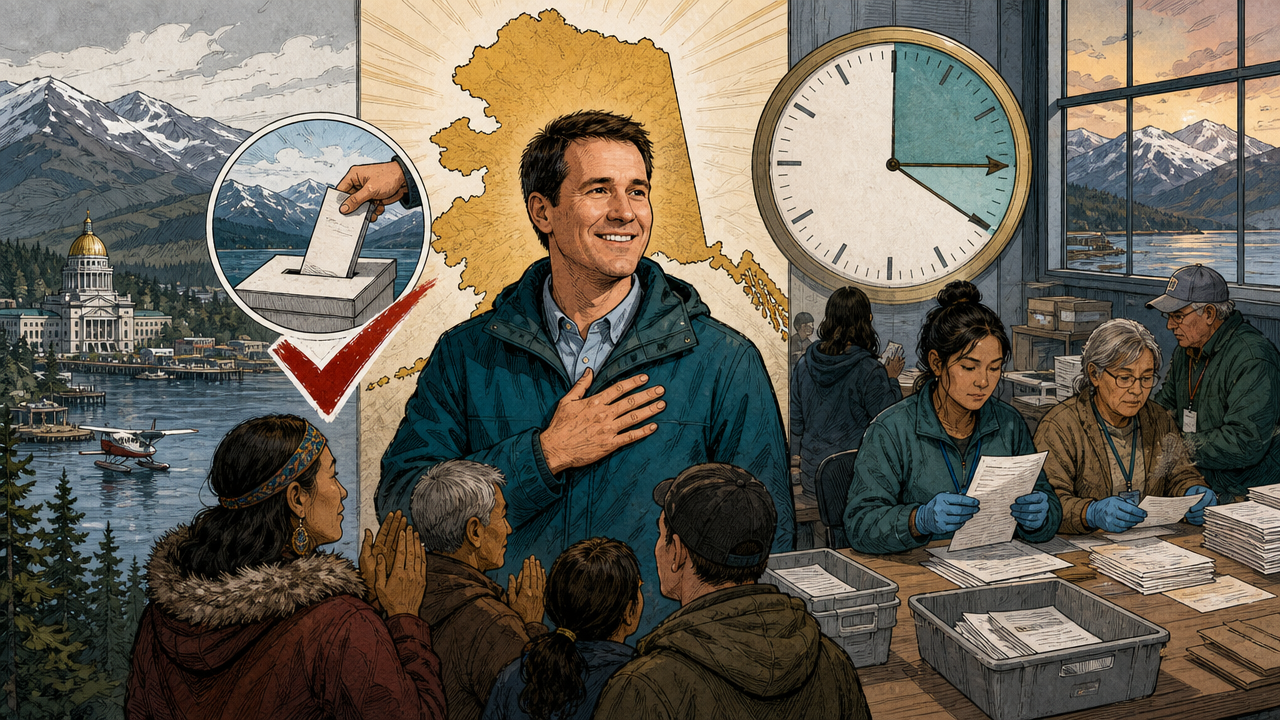
Alaska governor’s race is called, but the state’s formal count is still moving
What happened
Associated Press called Alaska’s governor’s race for Democrat Jonathan Kreiss-Tomkins on November 14. Alaska’s election office says its posted general-election material is still unofficial, and ranked-choice tabulations for contests without a first-choice majority are not available until November 18, after eligible ballots are reviewed and counted.
What it means for voters
Alaska voters appear to have chosen their next governor, but an election call is not the same thing as the state’s final certification. For workers and families, the practical point is that the incoming governor will later help shape state budgets, services, labor enforcement, energy policy, schools, and transportation. Those policy choices come after the state completes its election process and the next administration takes office; no immediate change to a household’s pay, benefits, or bills follows from the call itself.
Save stories & follow topics · Open this story
Get the context & analysis
What to watch
Watch the Alaska Division of Elections on November 18, 2026, when it says ranked-choice tabulations will become available for contests that need them, and then watch for the state’s formal certification steps.
Context from earlier events
Alaska adopted its open-primary and ranked-choice general-election system in 2022, which is why some contests can require later tabulation rounds rather than ending on election night.
Check sources (2)
Primary and independent sources
Voting; ballot measure; election rules; representation Alaska
Alaska voters reject another attempt to end open primaries and ranked-choice voting
In effect: As of November 14, 2026, Alaska’s open-primary and ranked-choice general-election system remains the operating system because the repeal measure was reported defeated. State certification is still pending, so the official election record is not complete. Verify status
What happened
Associated Press reported November 14 that Alaska voters rejected a ballot measure that sought to repeal the state’s open-primary and ranked-choice voting system. The result means the existing system remains in place unless final certified results change or a later law or ballot measure changes it.
What it means for voters
This is about the rules Alaskans use to choose candidates. Keeping the current system means voters will continue using one primary ballot that advances four candidates to the general election, followed by ranked-choice voting in the general election. It does not directly change wages, rent, or grocery prices today, but election rules affect which candidates reach office and who represents workers and households when those decisions come up.
Save stories & follow topics · Open this story
Get the context & analysis
What to watch
Watch the Alaska Division of Elections for official certification. For November 2026, the division says ranked-choice tabulations for applicable races will be available beginning November 18.
Context from earlier events
This was the second recent statewide vote on whether to overturn Alaska’s open-primary and ranked-choice system, according to Associated Press.
Check sources (2)
Voting; election administration; audits; certification Arizona
Arizona now lists completed hand-count audits for all counties; statewide canvass is next
In effect: Arizona’s statutory hand-count audit and canvass process is being carried out for the November 3, 2026 general election. The Secretary of State lists all county audit entries as completed, while county and statewide certification steps remain pending. Verify status
What happened
Arizona’s Secretary of State now lists completed hand-count audit entries for all 15 counties in the November 3 general election. Several counties reported discrepancies, but the state says each listed discrepancy was within the legally acceptable margin.
What it means for voters
Hand-count audits test a sample of ballots against the machine count. They are not a recount of every ballot, and a discrepancy within the legal margin is not by itself proof of fraud or a changed outcome. For Arizona voters, the important thing is that county canvasses and the statewide canvass are still part of making results official. That process protects every voter’s representation, whether the race they cared about was close or not.
Save stories & follow topics · Open this story
Get the context & analysis
Arizona’s Secretary of State now lists completed hand-count audit entries for all 15 counties in the November 3 general election. Several counties reported discrepancies, but the state says each listed discrepancy was within the legally acceptable margin. County canvasses are underway, and Arizona’s statewide canvass is scheduled for November 23.
What to watch
Watch Arizona county boards of supervisors through the November 19, 2026 deadline to canvass their returns. Then watch the Secretary of State, Governor, and Chief Justice for the statewide canvass scheduled for November 23.
Context from earlier events
On November 12, several Arizona county hand-count entries had not yet been posted. The Secretary of State’s current page now lists Maricopa, Gila, and Yavapai among completed audit entries.
Check sources (2)
Primary and independent sources
Courts; immigration; executive power; federal policy Washington, D.C.; nationwide
Supreme Court agrees to hear fight over Trump asylum order
Challenged in court: The executive order suspending asylum access is under Supreme Court review after lower courts found the administration could not block asylum applications in the manner challenged. The Supreme Court has agreed to hear the case but has not issued a final merits decision in the reviewed record. Verify status
What happened
The Supreme Court agreed November 13 to review President Trump’s executive order suspending access to asylum at the southern border. The administration is asking the Court to overturn lower-court rulings that found the order unlawful.
What it means for voters
This case could determine how much power a president has to restrict access to the asylum process at the border. The immediate effect for most U.S. households is indirect, but the outcome could affect border communities, immigrant families, employers that rely on immigrant labor, and federal spending on immigration enforcement and courts. As of November 14, no new Supreme Court merits ruling changes the law because the Court agreed to hear the dispute.
Save stories & follow topics · Open this story
Get the context & analysis
The Supreme Court agreed November 13 to review President Trump’s executive order suspending access to asylum at the southern border. The administration is asking the Court to overturn lower-court rulings that found the order unlawful. The Court’s decision to take the case is not a ruling on whether the order is legal.
What to watch
Watch the Supreme Court docket for an argument date and later decision. Neither was verified in the sources reviewed as of November 14, 2026.
Context from earlier events
Federal law generally permits people who fear persecution to seek asylum, while the executive branch decides whether individual applicants receive it. The dispute is over whether the administration can categorically suspend access to the application process for people covered by the order.
Check sources (1)
Primary and independent sources
Transportation; public infrastructure; federal agencies; work and commutes Nationwide
FAA cancels nationwide ground stop after communications issue
What happened
The Federal Aviation Administration said it issued a nationwide ground stop on November 13 after communications issues affected multiple air-route traffic-control centers. An FAA command-center advisory posted early November 14 says the nationwide ground stop was cancelled.
What it means for voters
A nationwide ground stop can throw off work trips, family travel, connecting flights, cargo movement, and shift schedules for people in aviation, airports, hotels, delivery, and other travel-linked jobs. The stop has been cancelled, but travelers may still face knock-on delays or rebookings. The FAA has not yet provided a final public account of the technical cause, so it would be premature to pin it on a particular system or person.
Save stories & follow topics · Open this story
Get the context & analysis
The Federal Aviation Administration said it issued a nationwide ground stop on November 13 after communications issues affected multiple air-route traffic-control centers. An FAA command-center advisory posted early November 14 says the nationwide ground stop was cancelled. The FAA described its information as preliminary and said technicians were investigating.
What to watch
Watch the FAA for a final explanation of the communications problem and for air-traffic advisories showing whether delays or other traffic-management measures continue.
Context from earlier events
No relevant context from earlier events was found.
Check sources (2)
You're caught up on this briefing. Choose topics and save stories to return on your own schedule.
How this briefing was made
We used official records to verify government actions and independent reporting to add context. We also searched recent election-related videos on YouTube for topic leads. Search rank and popularity were not treated as proof or public opinion. We also checked recent uploads from preferred news and public-affairs channels on YouTube for topic leads. Channel preference was not treated as proof or an endorsement. Every included claim still had to be checked against the linked sources.