The daily civic brief
U.S. Political Briefing — August 12, 2026
Federal election rules, health-care coverage, and several important primary contests moved this week. The biggest immediate legal development is a new court order blocking parts of the administration’s mail-voting plan for the November 3 midterms. Primary results in Wisconsin, Minnesota, Alabama, and South Carolina also set up races that could shape Congress and state power this fall.
Today's audio briefing
Today's spoken briefing
Hear the latest national briefing and what to watch next for every headline. A restrained instrumental bed plays in the web player.
Federal elections, presidential power, and mail voting Boston; nationwide
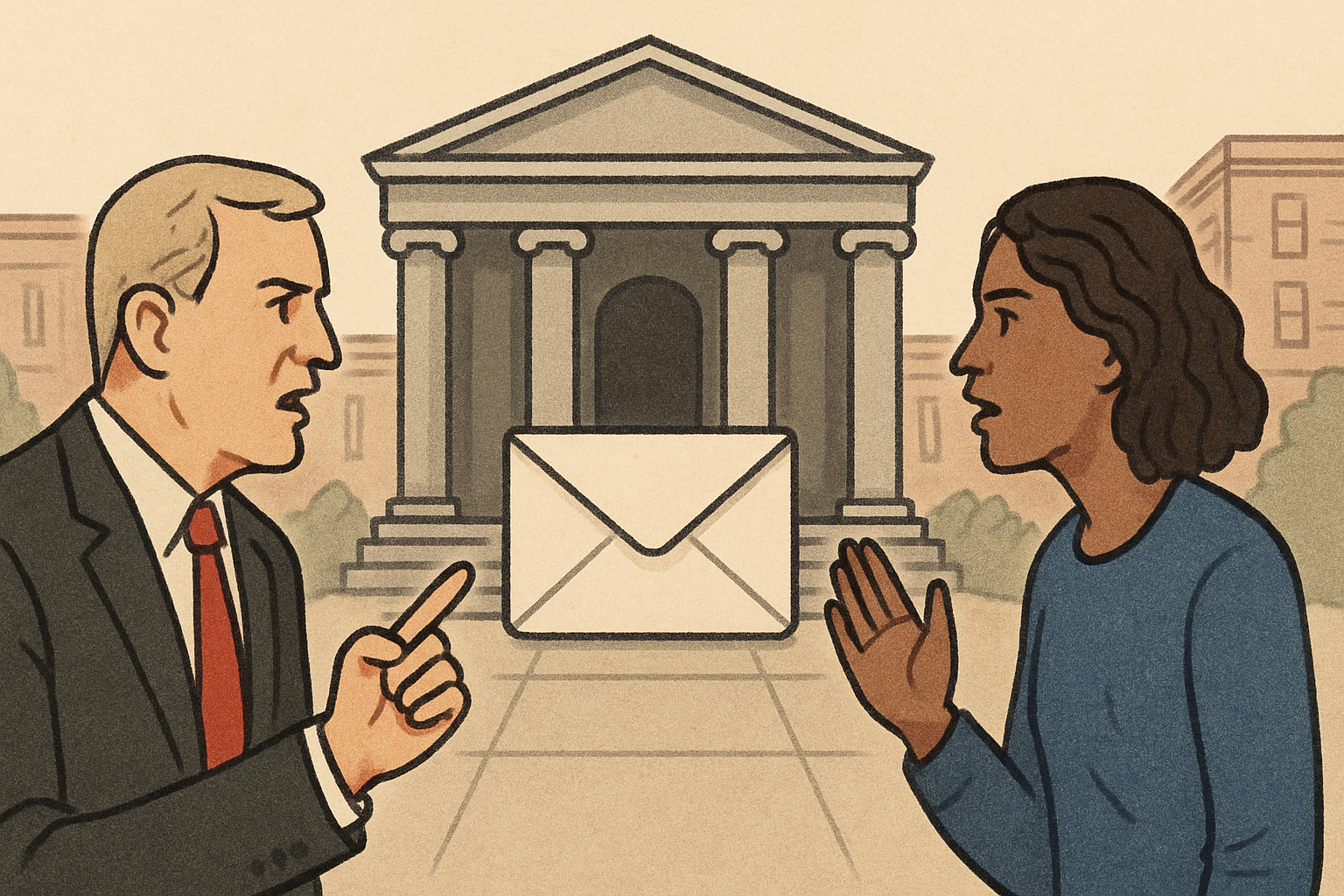
Debate spotlight: Boston judge again blocks federal mail-voting plan ahead of the midterms
What happened
A federal judge on August 11 barred the U.S. Postal Service from taking steps this year to carry out President Trump’s March election order. The order sought a federal voter list and a larger Postal Service role that could limit who receives mail ballots. The Trump administration has already asked the Supreme Court to pause related lower-court rulings; as of August 12, the Court’s docket shows no action on that emergency request.
What it means for voters
This does not change the voting rules for most people today. It keeps the lower-court blocks in place while the legal fight continues, so states covered by the rulings do not have to rebuild mail-ballot systems close to the November 3 election. Supporters say the order would strengthen citizenship checks and election security. The judge and voting-rights groups say the Constitution leaves these rule changes to states and Congress, not the president. The practical tradeoff is between a national verification system and the risk of late rule changes that could confuse voters or disrupt ballot delivery.
What to watch
Watch for a Supreme Court order in Trump v. California, No. 26A124. Also watch whether the administration appeals the new Postal Service injunction separately or asks Congress to advance the stalled SAVE America Act.
Context from earlier events
Judge Indira Talwani had already blocked core parts of the March order on June 25. The August 11 ruling addresses a separate lawsuit by voting-rights groups and specifically stops Postal Service implementation for the 2026 midterms.
Governor’s race and battleground-state politics Wisconsin
David Crowley wins Wisconsin’s Democratic nomination for governor
What happened
Milwaukee County Executive David Crowley narrowly defeated state Rep. Francesca Hong in the Democratic primary for Wisconsin governor. Crowley will face Republican U.S. Rep. Tom Tiffany in the November 3 general election for an open seat. Wisconsin’s election results are still unofficial until the state’s canvassing process is completed.
What it means for voters
Wisconsin is a closely divided state, and the governor will have a major say over state budgets, election administration, and whether either party can pair control of the governor’s office with control of the Legislature. Crowley’s win also settles a nationally watched Democratic argument over whether a more centrist or more left-wing candidate is better positioned in a swing state. But it is now a general-election race, not a decision about policy yet.
What to watch
Watch the official county and state canvasses, then the Crowley-Tiffany contest through November. Down-ballot legislative races matter too because Democrats are trying to win full control of Wisconsin state government.
Context from earlier events
The race is open because Democratic Gov. Tony Evers did not seek another term. Wisconsin does not publish one statewide election-night result system; county and then state canvasses certify the outcome.
U.S. Senate and governor elections Minnesota
Peggy Flanagan wins Minnesota’s Democratic Senate primary; Klobuchar and Demuth set governor race
What happened
Minnesota Lt. Gov. Peggy Flanagan defeated U.S. Rep. Angie Craig for the Democratic nomination to succeed retiring Sen. Tina Smith. Flanagan will face Republican Michele Tafoya in November. In the governor’s race, Democratic Sen. Amy Klobuchar won her primary and will face Republican state House Speaker Lisa Demuth, who defeated Trump-endorsed Mike Lindell.
What it means for voters
Minnesota now has an open Senate race and an open governor’s race on the same November ballot. The Senate race could affect which party controls the chamber, while the governor will shape state budgets, health programs, schools, and election administration. The primary results also show that endorsements matter, but they do not settle races: Craig had backing from several national Democratic leaders, while Lindell had Trump’s support.
What to watch
Watch whether Flanagan can hold a statewide seat for Democrats against Tafoya, and whether Demuth can make the governor’s race competitive against Klobuchar. Campaigns will also keep focusing on immigration enforcement, state oversight of public funds, and the cost of living.
Context from earlier events
Tina Smith’s retirement created the open Senate contest. Minnesota has not elected a Republican to statewide office since 2006, though Republicans argue that a state public-funds fraud scandal gives them an opening.
Redistricting, voting rights, and House control Alabama’s 2nd Congressional District
Alabama’s redrawn 2nd District sets Figures–Marques House contest
What happened
Republican state Rep. Rhett Marques won the special primary to face Democratic Rep. Shomari Figures in Alabama’s 2nd Congressional District. Alabama held new primaries in four districts after the state switched back to a Legislature-drawn map following Supreme Court action. The new 2nd District has a lower Black voting-age share than the district Figures won in 2024.
What it means for voters
This is one House seat in a closely contested national fight for control of Congress. The case also shows how map changes can alter who is likely to win representation before voters cast a general-election ballot. Republicans say the map is lawful and reflects the Legislature’s authority; critics argue the redraw weakens Black voters’ ability to elect candidates of their choice. The November result, not the primary, will decide the representative.
What to watch
Watch the August 18 county-party canvass and the state certification process, followed by the Figures-Marques campaign through November 3. Legal challenges to the map could continue as well.
Context from earlier events
A court-drawn 2024 map helped produce Alabama’s first two Black members of Congress. The Legislature’s newer map prompted the special primary after the Supreme Court allowed Alabama to use it for the 2026 election.
U.S. Senate special election South Carolina
Darline Graham and Ralph Norman advance to South Carolina’s GOP Senate runoff
What happened
Interim Sen. Darline Graham and U.S. Rep. Ralph Norman advanced from South Carolina’s Republican special primary and will meet in an August 25 runoff. The winner will face Democrat Annie Andrews in November for the seat left vacant by the July 11 death of Sen. Lindsey Graham.
What it means for voters
The race decides who will represent South Carolina in the Senate and could affect the party balance in Washington, especially if control is close after November. It also opens a real choice within the state GOP: Graham has Trump’s endorsement and serves as interim senator, while Norman brings congressional experience and backing from several conservative lawmakers. Neither is the nominee yet.
What to watch
The August 25 Republican runoff is the next hard deadline. Watch whether the runoff campaign turns mainly on Trump’s endorsement, Graham’s family connection to the late senator, or Norman’s congressional record.
Context from earlier events
Gov. Henry McMaster appointed Darline Graham to fill the seat temporarily one day after her brother’s death. State law set a compressed special-election calendar, with the general election on November 3.
Federal health policy and transgender rights Washington, D.C.; nationwide
Medicaid says it will end coverage of some gender-affirming care for minors
What happened
The Trump administration says Medicaid will stop paying for gender-affirming surgeries and hormone treatment for transgender minors on October 13. It says the Children’s Health Insurance Program, or CHIP, will no longer cover the same care for people under 19. The policy would continue mental-health coverage and would phase out hormone coverage for some current patients beginning in April 2027, according to reporting on the announcement.
What it means for voters
For families whose children use Medicaid or CHIP, the change could affect whether hormone treatment is affordable or available. The administration argues it should not use federal health funds for these treatments. Medical and LGBTQ+ advocacy groups disagree, arguing that it overrides family and clinician decisions; legal challenges are expected. This is a federal funding policy, so its effect may differ by state and by a patient’s insurance and treatment status.
What to watch
Watch for the formal CMS policy documents, state implementation guidance, and lawsuits before the stated October 13 start date. The treatment of people already receiving care is especially important because the announced phaseout is later than the initial coverage cutoff.
Context from earlier events
CMS and HHS had already proposed rules in late 2025 aimed at restricting federal funding and hospital participation related to gender-affirming care for minors. Several related administration policies have faced court challenges.
Congress and federal voting policy Washington, D.C.; nationwide
Senate’s election bill remains stalled as court fights continue
What happened
The SAVE America Act has passed the House but remains short of the votes needed to advance in the Senate. The bill would require proof of citizenship for voter registration and photo identification before voting. President Trump has pressed Senate leaders to pass it, while Senate Majority Leader John Thune has said Republicans do not have the votes to overcome the chamber’s usual 60-vote threshold.
What it means for voters
Unlike an executive order, a law passed by Congress could create nationwide election rules, subject to court review. Supporters say the bill would prevent noncitizen voting. Opponents and voting experts say document requirements could create barriers for eligible citizens who do not readily have a passport, birth certificate, or similar paperwork. For now, it is a proposal, not a rule voters must follow.
What to watch
Watch whether Senate leaders revisit the bill after the August break, try to attach parts of it to budget legislation, or leave election-policy changes to the courts and states for the 2026 cycle.
Context from earlier events
The administration’s March election order and the SAVE America Act pursue overlapping goals, including tighter citizenship verification. The courts have blocked key parts of the executive-order approach while the Senate has not passed the legislative approach.
How this briefing was made
We used official records to verify government actions and independent reporting to add context. We also checked popular political videos on YouTube for topic leads. Popularity helped us decide what to investigate, but it was not treated as proof or public opinion. Every included claim still had to be checked against the linked sources.