The daily civic brief
U.S. Political & Civic Daily Scan
Today’s scan centers on a new Kennedy Center board vote with legal consequences, unresolved federal election rules ahead of the midterms, and deadlines that could affect trade and health coverage. It also tracks two near-term special elections that will fill a House seat in California and set a Senate nominee in South Carolina. The popular derecho video was checked first as a lead, but it did not meet the national political or civic-news standard for the debate spotlight.
Today's audio briefing
Today's spoken briefing
Hear the latest national briefing and what to watch next for every headline. A restrained instrumental bed plays in the web player.
Federal memorial governance, court orders, and public cultural institutions Washington, D.C.
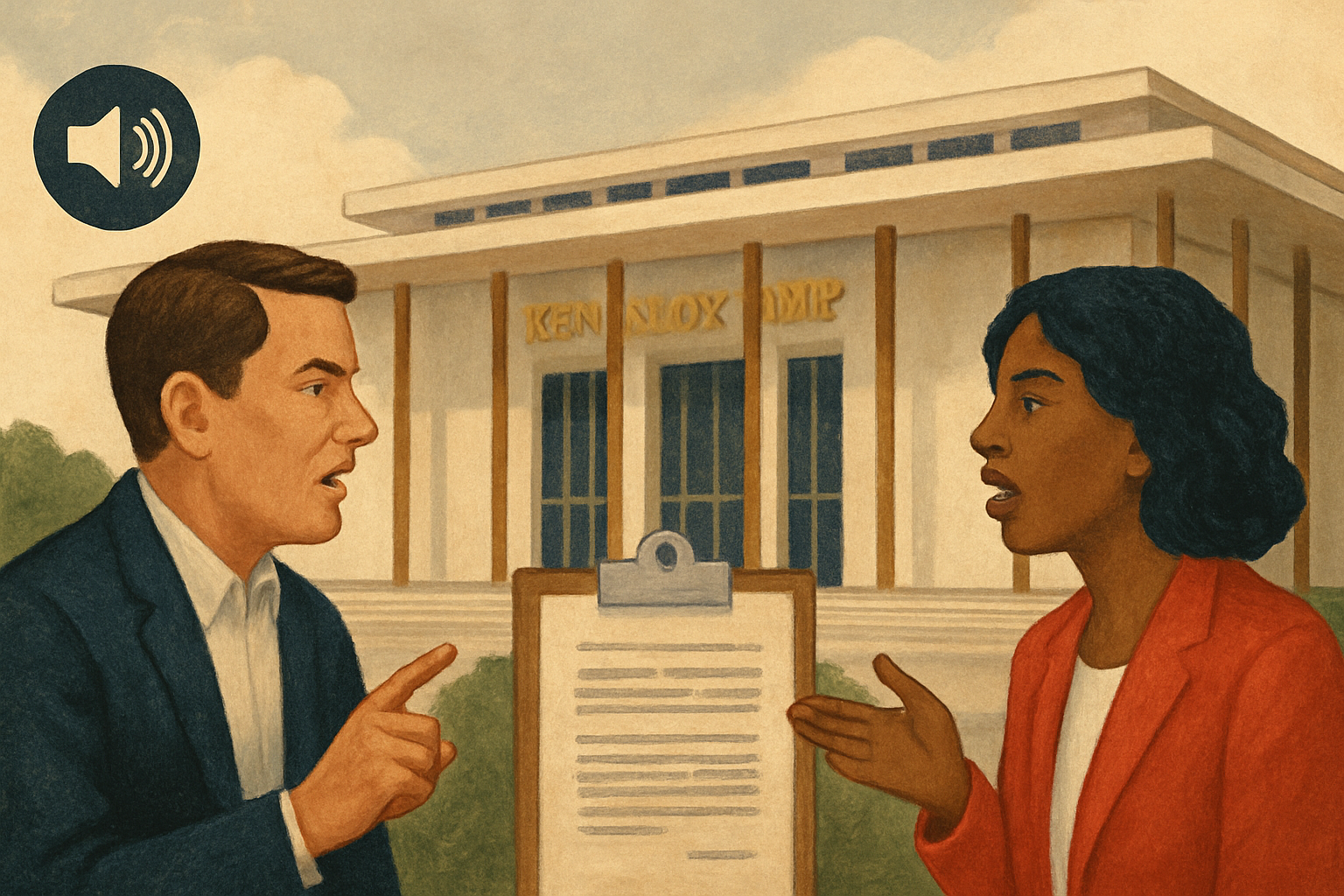
Debate spotlight: Kennedy Center board again backs a two-year closure and a Trump inscription
What happened
The Kennedy Center board voted Thursday to move ahead with a two-year closure of the main performing-arts building for renovations and to add President Donald Trump’s name to its facade. The action follows a federal judge’s May decision blocking the board’s earlier closure plan. In July, the D.C. Circuit also refused to let the center restore Trump’s name while the appeal continues.
What it means for voters
This is more than a fight over a sign. The Kennedy Center is a federally created memorial to President John F. Kennedy and a major national arts institution. The board says renovations are needed, while critics question whether the new vote meets the legal and procedural limits the court identified. A long closure could affect performers, workers, ticket holders, educational programs, and public access to the venue. It also tests how much control a presidentially aligned board has over a public memorial while court orders are still in force.
What to watch
Watch for a formal board announcement, a detailed renovation and operations plan, and any request for the federal judge to enforce or revise the earlier order. The pending appeal over the Trump name could also determine whether the inscription may remain.
Context from earlier events
A federal district judge blocked the first planned closure in May 2026. On July 2026, the D.C. Circuit denied the center’s request for emergency relief that would have allowed Trump’s name to be restored during the appeal.
Federal elections, presidential power, and voting rules Washington, D.C.; nationwide
Supreme Court has not acted on the administration’s mail-voting emergency request
What happened
As of Friday, August 14, the Supreme Court docket shows no ruling on the Trump administration’s July 27 request to revive parts of its election executive order before the November 3 midterms. California and other states filed their response on August 3. Lower-court limits on the plan remain in place while the Court considers the request.
What it means for voters
The dispute involves federal citizenship information for states and planned changes affecting mail-ballot handling. No new nationwide voting rule takes effect just because the emergency request is pending. Voters should continue to use their state and local election office for the rules that apply where they live, especially for registration, vote-by-mail deadlines, and ballot return options.
What to watch
The next major event is a Supreme Court order granting, denying, or partly granting the emergency request. States may also face separate court fights if federal agencies issue more detailed implementation rules.
Context from earlier events
The administration filed its emergency application on July 27, 2026, after a Massachusetts federal court blocked key parts of the order for the 2026 election in the plaintiff states.
Federal health policy and transgender rights Washington, D.C.; nationwide
Medicaid cutoff for some transgender-minor care remains set for October 13
What happened
The Trump administration says Medicaid will stop paying for gender-affirming surgeries and hormone treatment for transgender minors on October 13. It says the Children’s Health Insurance Program, or CHIP, will no longer cover the same care for people under 19. The administration said mental-health services would remain covered and described a later phaseout for some existing hormone-treatment patients.
What it means for voters
For affected families, the practical question is whether a doctor, insurer, and state Medicaid program can continue the care they currently use after the federal cutoff. States run Medicaid programs with federal funding, so the effects may differ depending on state rules and whether a state pays with its own money. Supporters say the policy protects minors and federal funds; opponents say it cuts off medically prescribed care and may disrupt treatment for young people who are already patients.
What to watch
Watch for written CMS implementation instructions to states, details on exceptions and transition rules, and lawsuits challenging the policy. Families using Medicaid or CHIP should check directly with their state program and care team before assuming coverage will continue or end.
Context from earlier events
CMS had previously described proposed regulatory steps that would limit federal Medicaid and CHIP funding for these treatments; the August announcement added a stated October 13 implementation date.
Trade policy, consumer costs, and presidential power Nationwide; U.S.-Canada trade
Additional 50% tariffs on listed Canadian goods are due to begin August 19
What happened
President Trump’s July proclamations impose an additional 50% import duty on certain Canadian goods beginning at 12:01 a.m. Eastern on August 19. The new duties cover listed products, not every import from Canada. The White House says the action responds to what it calls unfair Canadian treatment of U.S. dairy, vehicle, and alcohol-related commerce.
What it means for voters
Importers of covered goods will owe the added duty when those goods enter the country. Businesses may absorb some of that cost, renegotiate supply contracts, switch suppliers, or pass some of it on through higher prices. The tradeoff is direct: the administration says the tariffs give U.S. producers leverage and protect domestic commerce, while affected importers, retailers, and consumers may face higher costs or fewer choices.
What to watch
Watch for Customs implementation guidance, product-specific questions about the annexes, and any Canadian response before Tuesday’s effective date. The key deadline is August 19, not today.
Context from earlier events
The President issued the relevant proclamations on July 20, 2026, using Section 338 of the Tariff Act of 1930.
Presidential communications, ethics, and access to government information New York; nationwide
Press groups challenge paid early access to Trump policy posts on Truth Social
What happened
The Intercept and the Freedom of the Press Foundation sued President Trump, White House aides, and the Executive Office of the President on Wednesday over Truth API, a paid service from Trump Media that gives subscribers faster access to Truth Social posts. The groups ask the court to stop the arrangement and the company’s exclusive early access to the president’s posts. Trump Media says fast-access information services are common and argues the lawsuit is an attempt to silence the president.
What it means for voters
Presidential social-media posts can announce policy, personnel decisions, or other news that moves markets and shapes public debate. The case raises two separate questions: whether paying customers can get government-related information first, and whether a president can use a company he controls as the first outlet for official announcements. There is no court ruling yet, so the service has not been struck down.
What to watch
Watch for the case number and first court filings in the Southern District of New York, including whether the plaintiffs seek an immediate temporary order. The court will first have to decide whether the groups have legal standing and whether the arrangement involves official government communications.
Context from earlier events
The lawsuit was filed August 12, 2026, shortly after Trump Media began offering the faster-access service.
Congressional representation and special elections Alameda County, California
California’s 14th District special House election is Tuesday, August 18
What happened
Voters in California’s 14th Congressional District will elect a U.S. House member in a special general election on Tuesday, August 18. The district is entirely within Alameda County. The vacancy followed former Rep. Eric Swalwell’s resignation, and the California secretary of state lists the certified candidates and voting resources for the election.
What it means for voters
This election will restore representation for the district in the House. One seat can matter more when party control is close, but the immediate effect is local: residents will again have a voting member of Congress to represent them on federal laws, spending, oversight, and constituent services. Eligible voters should use Alameda County or the California secretary of state’s official tools for ballot and voting-location information.
What to watch
Watch turnout and the unofficial count beginning after polls close on August 18, followed by the county canvass and the state’s certification process.
Context from earlier events
Governor Gavin Newsom called the special election in April after the House vacancy occurred.
U.S. Senate special election South Carolina
South Carolina Republicans head to an August 25 Senate runoff
What happened
Interim Sen. Darline Graham and U.S. Rep. Ralph Norman advanced from South Carolina’s Republican special primary and will meet in a statewide runoff on August 25. The contest will choose the Republican nominee for the November 3 special general election for the Senate seat left vacant by Sen. Lindsey Graham’s death. Democrat Annie Andrews has already secured the Democratic nomination.
What it means for voters
The winner of the runoff will be the Republican candidate in a race to fill a U.S. Senate seat, so the outcome can affect the Senate’s party balance and South Carolina’s representation in Washington. For South Carolina voters, the next decision is immediate: eligible Republican primary voters have an August 25 runoff date, followed by the full special election on November 3.
What to watch
Watch turnout and campaigning through August 25, then the runoff result and the November general-election matchup. Voters should check their registration and polling-place details through the state election commission.
Context from earlier events
Gov. Henry McMaster appointed Darline Graham to serve temporarily after the vacancy; her appointment lasts until the new Congress begins in January 2027.
How this briefing was made
We used official records to verify government actions and independent reporting to add context. We also checked popular political videos on YouTube for topic leads. Popularity helped us decide what to investigate, but it was not treated as proof or public opinion. Every included claim still had to be checked against the linked sources.