The daily civic brief
U.S. Politics Daily Scan — August 13, 2026
Today’s biggest new civic story is a federal lawsuit over whether a president can sell paying customers faster access to policy announcements made on a private social-media platform. The rest of the scan centers on rules and elections with near-term deadlines: a court block on a federal voting order, a new Medicaid coverage cutoff, Canadian tariffs due next week, and two special congressional contests.
Today's audio briefing
Today's spoken briefing
Hear the latest national briefing and what to watch next for every headline. A restrained instrumental bed plays in the web player.
Presidential communications, ethics, and public access to government information New York; nationwide
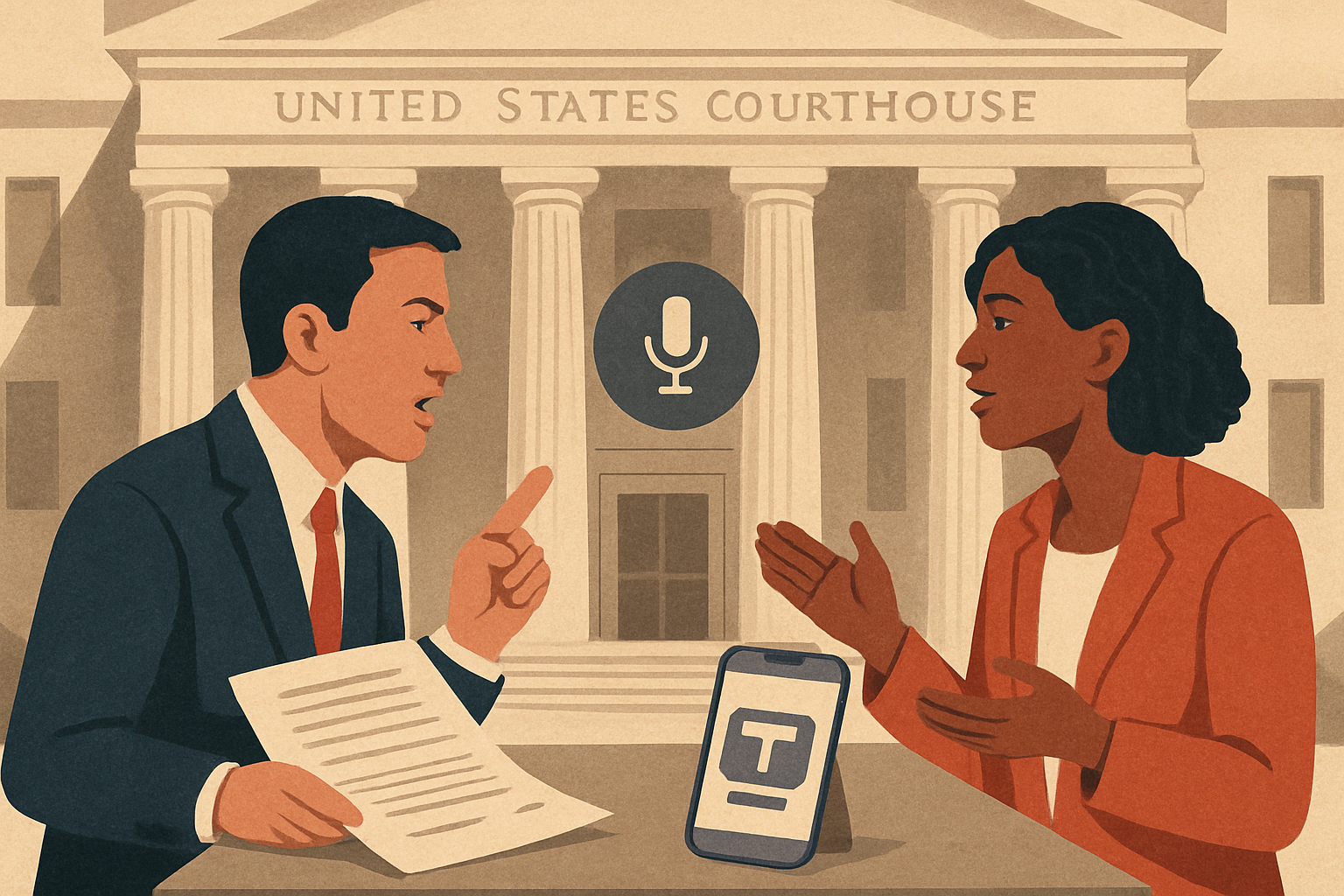
Debate spotlight: Lawsuit challenges paid early access to Trump policy posts on Truth Social
What happened
The Intercept and the Freedom of the Press Foundation sued President Trump, White House aides, and the Executive Office of the President on August 12 over Truth API, a paid service from Trump Media that gives subscribers quicker access to posts on Truth Social. The suit asks a federal court to stop the arrangement. The plaintiffs say the service can give paying customers an advantage when posts concern government policy; no court has ruled on those claims yet.
What it means for voters
Presidential posts can move markets and shape public understanding of tariffs, agency decisions, and other government actions. The case raises a basic question: when a president uses a privately owned platform to announce official policy, can some people buy earlier access? Supporters of the lawsuit say that setup gives wealthy firms a special lane to public information. The legal outcome could also shape how future administrations use personal or commercial social-media accounts for official announcements.
What to watch
Watch for the defendants’ response and for a request for an immediate court order stopping the service while the case is heard. The first major question will be whether the plaintiffs have legal standing and whether the court treats these posts as official government communications.
Context from earlier events
This is part of a wider dispute over the Trump administration’s use of online platforms for official communications and records, but this case focuses specifically on paid speed advantages for policy-related posts.
Federal elections, presidential power, and voting rules Boston; nationwide
Federal judge again blocks mail-voting parts of Trump’s election order before midterms
What happened
A federal judge on August 11 again barred the Trump administration from carrying out key parts of the president’s March election order for the 2026 midterms. The blocked provisions involve federal involvement in voter-citizenship information and mail-ballot procedures. The administration has separately asked the Supreme Court to pause lower-court restrictions, but the Court docket showed no action as of August 13.
What it means for voters
States run elections, while Congress sets many federal election rules. The injunction means the affected states do not have to change their election procedures now because of the order. That matters because ballots and poll-worker plans are already being prepared for the November 3 election. Supporters say the order would strengthen citizenship checks; states and voting-rights groups argue it would disrupt election administration and exceed presidential authority.
What to watch
The next major development is a Supreme Court order in Trump v. California, or further action in the underlying lower-court cases. Without a stay, the current court limits remain in place for the midterm cycle.
Context from earlier events
The administration issued its election order in March 2026, and several states and groups brought separate court challenges soon afterward.
Federal health policy and transgender rights Washington, D.C.; nationwide
Medicaid coverage cutoff for some transgender-minor care is set for October 13
What happened
The Trump administration said Medicaid will stop paying for gender-affirming surgeries and hormone treatment for transgender minors on October 13. It also said the Children’s Health Insurance Program, known as CHIP, will no longer cover the same care for people under 19. The administration said mental-health services will remain covered, and it described a later phaseout for some current hormone-treatment patients beginning in April 2027.
What it means for voters
This affects families who rely on Medicaid or CHIP, as well as hospitals, clinics, and state Medicaid agencies. A federal funding rule does not automatically ban treatment, but it can make care harder or more expensive to obtain where providers cannot bill the programs. The administration says the policy protects children. Major medical groups, including the American Medical Association, support access to gender-affirming care, while there is disagreement among medical organizations about the evidence for some surgical procedures for minors.
What to watch
States and health providers will have to decide how to carry out the funding change before October 13. Lawsuits could also challenge the policy, especially if opponents argue that it conflicts with federal health-law protections.
Context from earlier events
The administration has pursued several federal actions this year aimed at restricting gender-affirming care for minors.
Trade policy, prices, and presidential power Nationwide; U.S.-Canada trade
New 50% tariffs on selected Canadian goods are due to start August 19
What happened
Federal proclamations say selected goods from Canada will face an additional 50% import duty starting at 12:01 a.m. Eastern on August 19. The duties do not cover every Canadian import; they apply to product lists tied to motor vehicles, alcoholic beverages, and dairy. The administration says Canada has treated U.S. commerce unfairly and is using a rarely invoked provision of the Tariff Act of 1930.
What it means for voters
Importers pay tariffs first, but costs can later show up in prices, supplier contracts, or reduced profit margins. The effects will vary by product and by region, especially in border-state supply chains. The administration argues the tariffs give U.S. producers leverage against Canadian trade barriers. Critics, including Canada’s government, say the measures risk retaliation and disruption for businesses and consumers on both sides of the border.
What to watch
Watch whether the tariffs begin as scheduled on August 19, whether the United States and Canada reach a deal before then, and whether Canada announces new countermeasures. Businesses will also be watching Customs guidance on which imports fall within the listed categories.
Context from earlier events
The new duties use Section 338 of the Tariff Act, rather than the emergency-tariff authority involved in other recent court disputes over the administration’s import taxes.
Primary and independent sources
- Federal Register Imposing Additional Duties To Offset Canadian Discrimination Against the Commerce of the United States With Respect to Motor Vehicles
- Office of the United States Trade Representative Ambassador Greer Issues Statement on President Trump Imposing Section 338 Tariffs on Canada
- Associated Press What to know about the 50% tariffs Trump is imposing on Canada
Congressional representation and special elections Alameda County, California
California’s 14th District will fill a House vacancy on August 18
What happened
California will hold a special general election on Tuesday, August 18, to fill the vacant U.S. House seat in the 14th Congressional District, which is entirely in Alameda County. The vacancy followed former Rep. Eric Swalwell’s resignation. Democrat Aisha Wahab and Republican Wendy Huang advanced from the June special primary and will appear on the ballot.
What it means for voters
One House seat can matter more when control of Congress is close, and the winner will serve before the nationwide November election. The contest also gives voters a chance to replace a representative sooner rather than wait for the regular election. California mails active registered voters a vote-by-mail ballot, while in-person and same-day registration options are also available under state rules.
What to watch
The immediate date is August 18. Watch turnout, the final certified result, and when the winner is sworn in. Those details will determine how quickly the district regains a voting member in the House.
Context from earlier events
In the June 16 special primary, Wahab received 42.8% of the vote and Huang received 9.2%, according to the California secretary of state’s final canvass.
Primary and independent sources
- California Secretary of State Congressional District 14 — Special Election
- California Secretary of State Final Official Election Results — Congressional District 14 Special Primary Election, June 16, 2026
- Office of Governor Gavin Newsom Governor Newsom issues proclamation setting special election for California Congressional District 14
U.S. Senate special election South Carolina
South Carolina Republican Senate runoff is set for August 25
What happened
Interim Sen. Darline Graham and U.S. Rep. Ralph Norman advanced from South Carolina’s August 11 Republican special primary and will meet in an August 25 runoff. They are competing for the Republican nomination to succeed the late Sen. Lindsey Graham on the November ballot. Democrat Annie Andrews has already won her party’s nomination.
What it means for voters
The election will decide who is favored to represent South Carolina in the next Senate term, and it could change the makeup of the state’s House delegation if Norman leaves his current seat. The runoff is also a near-term test of voter turnout in a race with an unusually short campaign calendar. Because South Carolina is a Republican-leaning state, the GOP runoff is likely to be especially important, though the November election will decide the seat.
What to watch
Watch endorsements and turnout efforts before the August 25 runoff, then the November 3 general election. If Norman wins the Senate nomination and later the general election, a separate process would be needed to fill his House seat.
Context from earlier events
Gov. Henry McMaster appointed Darline Graham to serve the remaining months of her brother’s Senate term after his death in July.
Primary and independent sources
- Associated Press Sen. Darline Graham, US Rep. Ralph Norman advance to GOP runoff for US Senate in South Carolina
- South Carolina Election Commission Military & Overseas Citizens — Special Republican Primary for United States Senate
- Office of Governor Henry McMaster Gov. McMaster Appoints Darline Graham to the U.S. Senate
White House staffing and public communications Washington, D.C.
White House press secretary Karoline Leavitt will leave at the end of August
What happened
President Trump announced that White House press secretary Karoline Leavitt will leave the administration at the end of August. Leavitt said she is leaving to spend more time with her family. The White House had not publicly named a successor in the reporting reviewed for this briefing.
What it means for voters
The press secretary is a key link between the White House, journalists, and the public. A change in the job can affect how quickly the administration answers questions, conducts briefings, and explains policy decisions. It does not change any law or agency program by itself, but it comes during an active period of court fights, trade actions, and midterm campaigning.
What to watch
Watch for Trump’s choice of a replacement and whether the White House changes its briefing schedule or communications structure after Leavitt departs.
Context from earlier events
Leavitt’s exit follows the announcement that Will Scharf will become White House counsel on September 1.
How this briefing was made
We used official records to verify government actions and independent reporting to add context. We also checked popular political videos on YouTube for topic leads. Popularity helped us decide what to investigate, but it was not treated as proof or public opinion. Every included claim still had to be checked against the linked sources.