The daily civic brief
U.S. civic briefing
Benefits keep rising faster than pay in new federal compensation data
Estimated 1-minute catch-up · 1 stories
Today's audio briefing
Today's spoken briefing
Hear the latest national briefing and what to watch next for every headline. A restrained instrumental bed plays in the web player.
Read the audio transcript
Work and wages; benefits; healthcare costs; economic life Nationwide
Benefits keep rising faster than pay in new federal compensation data
What happened
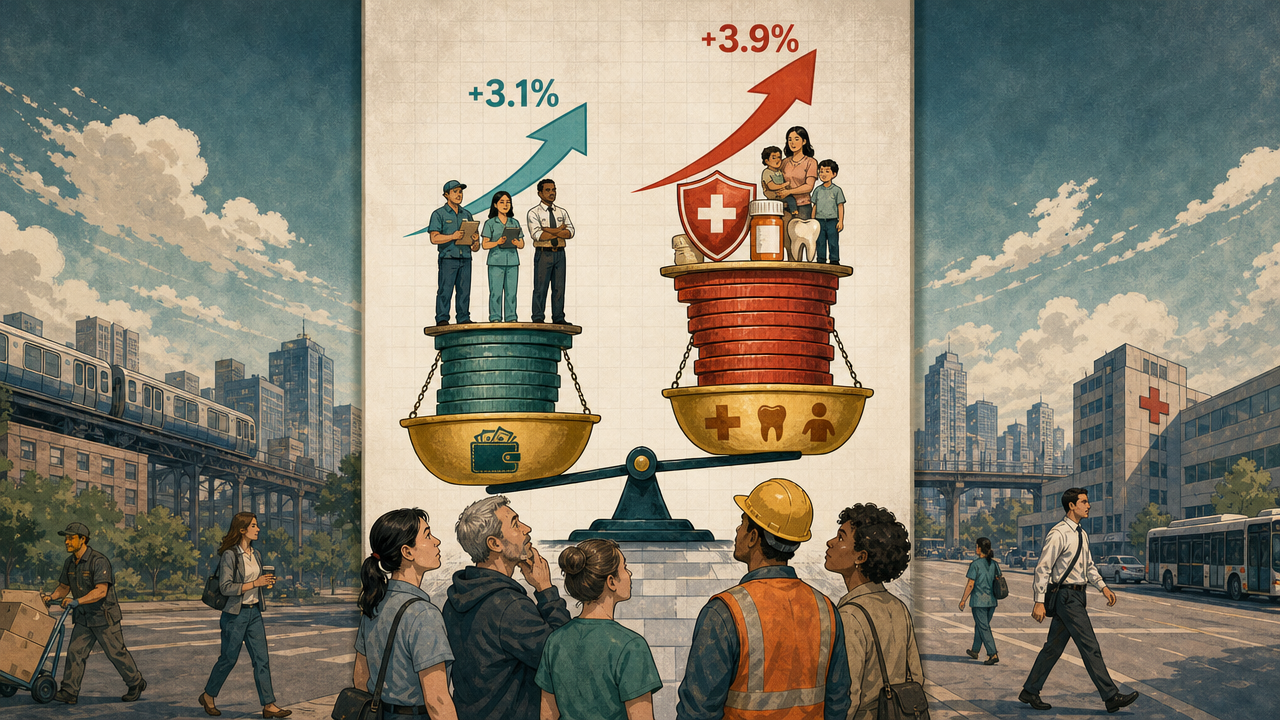
The Bureau of Labor Statistics reported October 30 that total compensation for civilian workers rose 0.8% from June through September, after seasonal adjustment. Over the 12 months ending in September, wages and salaries rose 3.1% while benefit costs rose 3.9%.
What it means for voters
A raise is not the whole picture when health coverage, retirement benefits, and other job benefits are changing too. This data measures what employers pay for compensation, not each worker’s take-home pay or a particular family’s insurance bill. Still, it shows a squeeze many workers recognize: benefits can get more expensive for employers even when wage growth is modest, and the inflation-adjusted wage measure fell over the year in private industry.
Save stories & follow topics · Link to this story
Get the context & analysis
The Bureau of Labor Statistics reported October 30 that total compensation for civilian workers rose 0.8% from June through September, after seasonal adjustment. Over the 12 months ending in September, wages and salaries rose 3.1% while benefit costs rose 3.9%. For private-industry workers, inflation-adjusted wages and salaries were down 0.6% over the year, while health-benefit costs rose 6.4% in current dollars.
What to watch
The next Employment Cost Index release, covering December 2026, is scheduled for January 29, 2027. Workers should also watch their own open-enrollment notices, since employer-wide cost trends do not tell a person’s exact premium, deductible, or raise.
Context from earlier events
The September release follows a 0.9% quarterly rise in civilian compensation in the June 2026 Employment Cost Index. The latest quarter slowed slightly to 0.8%, while annual wage-and-salary growth also eased from 3.2% to 3.1%.
Check sources (2)
You're caught up on this briefing. Choose topics and save stories to return on your own schedule.
How this briefing was made
We used official records to verify government actions and independent reporting to add context. We also searched recent election-related videos on YouTube for topic leads. Search rank and popularity were not treated as proof or public opinion. We also checked recent uploads from preferred news and public-affairs channels on YouTube for topic leads. Channel preference was not treated as proof or an endorsement. Every included claim still had to be checked against the linked sources.