The daily civic brief
U.S. Civic News Scan: September 1, 2026
Today’s biggest practical federal decision is a House vote expected on a short-term funding bill that could keep agencies and many public programs running past September 30. Also worth watching: mail-ballot operations remain tied up in court, a new nursing-home inspection system begins this month, and a Rhode Island utility ruling shows how state regulators can change household bills directly. The common thread is who makes the rules: Congress controls federal spending, courts review executive actions, agencies run programs, and state utility commissions set many local energy charges.
Estimated 4-minute catch-up · 5 stories
Today's audio briefing
Today's spoken briefing
Hear the latest national briefing and what to watch next for every headline. A restrained instrumental bed plays in the web player.
A verbatim transcript is unavailable for this edition. Read the written briefing below.
Federal budget, public services, benefits, transit, and congressional power Washington, D.C.; nationwide
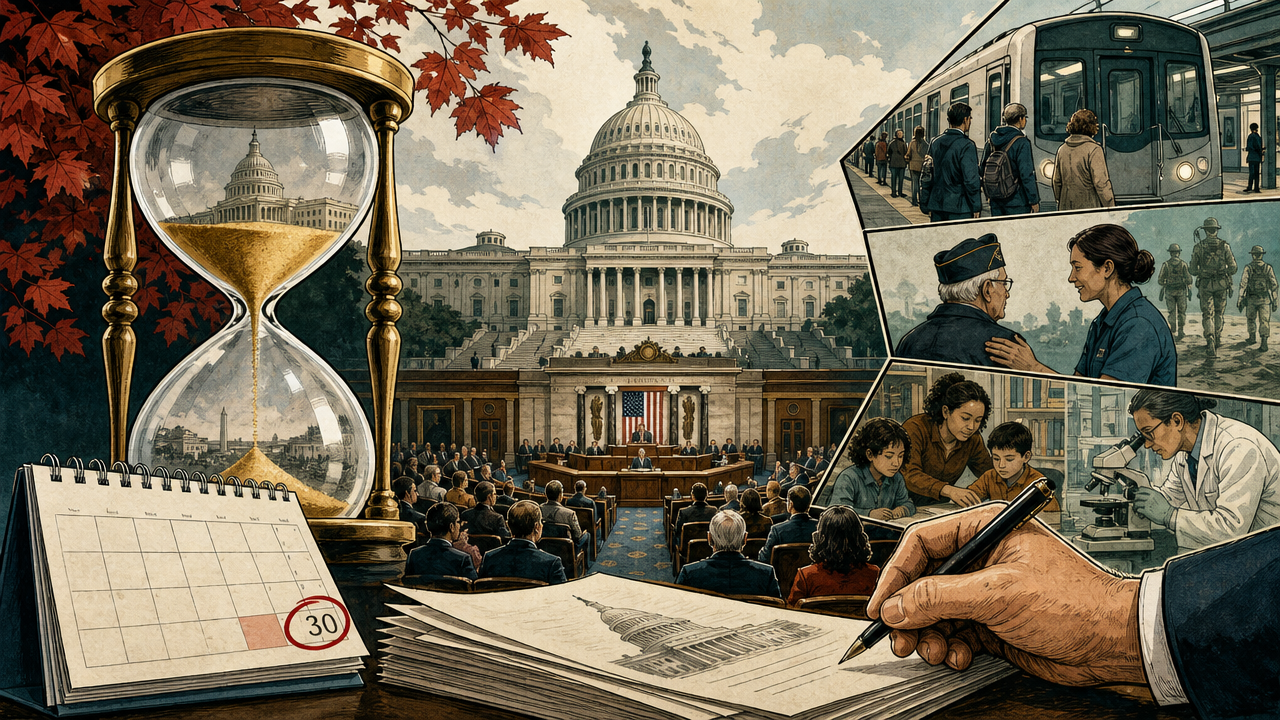
House is set to take up a stopgap funding bill before the September 30 deadline
What happened
The House is scheduled to consider H.R. 6500, the Senate-passed Continuing Appropriations and Extensions Act, 2027. The bill would generally keep federal agencies funded at current operating levels through December 11, 2026, rather than let funding run out when the new fiscal year starts on October 1.
What it means for voters
A shutdown can interrupt or slow public-facing work at agencies that handle housing help, small-business loans, workplace enforcement, federal permits, and some benefit administration. This bill is mostly about avoiding that disruption, not creating a new long-term budget. It would give Congress roughly another two months to finish the annual spending bills that decide funding for services households use. Congress holds the power to fund the government; the president can sign or veto the measure after both chambers approve the same text.
Save stories & follow topics · Link to this story
Get the context & analysis
The House is scheduled to consider H.R. 6500, the Senate-passed Continuing Appropriations and Extensions Act, 2027. The bill would generally keep federal agencies funded at current operating levels through December 11, 2026, rather than let funding run out when the new fiscal year starts on October 1. It also extends selected programs and authorities, including surface-transportation and veterans’ provisions. The House has not completed passage yet, so nothing changes unless it passes the bill and it becomes law.
What to watch
Watch the House vote this week. If it passes the Senate version without changes, it would go to President Trump. If the House changes it, the Senate would need to act again before September 30.
Context from earlier events
The Senate passed its version of H.R. 6500 in early August. The House returned from its August break on August 31 with the stopgap bill at the top of its agenda.
Check sources (3)
Primary and independent sources
Voting, mail ballots, Postal Service operations, and court oversight Nationwide
Mail-ballot rule remains blocked as a whistleblower raises concerns about Postal Service preparations
What happened
A federal whistleblower disclosure made public Tuesday alleges that a rushed Postal Service system tied to President Trump’s mail-voting executive order could wrongly reject batches of mail ballots if one sampled barcode cannot be read or matched. The allegation has not been proven in court.
What it means for voters
For voters who use absentee or vote-by-mail ballots, the practical question is whether a ballot request and return envelope will be accepted and processed on time. The court block means the executive order has not changed state mail-voting rules today. States still run elections and set most ballot procedures, while federal courts decide whether the president and Postal Service have legal authority for the proposed federal requirements. Voters should follow instructions from their state or local election office, not claims about a rule that is still blocked.
Save stories & follow topics · Link to this story
Get the context & analysis
A federal whistleblower disclosure made public Tuesday alleges that a rushed Postal Service system tied to President Trump’s mail-voting executive order could wrongly reject batches of mail ballots if one sampled barcode cannot be read or matched. The allegation has not been proven in court. The key immediate fact is that a federal court order still blocks the Postal Service from carrying out central parts of the mail-ballot plan while the legal challenge continues.
What to watch
Watch for the administration’s appeal, any court decision changing the injunction, and a Postal Service response to the disclosure. States will also begin sending ballots under their own election calendars in the run-up to the November 3 election.
Context from earlier events
On August 27, a federal judge again paused parts of the mail-voting executive order after an earlier Supreme Court procedural ruling. The new disclosure concerns agency preparations that reportedly continued while the court fight was underway.
Check sources (3)
Primary and independent sources
- Associated Press Postal Service work to comply with Trump's executive order is rushed, sloppy, whistleblower contends
- The Washington Post Postal Service plans may keep voters from getting ballots, whistleblower says
- Georgia Public Broadcasting Whistleblower claims USPS plan for Trump's mail voting order could 'derail' midterms
Medicare, nursing-home care, family healthcare choices, and oversight Nationwide
New nursing-home inspection approach is scheduled to begin this month
What happened
September is the planned start month for Medicare’s new risk-based nursing-home inspection approach. CMS says roughly 12% of nursing homes may initially qualify for a more focused standard inspection if they meet strict conditions, including a five-star overall rating, no recent serious care citations, accurate reporting, and no recent ownership change.
What it means for voters
Families comparing nursing homes may see a new designation on Medicare’s Care Compare website this month. The change does not mean highly rated homes are free from oversight, but it shifts some inspector time toward facilities judged to have greater safety risks. CMS says the approach is meant to stretch inspection resources that Congress has kept flat for years. For a family, the useful takeaway is still to check recent inspection reports, staffing information, and complaint history instead of relying on one rating alone.
Save stories & follow topics · Link to this story
Get the context & analysis
September is the planned start month for Medicare’s new risk-based nursing-home inspection approach. CMS says roughly 12% of nursing homes may initially qualify for a more focused standard inspection if they meet strict conditions, including a five-star overall rating, no recent serious care citations, accurate reporting, and no recent ownership change. Complaints are not covered by the lighter process: inspectors must still investigate them, and any safety concern found during a focused inspection is supposed to expand the review.
What to watch
Watch for the new Care Compare designations and for data on whether state inspection agencies use the time saved to investigate serious complaints and lower-performing homes more quickly.
Context from earlier events
CMS announced the policy in August after training state inspection agencies. September is the agency’s stated implementation month.
Electric and gas bills, utility regulation, and state government Rhode Island; state utility-policy trend with national relevance
Rhode Island utility rate changes begin September 1 after state regulators’ decision
What happened
Rhode Island Energy customers begin seeing new charges and credits September 1 after the Rhode Island Public Utilities Commission approved parts of a base-rate case in August. The docket includes changes to electric and gas distribution rates, which are the utility charges for maintaining and delivering energy, separate from the price of the energy supply itself.
What it means for voters
This is a direct example of a state-level government decision that can change a monthly household bill. The commission, not Congress or the White House, sets these regulated distribution rates in Rhode Island. Rate cases can fund repairs, reliability work, customer programs, and utility operations, but customers and consumer advocates can also face higher bills if approved revenue needs are passed through. The commission’s public record includes a low-income discount agreement, so the effects are not the same for every household.
Save stories & follow topics · Link to this story
Get the context & analysis
Rhode Island Energy customers begin seeing new charges and credits September 1 after the Rhode Island Public Utilities Commission approved parts of a base-rate case in August. The docket includes changes to electric and gas distribution rates, which are the utility charges for maintaining and delivering energy, separate from the price of the energy supply itself. The final household effect varies by customer type, usage, income-based discounts, and other bill riders.
What to watch
Watch for the commission’s final compliance review, the utility’s customer notices, and the actual bill examples released for typical electric and gas customers. Those will show the dollar changes more clearly than the headline revenue figures alone.
Context from earlier events
The rate case began in November 2025, and the commission held hearings through the summer before its August decisions and late-August compliance filings.
Check sources (3)
Primary and independent sources
- Rhode Island Public Utilities Commission Docket No. 25-45-GE — Rhode Island Energy Application for Approval of a Change in Electric and Gas Base Distribution Rates
- Rhode Island Public Utilities Commission Docket No. 25-33-GE — Proposal to Change Rate Accounting and Issue Bill Credits
- Rhode Island Current Buckle up! The energy bill roller coaster is about to begin.
Federal courts, legal immigration, family budgets, and jobs New York; nationwide federal immigration-policy effect
Federal judge cancels the State Department’s 75-country immigrant-visa pause
What happened
A federal judge in Manhattan ruled on August 21 that the State Department’s policy pausing immigrant-visa issuance for people from 75 countries was unlawful. The court set aside the policy and visa refusals based solely on that policy, requiring consular officers to return to individual case-by-case reviews.
What it means for voters
The immediate effect is important for U.S. families waiting to reunite and employers with workers using employment-based immigrant visas. A blanket pause can delay a household’s move, a spouse’s ability to work, and a business’s hiring plans. The executive branch runs consular visa processing, but federal courts can strike down policies that exceed authority Congress granted or conflict with immigration law. The administration can appeal or seek to pause the ruling, so affected families should check official case and consular updates rather than assume a visa will be issued automatically.
Save stories & follow topics · Link to this story
Get the context & analysis
A federal judge in Manhattan ruled on August 21 that the State Department’s policy pausing immigrant-visa issuance for people from 75 countries was unlawful. The court set aside the policy and visa refusals based solely on that policy, requiring consular officers to return to individual case-by-case reviews. The ruling concerns immigrant visas, which are part of the lawful permanent-residence process; it does not erase other immigration rules, country-specific restrictions, or normal eligibility checks.
What to watch
Watch for any appeal, request to pause the ruling, or State Department instructions to consulates on reopening affected cases. A separate reported plan involving revocation of some visitor visas for asylum applicants is a different proposal and is not decided by this ruling.
Context from earlier events
The State Department announced the 75-country pause in January 2026. The court’s August 21 decision came after legal challenges by immigration-service groups and affected applicants.
Check sources (3)
Primary and independent sources
- U.S. District Court for the Southern District of New York Opinion and Order in Catholic Legal Immigration Network, Inc. et al. v. Rubio et al.
- Associated Press Federal judge vacates Trump policy that suspended processing of immigration visas from 75 countries
- Associated Press How the Trump administration is expanding its immigration crackdown to people entering legally
You're caught up on this briefing. Choose topics and save stories to return on your own schedule.
How this briefing was made
We used official records to verify government actions and independent reporting to add context. We also checked popular political videos on YouTube for topic leads. Popularity helped us decide what to investigate, but it was not treated as proof or public opinion. Every included claim still had to be checked against the linked sources.