The daily civic brief
U.S. Civic News Scan: Pocketbook Rules and Voting
It’s Labor Day, so there were few new federal actions today. The biggest live national stories are court fights over how people can vote in the November 3 midterms, plus recent federal actions affecting healthcare access and military families’ fees. The practical theme is simple: courts and agencies are making decisions now that could affect ballots, medical care, and household bills later.
Estimated 4-minute catch-up · 5 stories
Today's audio briefing
Today's spoken briefing
Hear the latest national briefing and what to watch next for every headline. A restrained instrumental bed plays in the web player.
A verbatim transcript is unavailable for this edition. Read the written briefing below.
Voting, mail ballots, Postal Service rules, and federal courts Nationwide
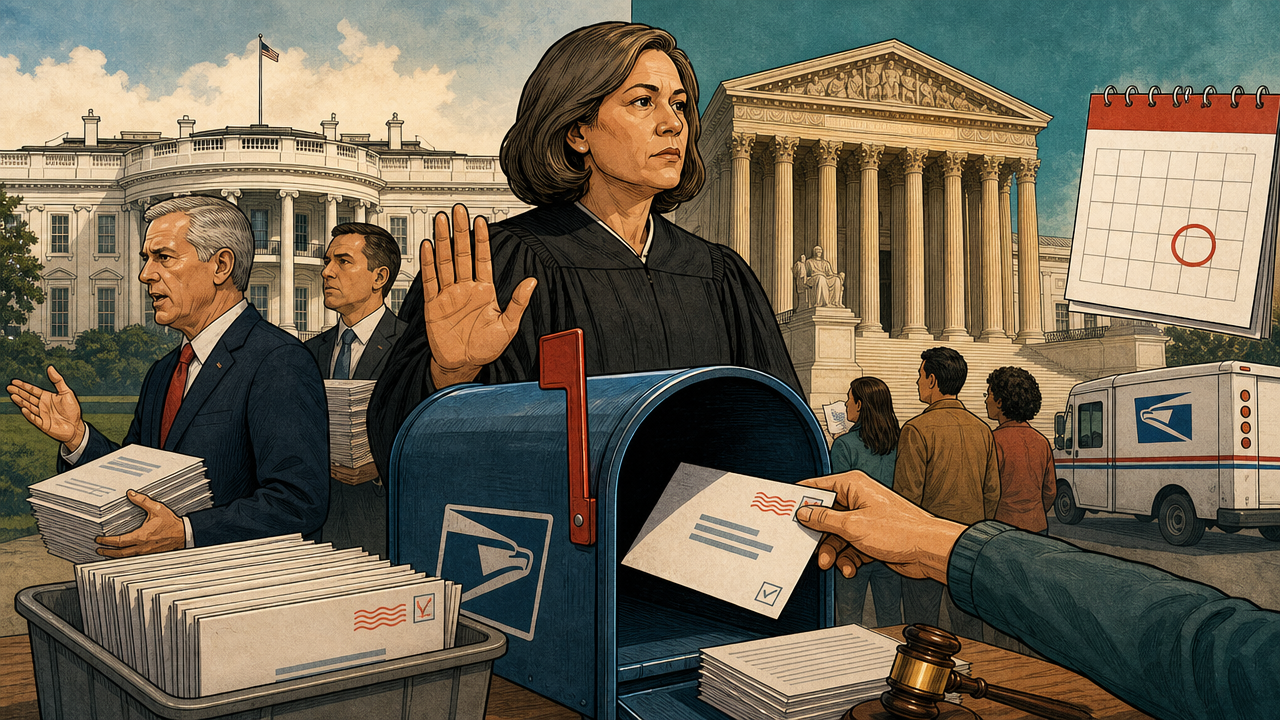
White House renews Supreme Court request to enforce new mail-ballot rules
What happened
On September 6, the Trump administration again asked the U.S. Supreme Court to let the Postal Service enforce new requirements for mail ballots before the November 3 midterm election. A federal judge has blocked the plan for now.
What it means for voters
Many voters use mail ballots, including service members, older adults, people with disabilities, and people who will be away from home on Election Day. The immediate rule is still blocked, so state and local election offices continue under their current procedures. A quick Supreme Court order could still force election officials to change ballot-envelope or mailing processes after some states have already started sending ballots, which could create confusion and added administrative costs.
Save stories & follow topics · Link to this story
Get the context & analysis
On September 6, the Trump administration again asked the U.S. Supreme Court to let the Postal Service enforce new requirements for mail ballots before the November 3 midterm election. A federal judge has blocked the plan for now. The administration says the rules concern mail preparation and would not decide who can vote or which ballots count; Democratic state officials and voting-rights groups argue the changes are unlawful and too late for states to carry out safely.
What to watch
Whether the Supreme Court grants an emergency stay, and whether states scheduled to begin ballot mailings on September 9 and the following week change any procedures.
Context from earlier events
A Massachusetts federal judge issued a preliminary injunction on September 4 blocking the Postal Service system through the midterms. The Supreme Court has previously allowed parts of the broader plan to move forward procedurally without deciding whether it is lawful.
Check sources (1)
Primary and independent sources
Voting, voter registration, privacy, and federal courts Nationwide; U.S. Court of Appeals for the D.C. Circuit
Appeals court keeps federal citizenship-check database blocked before midterms
What happened
A federal appeals-court panel on September 5 declined to lift a lower-court order blocking the Department of Homeland Security from using its expanded SAVE immigration-status database to check citizenship information on state voter rolls before the November 3 election. The panel’s majority said the system’s use could violate federal protections for Social Security information and raised concerns that inaccurate records could lead eligible voters to be questioned or removed.
What it means for voters
The ruling leaves the nationwide block in place for now. That means states cannot use this version of the federal system for broad citizenship checks ahead of the election. The administration says the database would help states identify people who are not eligible to vote; the court majority was concerned that database errors and privacy problems could put eligible voters at risk of being wrongly flagged.
Save stories & follow topics · Link to this story
Get the context & analysis
A federal appeals-court panel on September 5 declined to lift a lower-court order blocking the Department of Homeland Security from using its expanded SAVE immigration-status database to check citizenship information on state voter rolls before the November 3 election. The panel’s majority said the system’s use could violate federal protections for Social Security information and raised concerns that inaccurate records could lead eligible voters to be questioned or removed. One judge dissented.
What to watch
The administration can seek review from the full appeals court or the Supreme Court. Separate litigation involving state access to the database is also continuing.
Context from earlier events
SAVE has traditionally been used by government agencies to verify immigration status for benefits and other eligibility decisions. The dispute concerns the administration’s expanded use of it for large-scale voter-roll checks.
Check sources (1)
Primary and independent sources
Voting, congressional maps, state referendums, and the Supreme Court Missouri; nationwide implications for U.S. House representation
Missouri redistricting dispute adds a new Supreme Court filing
What happened
The U.S. Supreme Court docket in Missouri’s congressional-map dispute shows that two Missouri voters filed a friend-of-the-court brief on September 7. Missouri is asking the Court to pause a Missouri Supreme Court decision that stopped the state’s newer congressional map from being used this November unless voters approve it in a referendum.
What it means for voters
Congressional district lines decide which voters are grouped together for U.S. House elections. For now, Missouri’s older map remains the one required by the state-court ruling. A Supreme Court emergency order could change which map is used, affecting candidate campaigns, voters’ districts, and election officials’ preparations before November 3.
Save stories & follow topics · Link to this story
Get the context & analysis
What to watch
The Court asked for a response by noon Eastern on September 7. Watch for a stay order or a denial; either could determine whether Missouri uses the newer map or the prior map this fall.
Context from earlier events
The Missouri Supreme Court ruled on September 3 that the referendum could proceed and that the previous congressional map remained in force for the November election unless voters approve the newer map.
Healthcare access, workforce shortages, and federal grants Fourteen states; rural and tribal communities
HHS awards $11.2 million to plan rural and tribal doctor-residency programs
What happened
The Department of Health and Human Services announced September 4 that it awarded $11.2 million to help develop 15 new physician residency programs in rural communities across 14 states. The money is for planning and launching programs in fields including family medicine, internal medicine, psychiatry, preventive medicine, and general surgery.
What it means for voters
This does not put new doctors in clinics overnight. But residency training often influences where physicians later practice, so the goal is to build a longer-term supply of doctors in places where families may travel far or wait months for care. Each recipient can receive up to $750,000 over three years, and local programs will still need accreditation, staff, and long-term funding.
Save stories & follow topics · Link to this story
Get the context & analysis
What to watch
Which communities receive the awards, when the programs win accreditation, and whether they can secure Medicare, Medicaid, state, or private funding to continue after the planning grants end.
Context from earlier events
HHS says the rural-residency program began in 2019 and had supported the development of dozens of accredited programs by July 2026.
Check sources (1)
Taxes and fees, military families, transportation, and civil-rights enforcement Maryland; federal servicemember protections with nationwide relevance
Justice Department challenges Maryland vehicle fees charged to military families
What happened
The Justice Department said September 3 that it sent Maryland transportation officials a letter demanding that they stop collecting nonresident vehicle-permit fees from service members and spouses when those families already have vehicles registered in their home states. The department says the fees violate the federal Servicemembers Civil Relief Act and amount to double charging families who move to Maryland on military orders.
What it means for voters
This is not a final court ruling or an automatic refund. But if Maryland changes course, affected military households could avoid a state vehicle fee and may receive refunds for fees already paid. The case also matters beyond Maryland because military families often move across state lines and federal law limits some taxes and fees states can impose on them.
Save stories & follow topics · Link to this story
Get the context & analysis
What to watch
Whether Maryland’s transportation department changes its policy, issues refunds, or disputes the Justice Department’s interpretation of the federal law.
Context from earlier events
The Servicemembers Civil Relief Act is a federal law that gives active-duty members and, in some areas, their families protections involving financial obligations, housing, court matters, and certain state taxes and fees.
Check sources (1)
Primary and independent sources
You're caught up on this briefing. Choose topics and save stories to return on your own schedule.
How this briefing was made
We used official records to verify government actions and independent reporting to add context. We also checked popular political videos on YouTube for topic leads. Popularity helped us decide what to investigate, but it was not treated as proof or public opinion. Every included claim still had to be checked against the linked sources.