The daily civic brief
U.S. Civic Daily Scan — October 25, 2026
With nine days until the November 3 general election, the biggest verified developments are about how ballots are handled and where people can still vote early or fix registration issues. Today’s scan leads with a California court fight over federal demands involving alleged noncitizen voters, then flags practical state deadlines and early-voting options for people making a plan around work and family schedules.
Estimated 4-minute catch-up · 6 stories
Today's audio briefing
Today's spoken briefing
Hear the latest national briefing and what to watch next for every headline. A restrained instrumental bed plays in the web player.
Read the audio transcript
Voting; election administration; federal courts; accountability California
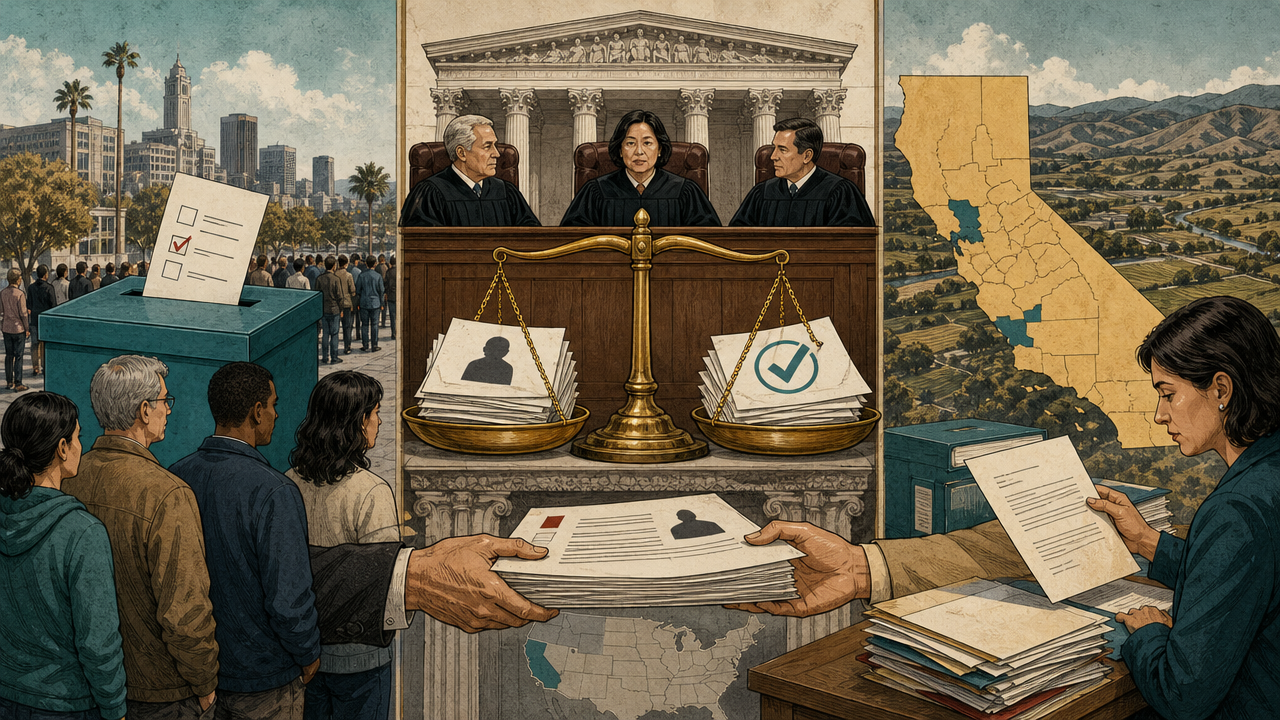
Appeals court hearing is set in California ballot dispute after DOJ presses counties to set aside named voters’ ballots
Challenged in court: The Justice Department’s request to stop or segregate certain California ballots is being litigated. As of October 25, the cited reporting identifies a Ninth Circuit hearing but not a final appellate ruling requiring the requested ballot treatment. Verify status
What happened
The U.S. Justice Department has sent California county election offices letters demanding that they set aside and verify ballots tied to people the federal government says may be noncitizens. The federal government’s broader lawsuit seeks to stop California from counting ballots from roughly 20,000 people unless citizenship is verified.
What it means for voters
For California voters, this fight is about whether a ballot from a registered voter could be delayed while officials check citizenship information supplied by the federal government. County election offices run voting and count ballots under state law, while federal courts can decide whether federal law requires a different process. A delayed ballot review could slow results or create uncertainty for affected voters, but no cited court order here requires counties to reject ballots. For workers trying to vote before or after a shift, California’s same-day registration and in-person voting options remain available through Election Day under the state’s election rules.
Save stories & follow topics · Link to this story
Get the context & analysis
The U.S. Justice Department has sent California county election offices letters demanding that they set aside and verify ballots tied to people the federal government says may be noncitizens. The federal government’s broader lawsuit seeks to stop California from counting ballots from roughly 20,000 people unless citizenship is verified. California officials dispute the reliability and usefulness of the federal list, and Associated Press reported that a Ninth Circuit panel is scheduled to hear arguments on Sunday, October 25. The allegations in the federal letters and lawsuit are not court findings that the named people are ineligible or that any ballot was illegally cast.
What to watch
As of 2026-10-25, watch for the Ninth Circuit’s action after its Sunday hearing and any written order in the federal case. Also watch whether California counties publicly say they will change ballot-processing steps before November 3.
Context from earlier events
On October 23, the Justice Department’s California case was already seeking to stop certification or counting tied to its list. The newer county letters and scheduled appeals-court hearing make the dispute more immediate for local election offices.
Check sources (3)
Voting; early voting; election administration; voter access Michigan
Michigan’s statewide early in-person voting is underway
In effect: Michigan’s early in-person voting period for the November 3, 2026 general election began October 24, according to the Secretary of State. Verify status
What happened
Michigan began statewide early in-person voting for the November 3 general election on Saturday, October 24. The Michigan Secretary of State says eligible voters can cast a ballot at their assigned early-voting site during the early-voting period, with local site locations and hours available through the state voting dashboard.
What it means for voters
Early voting can help people whose Election Day is packed with a shift, commute, child care, or a last-minute work problem. It does not change who can vote or which races are on the ballot; it gives eligible Michigan voters another time to cast the same ballot before November 3. Voters should confirm their assigned site and hours because local governments operate the sites and schedules.
Save stories & follow topics · Link to this story
Get the context & analysis
What to watch
As of 2026-10-25, Michigan voters should check their early-voting site, hours, registration status, and ballot information through the state’s voter resources before making a trip. Election Day is Tuesday, November 3.
Context from earlier events
Michigan voters approved a constitutional amendment establishing at least nine days of early in-person voting; the current early-voting period is the system operating for this general election.
Check sources (1)
Primary and independent sources
Voting; mail ballots; in-person voter service; election administration Hawaii
Hawaii voter service centers are open through Election Day
In effect: Hawaii’s official 2026 election proclamation lists voter service centers as open beginning October 24 through 7 p.m. on November 3, 2026. Verify status
What happened
Hawaii’s voter service centers opened October 24 and will remain available through 7 p.m. on Election Day, November 3. Hawaii conducts elections primarily by mail, but voter service centers provide an in-person option for eligible voters who need help, need to register or update information, or want to vote in person under the state’s rules.
What it means for voters
For a working household, a voter service center can be the backup plan when a mailed ballot did not arrive, was misplaced, needs to be replaced, or when a voter wants in-person help. The exact services and hours can vary by county, so voters should check their county election office rather than assume every site has the same schedule.
Save stories & follow topics · Link to this story
Get the context & analysis
What to watch
As of 2026-10-25, Hawaii voters who have not received a ballot or need to change voter information should check their county’s voter service-center details promptly. The statewide in-person service period runs through 7 p.m. on November 3.
Context from earlier events
Hawaii has used statewide vote-by-mail elections since 2020, while keeping in-person voter service centers as an option for voters who need them.
Check sources (2)
Primary and independent sources
Voting; early voting; voter registration; election administration Connecticut
Connecticut early voting starts Monday, October 26
In effect: Connecticut’s official calendar lists October 19 through November 1 as the general-election early-voting period, with town-level operating details set locally. October 26 is the next listed weekday in that period. Verify status
What happened
Connecticut’s 14-day in-person early-voting period for the November 3 general election starts Monday, October 26. The state says the advance registration deadline has passed, but eligible people who miss it may still have same-day registration options under Connecticut’s election system.
What it means for voters
Starting Monday gives eligible Connecticut voters another way to fit voting around jobs, classes, caregiving, and transportation. Same-day registration can help an eligible voter who missed the earlier registration deadline, but it usually takes more time than simply checking registration before going out. Voters should confirm their local early-voting location and hours first.
Save stories & follow topics · Link to this story
Get the context & analysis
What to watch
As of 2026-10-25, the next confirmed step is the opening of Connecticut early voting on Monday, October 26. Voters should use the state election portal or contact their town registrar for site and same-day-registration details.
Context from earlier events
Connecticut voters approved a constitutional amendment allowing early voting in 2022. The 2026 general election uses the early-voting structure that followed.
Check sources (2)
Voting; voter registration; mail ballots; election administration Washington
Washington voters have until Monday to register or update by mail or online
In effect: Washington’s official election calendar lists October 26, 2026 as the last day to register or update registration by methods other than in person. In-person registration remains available through Election Day under the state’s rules. Verify status
What happened
Washington’s October 26 deadline is the last day to register or update a voter registration by methods other than in person for the November 3 general election. Eligible voters may still register in person through Election Day, including up to 8 p.m. on November 3.
What it means for voters
For Washington workers and families, tomorrow is the last day to handle a registration or address update without going in person. That matters if a ballot was sent to an old address or if someone moved recently. Missing the October 26 deadline does not automatically end the chance to vote, but in-person registration takes more time and may mean arranging a trip during business hours or on Election Day.
Save stories & follow topics · Link to this story
Get the context & analysis
Washington’s October 26 deadline is the last day to register or update a voter registration by methods other than in person for the November 3 general election. Eligible voters may still register in person through Election Day, including up to 8 p.m. on November 3. Washington’s 18-day voting period is already underway, and voters can return ballots at official drop boxes until 8 p.m. on Election Day.
What to watch
As of 2026-10-25, Washington voters who need to register or update an address should complete it by Monday, October 26, using the state-approved non-in-person method. Ballots can be returned to an official drop box by 8 p.m. on November 3.
Context from earlier events
Washington has conducted elections by mail statewide for years, with county election offices responsible for local ballot mailing, drop boxes, and voter service.
Check sources (2)
Voting; absentee ballots; election deadlines; voter access Arkansas
Arkansas absentee-ballot application deadline is Monday, October 26
In effect: Arkansas’s official 2026 election calendar identifies Monday, October 26, 2026 as the adjusted deadline for county clerks to receive absentee-ballot applications by mail, fax, or electronic mail for the general election. Verify status
What happened
Arkansas voters who need an absentee ballot for the November 3 general election have until Monday, October 26, for a county clerk to receive an application sent by mail, fax, or electronic means. Arkansas’s election calendar notes that the regular date falls on a weekend, so the deadline moves to Monday.
What it means for voters
This is a hard practical deadline for eligible Arkansas voters who expect to be away from their polling place, unable to vote in person, or otherwise qualify for absentee voting. For someone balancing shift work, travel, illness, or caregiving, waiting past Monday can remove the option to have a ballot sent out. An application is not the same as a completed ballot, so voters should also check the return rules and timing once they receive one.
Save stories & follow topics · Link to this story
Get the context & analysis
What to watch
As of 2026-10-25, the key action is getting an absentee-ballot application to the county clerk by Monday, October 26. Voters should check directly with their county clerk about receipt confirmation and the deadline for returning the completed ballot.
Context from earlier events
Absentee voting is a separate process from ordinary early in-person voting. Arkansas voters must meet the application rule before a county clerk can issue an absentee ballot.
Check sources (1)
Primary and independent sources
You're caught up on this briefing. Choose topics and save stories to return on your own schedule.
How this briefing was made
We used official records to verify government actions and independent reporting to add context. We also searched recent election-related videos on YouTube for topic leads. Search rank and popularity were not treated as proof or public opinion. Every included claim still had to be checked against the linked sources.