The daily civic brief
U.S. Civic News Scan — August 20, 2026
Today’s biggest pocketbook development is a last-minute pause on planned 50% tariffs on selected Canadian imports, which avoids an immediate new cost pressure but only for a short negotiating window. Other key items involve federal health grants, House representation, redistricting, and a court fight over who can approve major changes to the White House. Several election-related decisions are still unsettled, so the next court orders and vote-count updates matter more than campaign claims.
Estimated 4-minute catch-up · 5 stories
Today's audio briefing
Today's spoken briefing
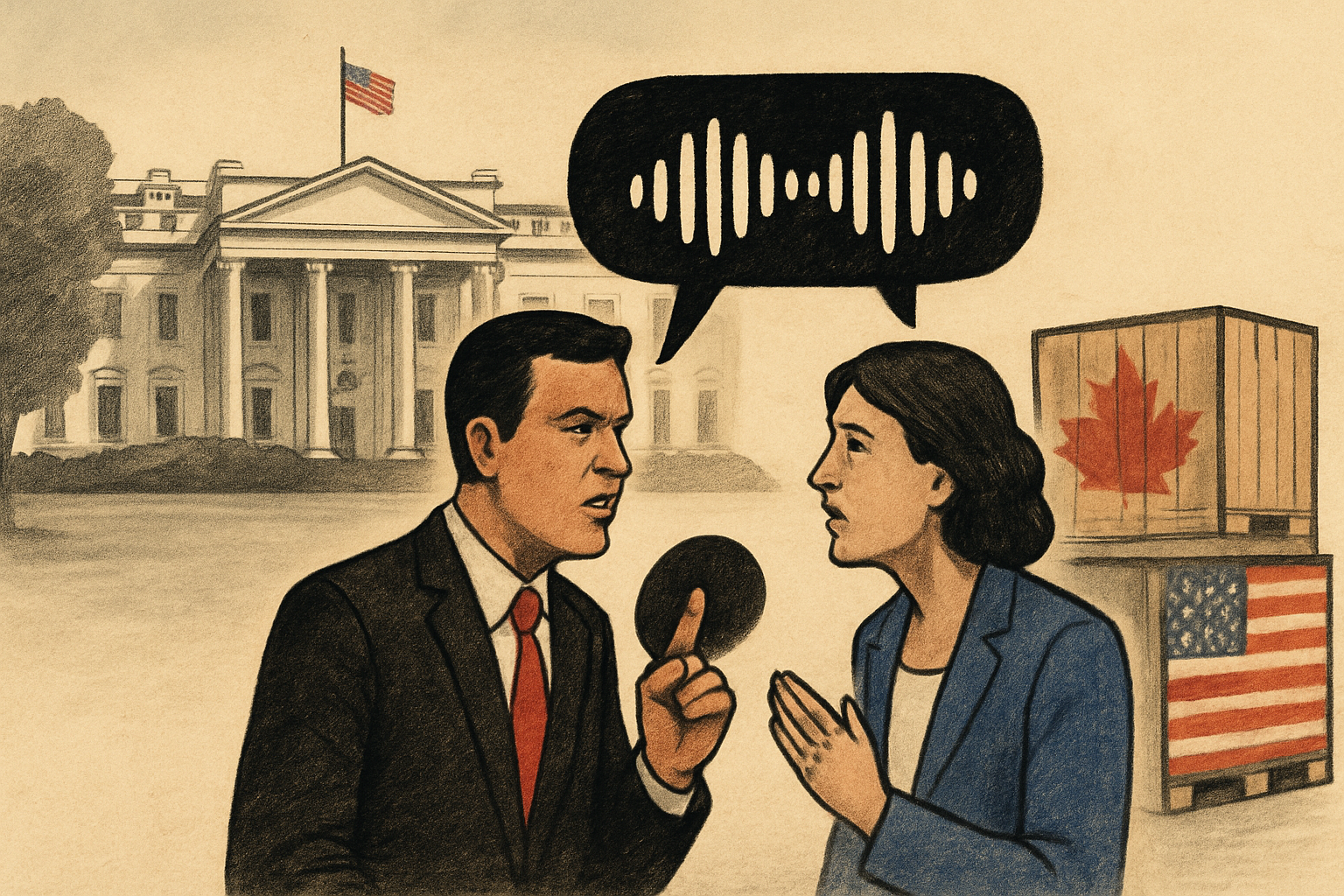
Hear the latest national briefing and what to watch next for every headline. A restrained instrumental bed plays in the web player.
A verbatim transcript is unavailable for this edition. Read the written briefing below.
Trade policy, prices, and presidential tariff authority Nationwide; U.S.-Canada trade
Debate spotlight: U.S. pauses planned 50% tariffs on selected Canadian imports for three days
What happened
President Trump said on August 18 that the United States would pause for three days the planned additional 50% tariffs on about $20 billion in selected Canadian imports. The tariffs had been scheduled to begin shortly after midnight on August 19.
What it means for voters
Tariffs are taxes paid at the border by U.S. importers, though businesses may absorb some costs or pass some along through prices. The immediate pause means the listed imports did not get that new 50% charge this week. That does not guarantee lower prices, and it does not settle the wider trade dispute. The White House controls tariff action under the trade authority it is using; Congress can change the underlying law and oversee the policy.
Save stories & follow topics · Link to this story
Get the context & analysis
President Trump said on August 18 that the United States would pause for three days the planned additional 50% tariffs on about $20 billion in selected Canadian imports. The tariffs had been scheduled to begin shortly after midnight on August 19. The pause followed last-minute talks; the final terms of any U.S.-Canada agreement were not yet public.
What to watch
Watch for written U.S. and Canadian terms when the three-day pause ends, including which products are covered and whether either country takes new action. The key practical question is whether the tariffs are cancelled, extended again, or allowed to take effect.
Context from earlier events
Earlier White House actions had set additional duties on selected Canadian dairy, alcohol-related, and motor-vehicle products. The announced pause is a change from the previously scheduled start date.
Check sources (1)
Primary and independent sources
Healthcare, schools, federal grants, and agency accountability Washington, D.C.; nationwide
Federal judge pauses HHS restrictions on teen-pregnancy-prevention grants
What happened
A federal judge on August 19 temporarily blocked the Department of Health and Human Services from applying new limits to the Teen Pregnancy Prevention Program. The judge found that the new policy was likely unreasonable or insufficiently explained under the federal law that governs agency decision-making.
What it means for voters
The program helps fund local health departments, schools, and nonprofits that offer teen-pregnancy-prevention and adolescent-health programs. The ruling keeps the new restrictions from taking effect for now, but communities that lost grants may still have service gaps until the case is resolved. Congress created and funds the program; HHS administers it; the federal court is reviewing whether the agency stayed within the limits Congress set.
Save stories & follow topics · Link to this story
Get the context & analysis
A federal judge on August 19 temporarily blocked the Department of Health and Human Services from applying new limits to the Teen Pregnancy Prevention Program. The judge found that the new policy was likely unreasonable or insufficiently explained under the federal law that governs agency decision-making. The order does not yet restore grants that HHS had already ended.
What to watch
Both sides must propose a schedule for the next stage of the case by September 1. Watch for whether the court later orders restoration of terminated grants, or whether HHS appeals.
Context from earlier events
The lawsuit followed HHS changes and early grant terminations announced this summer for a program Congress has funded since 2009.
Check sources (3)
Redistricting, voting, and U.S. House representation Missouri
Missouri judge lets new congressional map stay in place for November, pending appeal
What happened
A Cole County circuit judge ruled on August 19 that Missouri’s new U.S. House map can be used in the November election and rejected an effort to put the map before voters in a statewide referendum. The group challenging the map said it would appeal to the Missouri Supreme Court.
What it means for voters
District lines decide which voters are grouped together when choosing members of Congress. The ruling leaves the new map in effect for now, including changes aimed at making one Kansas City-area district more favorable to Republicans. Missouri’s legislature drew the map, the secretary of state rejected the referendum petition, and state courts are deciding whether the state constitution allows voters to overturn a congressional map this way.
Save stories & follow topics · Link to this story
Get the context & analysis
A Cole County circuit judge ruled on August 19 that Missouri’s new U.S. House map can be used in the November election and rejected an effort to put the map before voters in a statewide referendum. The group challenging the map said it would appeal to the Missouri Supreme Court. The new lines were already used in the state’s August primaries.
What to watch
The Missouri Supreme Court is the next likely stop. Its decision could determine whether the November election proceeds under these boundaries or whether voters get a referendum question.
Context from earlier events
Missouri’s congressional delegation was previously elected from post-2020-census lines, with six Republicans and two Democrats.
Congressional representation and vote counting California’s 14th Congressional District, Alameda County
California House special election remains too close to call in early returns
What happened
Early returns from California’s August 18 special election showed Democratic state Sen. Aisha Wahab narrowly ahead of BART Board President Melissa Hernandez in the race to fill the rest of the current House term. The result was not final as of August 20.
What it means for voters
The winner will give roughly 423,000 registered voters in the district a voting representative in the House for the remainder of the term. Both candidates are Democrats, but the seat matters because every House vote can matter when party margins are narrow. County election officials run the count and canvass; California certifies the election; the House seats the winner.
Save stories & follow topics · Link to this story
Get the context & analysis
Early returns from California’s August 18 special election showed Democratic state Sen. Aisha Wahab narrowly ahead of BART Board President Melissa Hernandez in the race to fill the rest of the current House term. The result was not final as of August 20. Alameda County lists additional results updates for August 21, August 26, and August 28.
What to watch
Do not treat the early margin as final. Watch Alameda County’s August 21 results update and whether later vote-by-mail ballots change the lead.
Context from earlier events
The vacancy followed former Rep. Eric Swalwell’s resignation. Wahab and Hernandez advanced from the June special primary and are also competing for the next full House term in November.
Check sources (3)
Primary and independent sources
Presidential power, federal property, congressional spending authority, and courts Washington, D.C.
White House ballroom fight reaches its August 21 court deadline as construction continues
What happened
Workers continued construction on the planned White House ballroom on August 19 while the administration seeks Supreme Court intervention. A federal appeals court had ruled that Congress must authorize the project and set August 21 as the date its halt on aboveground work would take effect unless a higher court steps in.
What it means for voters
This is not just a dispute about a building. It tests who controls major changes to federal property and the use of public or privately raised money connected to the executive branch. Congress controls appropriations and can authorize projects; the president runs the executive branch; federal courts decide whether those actions follow the law. The immediate financial details and eventual cost remain important because the administration has described the project as a major security and event-space improvement.
Save stories & follow topics · Link to this story
Get the context & analysis
Workers continued construction on the planned White House ballroom on August 19 while the administration seeks Supreme Court intervention. A federal appeals court had ruled that Congress must authorize the project and set August 21 as the date its halt on aboveground work would take effect unless a higher court steps in. The Supreme Court had not publicly issued a ruling on the emergency request at the time of this scan.
What to watch
Watch for a Supreme Court order before the August 21 deadline. If no stay is granted, the appeals-court order would require aboveground construction to stop while the lawsuit continues.
Context from earlier events
The National Trust for Historic Preservation asked the Supreme Court on August 18 to leave the lower-court block in place while the appeal proceeds.
Check sources (3)
Primary and independent sources
You're caught up on this briefing. Choose topics and save stories to return on your own schedule.
How this briefing was made
We used official records to verify government actions and independent reporting to add context. We also checked popular political videos on YouTube for topic leads. Popularity helped us decide what to investigate, but it was not treated as proof or public opinion. Every included claim still had to be checked against the linked sources.