The daily civic brief
U.S. civic news scan: grocery prices, housing funds, federal power, and voting
The biggest household-cost developments are two new and opposite tariff moves: the White House announced temporary tariff relief for some ground-beef imports, while new 50% duties on selected Canadian products took effect after trade talks broke down. Housing providers are also waiting on courts and HUD after a judge threw out a national homelessness-grant competition. On the voting side, California’s 14th District count has moved further toward Aisha Wahab, but the result is still unofficial.
Estimated 5-minute catch-up · 6 stories
Today's audio briefing
Today's spoken briefing
Hear the latest national briefing and what to watch next for every headline. A restrained instrumental bed plays in the web player.
A verbatim transcript is unavailable for this edition. Read the written briefing below.
Groceries, tariffs, and consumer prices Nationwide
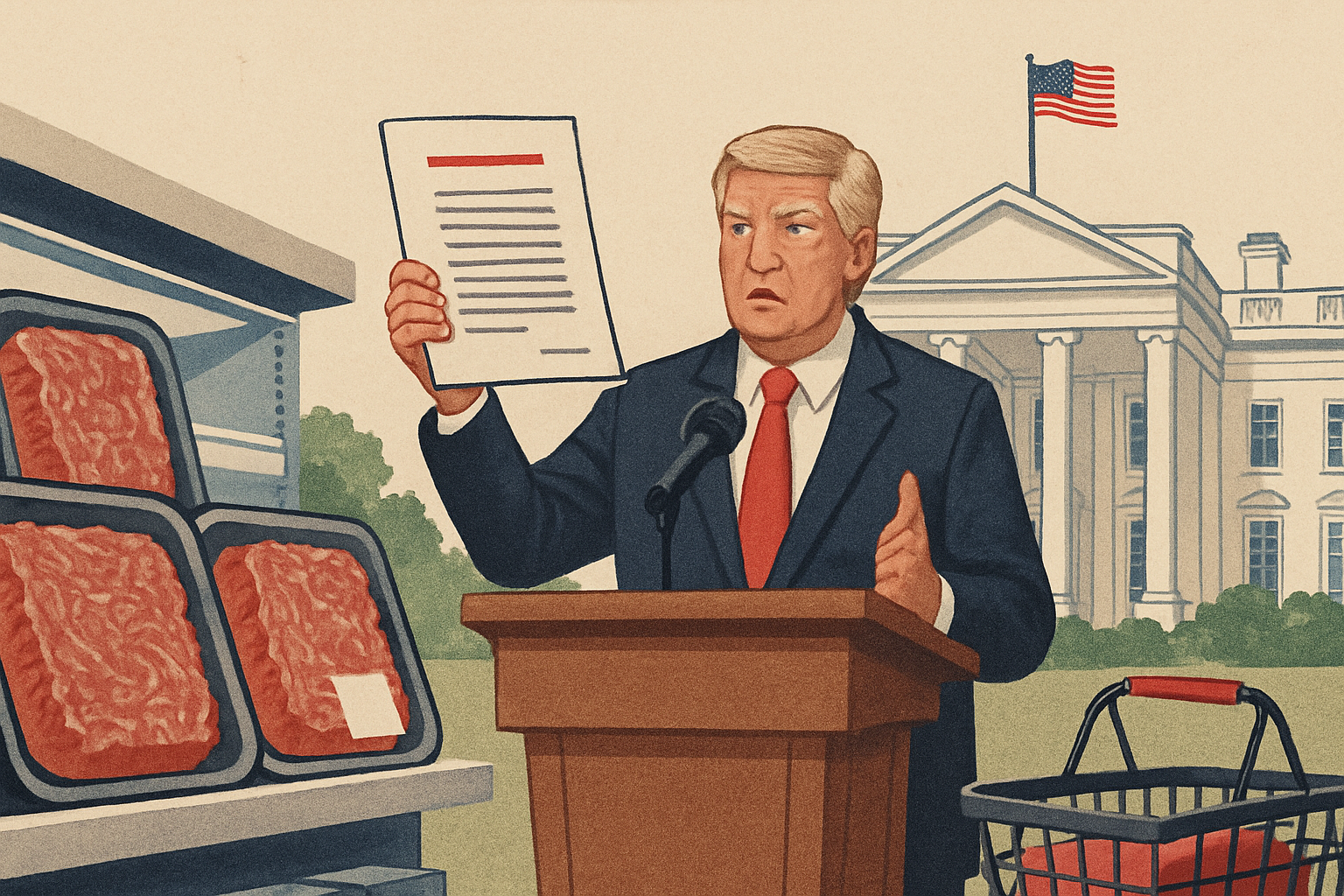
White House announces 90-day tariff relief for up to 300,000 metric tons of ground beef imports
What happened
President Donald Trump announced Friday that the United States will allow up to 300,000 metric tons of ground beef imports over 90 days without the higher tariff that normally applies after import quotas are filled. The administration says the step is meant to increase supply and lower ground-beef prices.
What it means for voters
This could eventually give importers a lower-cost route to bring in more ground beef, which may put some downward pressure on grocery prices. It does not guarantee a 25% price cut at the store: retailers, processors, shipping costs, and the amount of qualifying beef available all matter. Ranchers and some rural lawmakers object that added imports could lower prices paid to U.S. cattle producers. The president controls this tariff action under federal trade law; Congress can change the underlying tariff rules through legislation.
Save stories & follow topics · Link to this story
Get the context & analysis
President Donald Trump announced Friday that the United States will allow up to 300,000 metric tons of ground beef imports over 90 days without the higher tariff that normally applies after import quotas are filled. The administration says the step is meant to increase supply and lower ground-beef prices. As of this scan, the reporting reviewed described an announcement; it did not identify a published implementing order with the operating details.
What to watch
Watch for a formal Customs, U.S. Trade Representative, or White House notice explaining when the tariff relief starts, which countries and products qualify, and whether importers actually use the full quota.
Context from earlier events
/n
Check sources (2)
Trade policy, prices, and jobs Nationwide; U.S.-Canada trade
New 50% tariffs on selected Canadian products take effect after talks fail
What happened
The United States imposed additional 50% tariffs on about $20 billion in selected Canadian products early Saturday after last-minute negotiations failed. The White House’s July proclamation covers listed goods rather than every Canadian import.
What it means for voters
Tariffs are paid first by U.S. importers. Those businesses may absorb some cost, switch suppliers, or pass some of it along through higher prices. The affected goods include products used by households and businesses, so the effect may show up in particular store items, construction inputs, medical supplies, or business costs rather than as one across-the-board price increase. Canadian retaliation can also reduce sales for U.S. exporters and affect workers tied to those businesses. The president imposed these duties under federal trade authority; Congress has the constitutional power to write tariff laws and can revise that authority.
Save stories & follow topics · Link to this story
Get the context & analysis
The United States imposed additional 50% tariffs on about $20 billion in selected Canadian products early Saturday after last-minute negotiations failed. The White House’s July proclamation covers listed goods rather than every Canadian import. Canada said it would retaliate with matching tariffs.
What to watch
Watch for Canada’s specific retaliation list, Customs guidance on which goods are covered, and any renewed U.S.-Canada negotiations. The exact household effect will depend on the products, importer choices, and whether retailers pass costs through.
Context from earlier events
On August 18, the two governments announced a short delay while they tried to finish a deal. That effort ended without an agreement, and the duties went into effect on August 22.
Check sources (2)
Rent, homelessness, and federal housing grants Nationwide
HUD’s national homelessness-grant competition remains off the table after court ruling
What happened
A federal judge in Rhode Island set aside HUD’s entire 2026 Continuum of Care grant competition on August 7, finding that the agency’s notice violated the federal law governing agency decision-making. HUD now says it cannot accept applications under that notice or use its August 26 application deadline while it considers an appeal or other next steps.
What it means for voters
Local homelessness systems use these grants to help pay for shelter, rental help, permanent supportive housing, outreach, and related services. The court ruling prevents HUD from using its 2026 competition rules for now, but it also leaves providers without a current application process and timeline for future awards. That uncertainty can affect organizations’ staffing and planning, especially where federal money supports housing for people with disabilities or families leaving homelessness. HUD writes and administers grant rules; federal courts can block rules that do not follow required procedures; Congress appropriates the money and sets the program’s basic limits.
Save stories & follow topics · Link to this story
Get the context & analysis
A federal judge in Rhode Island set aside HUD’s entire 2026 Continuum of Care grant competition on August 7, finding that the agency’s notice violated the federal law governing agency decision-making. HUD now says it cannot accept applications under that notice or use its August 26 application deadline while it considers an appeal or other next steps. The competition had offered more than $4 billion for homelessness housing and services.
What to watch
Watch for HUD to announce an appeal, a replacement notice, or a revised deadline. Also watch whether Congress changes program rules or funding levels in its next appropriations bills.
Context from earlier events
HUD’s June notice would have shifted part of the competition toward transitional housing and supportive-service projects. The court did not permanently bar HUD from proposing future changes; it set aside this particular notice.
Housing assistance, homelessness, and federal grants Los Angeles County, California
Federal judge temporarily restores Los Angeles homeless-services agency’s access to HUD funding
What happened
A federal judge on August 13 temporarily blocked HUD from suspending the Los Angeles Homeless Services Authority, known as LAHSA, from its role in the region’s federal homelessness-grant system. The court’s order lets LAHSA continue work connected to 2025 grants and the next funding cycle while the case proceeds.
What it means for voters
Los Angeles is a local story with national importance because it is one of the country’s largest homelessness systems. The ruling helps avoid an immediate interruption for providers that rely on federal Continuum of Care funds for shelter, housing placement, rent support, and services. It does not decide who should run the system permanently or settle questions about LAHSA’s performance. HUD administers the federal grants, local agencies deliver services, and the federal court is reviewing whether HUD followed the law when it moved to suspend the agency.
Save stories & follow topics · Link to this story
Get the context & analysis
A federal judge on August 13 temporarily blocked HUD from suspending the Los Angeles Homeless Services Authority, known as LAHSA, from its role in the region’s federal homelessness-grant system. The court’s order lets LAHSA continue work connected to 2025 grants and the next funding cycle while the case proceeds. The court also required review of possible alternative agencies for the future.
What to watch
The preliminary order is temporary. Watch for HUD’s response, the court-ordered review of alternative administrators, and the next hearing or funding deadline.
Context from earlier events
The ruling came days after the Rhode Island court set aside HUD’s separate nationwide 2026 homelessness-grant competition notice.
Check sources (2)
Federal property, spending authority, and court oversight Washington, D.C.
Chief Justice Roberts lets White House ballroom construction continue while appeal is considered
What happened
Chief Justice John Roberts on August 21 put a lower-court injunction on hold, allowing construction on the planned White House ballroom to continue for now. The order is temporary and does not decide whether the project is lawful.
What it means for voters
This case is about more than one construction project. It tests who controls major changes and spending involving federal property: Congress, which controls appropriations and federal property by law, or the executive branch. The administration estimates the ballroom project at $400 million and says it is tied to security needs; opponents argue the project cannot proceed without Congress. The immediate result is that above-ground work can continue while the Supreme Court considers the emergency request.
Save stories & follow topics · Link to this story
Get the context & analysis
Chief Justice John Roberts on August 21 put a lower-court injunction on hold, allowing construction on the planned White House ballroom to continue for now. The order is temporary and does not decide whether the project is lawful. The legal dispute concerns whether the executive branch can build and finance the project without congressional authorization.
What to watch
The Supreme Court may issue a fuller order, grant or deny a longer stay, or leave the dispute for lower courts to resolve. Congress could also choose to authorize, limit, or investigate the project.
Context from earlier events
The D.C. Circuit had allowed time for the administration to seek Supreme Court relief before its order halting most above-ground work took effect. Roberts acted on the final day of that window.
Voting, House representation, and vote counting Alameda County, California
Aisha Wahab’s lead grows in California’s 14th District special election, but count is still unofficial
What happened
Alameda County’s August 20 update showed Democratic state Sen. Aisha Wahab ahead of Melissa Hernandez by 51,610 votes to 45,598, or 53.09% to 46.91%, in the special election for California’s 14th Congressional District. All 323 vote-center precincts had reported, but the county still labels the results preliminary and unofficial because more ballot processing and the formal canvass remain.
What it means for voters
The winner will represent the district in the U.S. House for the rest of the current term, so the race affects constituent service and House representation before the November election. For voters, this is also a reminder that election-night numbers are not final results: mailed ballots, signature reviews, ballot curing, and required checks can change the total. County election officials administer and certify the count under state law; the House ultimately judges the elections and qualifications of its members.
Save stories & follow topics · Link to this story
Get the context & analysis
What to watch
Alameda County lists its next results update for August 26, followed by another update on August 28. Watch the official canvass and certification rather than treating the current margin as final.
Context from earlier events
Early vote-by-mail-only results on election night showed a much narrower Wahab lead. The August 20 update added vote-center reporting and more mailed-ballot processing.
You're caught up on this briefing. Choose topics and save stories to return on your own schedule.
How this briefing was made
We used official records to verify government actions and independent reporting to add context. We also checked popular political videos on YouTube for topic leads. Popularity helped us decide what to investigate, but it was not treated as proof or public opinion. Every included claim still had to be checked against the linked sources.